
Last updated October 16, 2026
 Wrought iron
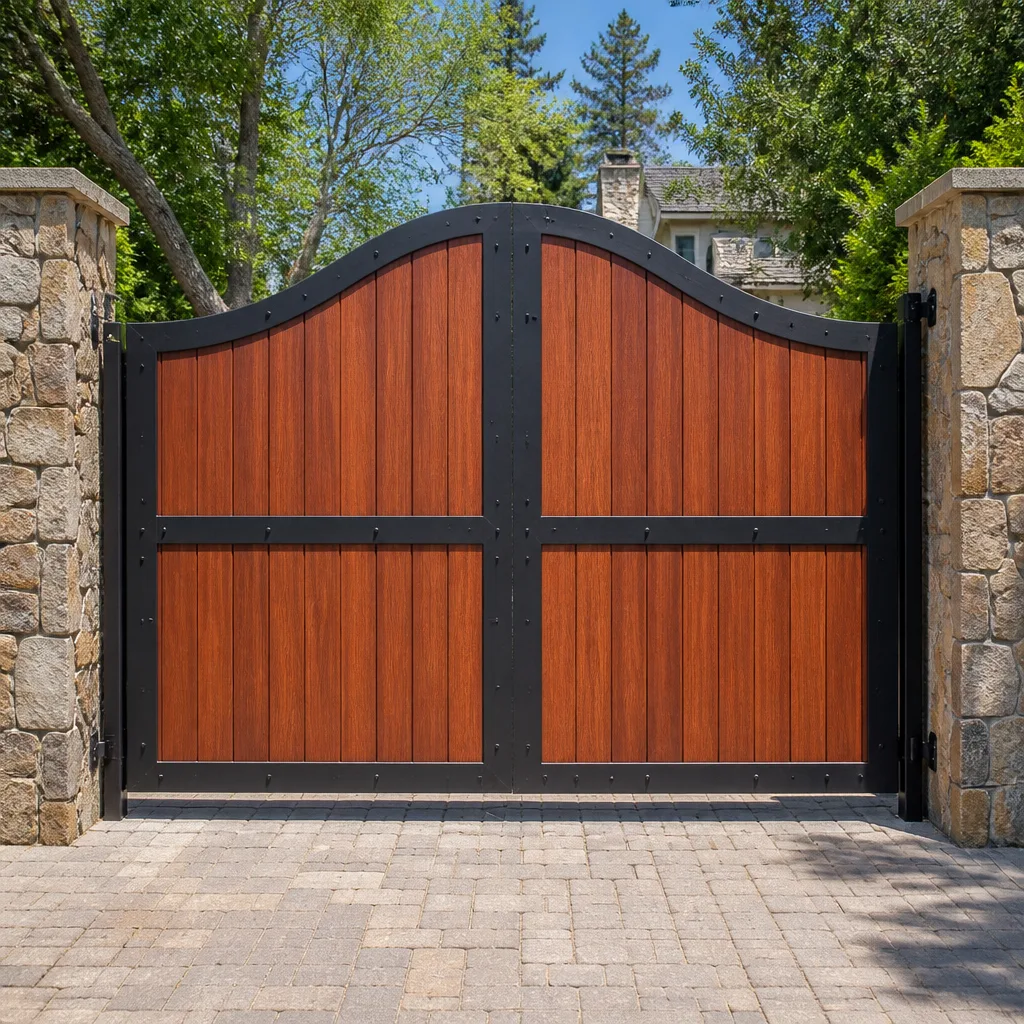 Wood & steel frame
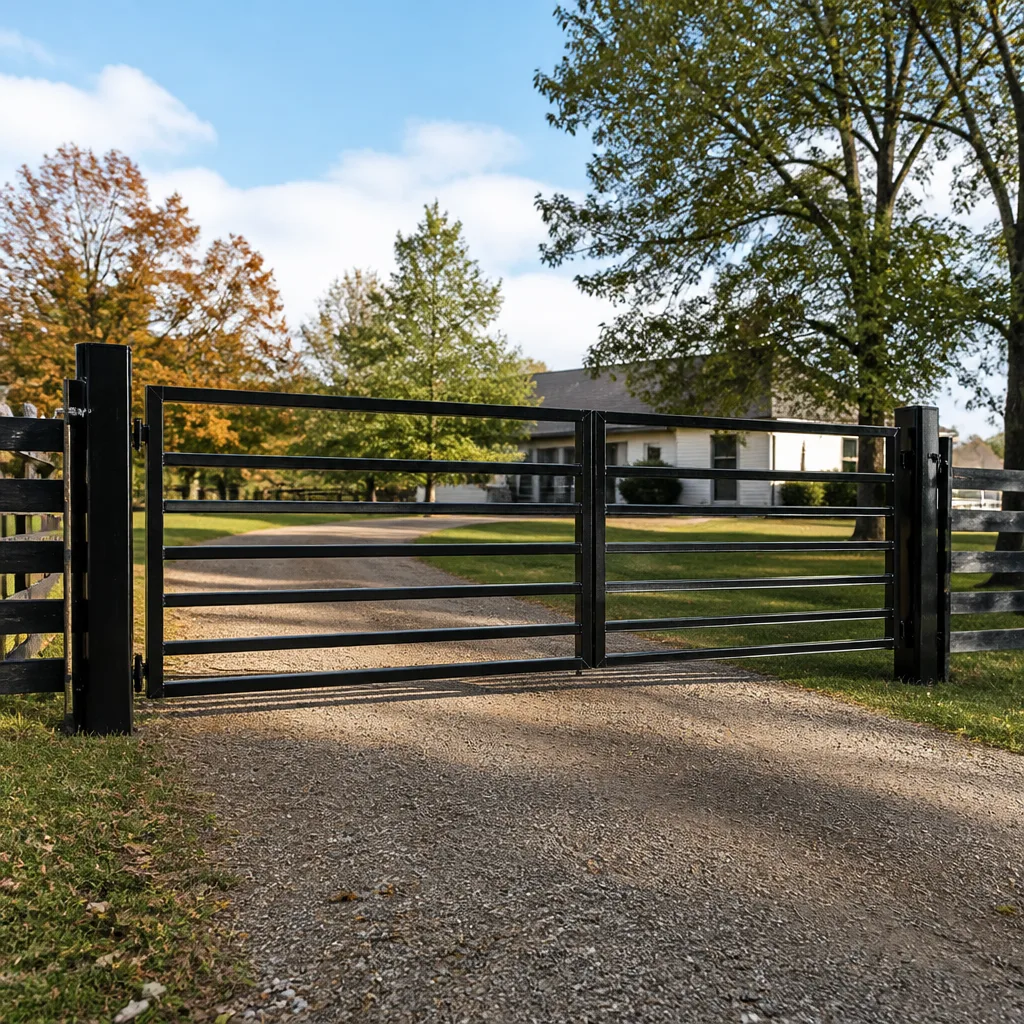 Farm & ranch
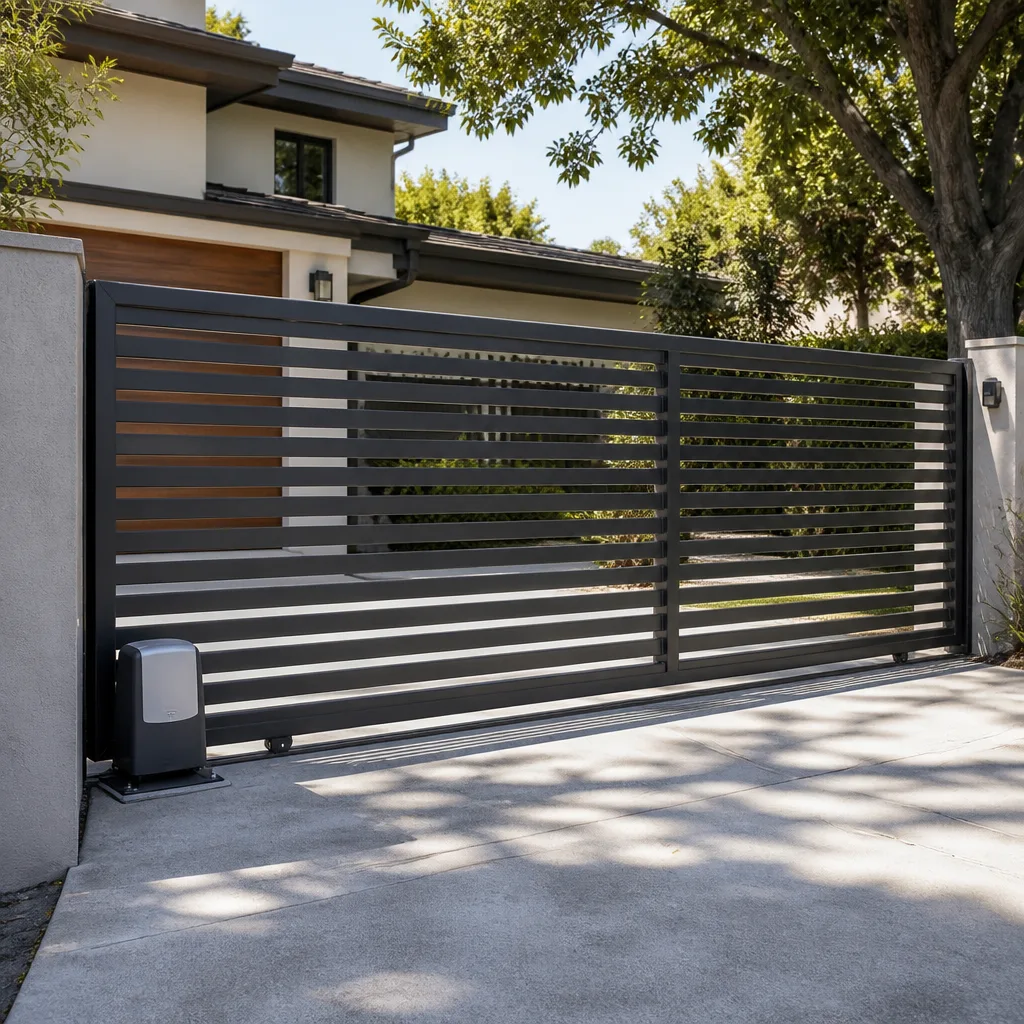 Sliding driveway gates
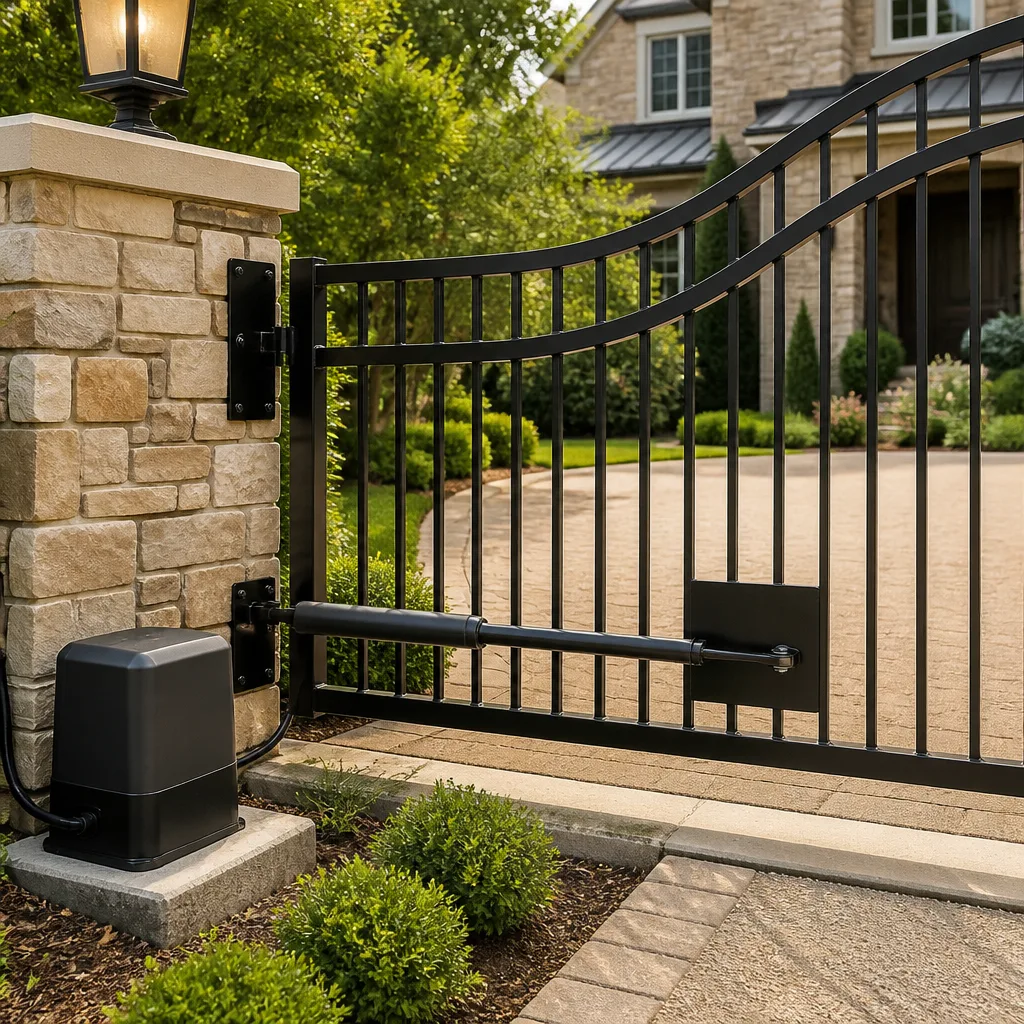 LiftMaster operators
Free on-site gate assessment - hinges, posts, and your LiftMaster or Nice gate operator checked before anything is quoted
The assessment is free and the quote is the invoice.
Get your free estimateThe Complete Guide to Gate Repair in Houston
A gate that stops mid-swing isn’t a gate problem. It’s usually a limit-switch or motor-capacitor problem, and replacing the whole operator when a $12 capacitor is the culprit is one of the most common upsells in Houston gate service. This guide walks through how Houston gates actually fail, what the repair should cost, and what separates a real fix from a parts-swap guess. Most gate failures follow a predictable chain: the operator faults first, the hinge hardware strains second, and the structural post moves last. By the time you finish this guide, you’ll know exactly which link in that chain you’re dealing with, what the repair scope should be, and what questions to ask before anyone touches your gate in Houston.
Quick Answer
Gate repair in Houston typically costs between $185 and $1,800 depending on which component has failed. The most common repairs are motor capacitor replacements ($185 – $350), limit switch adjustments ($165 – $300), hinge replacements ($225 – $650), and swing-arm operator replacements ($950 – $1,800 including labor). Most gate repairs in Houston are completed in a single visit, and the right question to ask first is whether the quote identifies which component failed, not just whether the gate can be replaced.
Styles & brands we work with
Table of Contents
- How Houston Gates Fail: The Three-Link Chain
- Houston’s Clay Soil and the Post-Lean Problem
- The Five Most Common Gate Failure Types by Component
- Why Brand-Matched Parts Matter on Your Gate Motor
- What a Legitimate Written Gate Repair Estimate Must Include
- Humidity, Heat Cycling, and Houston Corrosion Points
- What You Can Safely Check Before Calling a Gate Technician
- Common Mistakes to Avoid in Gate Repair
- When to Call a Professional Gate Repair Technician
- Frequently Asked Questions About Gate Repair in Houston
How Houston Gates Fail: The Three-Link Chain
In our experience across Houston, gate failures almost never happen in random order. They follow a chain. The operator is the first link. It’s the component that does the most work, cycles the most times per day, and contains the most parts that wear out on a predictable schedule: capacitors, limit switches, circuit boards, and drive belts. When a gate stops responding or moves only partway, the operator is the place to start.
The second link is the hinge hardware. As an operator’s internal parts degrade, the gate’s movement gets rougher. That roughness transfers mechanical stress to the hinges, which begin to sag, bind, or shear. A gate that used to swing silently in a Katy cul-de-sac starts to groan in The Heights. The groaning is your hinge hardware telling you it’s taking load it was never designed to carry.
The third link is the structural post. By the time a post is visibly leaning, the operator and hinges have been failing for months, sometimes years. The post didn’t just move overnight. It moved slowly, millimeters at a time, while the gate’s weight repeatedly pressed against it through compromised hinges and a struggling motor. This is why replacing only the post never fixes the root problem. The chain has to be addressed in order: operator first, then hinges, then post. If you replace the post without checking the operator and hinges, you’ll be back in a year with the same lean and a new post in the ground.
Understanding this sequence matters because it changes the conversation with any gate repair company. A technician who arrives and immediately says “new post” without opening the operator housing is guessing. A technician who checks the operator first, verifies the hinges second, and only then evaluates the post is working the problem the way it actually unfolds in Houston’s soil and climate.
Houston’s Clay Soil and the Post-Lean Problem
Houston sits on a specific set of soil conditions that most of the rest of the country doesn’t have to think about. The clay-heavy soils across Harris County, Fort Bend County, and Montgomery County expand dramatically when wet and shrink dramatically when dry. A gate post set in that soil is effectively sitting in a material that changes volume throughout the year. The expansion and contraction loosens the concrete footing around the post over time. The post develops play. That play becomes lean. And that lean reads as a motor failure because the gate starts binding against the ground, the latch stops lining up, and the operator works harder to move the same weight.
Here’s how to tell the difference before you call anyone. Open the gate manually to the halfway point and let go. If the gate stays in place, the post is probably sound and the problem is in the operator or hinges. If the gate swings closed on its own, or drifts open, the post has moved. The gate’s own weight is telling you which direction the post is leaning.
A second check: look at the gap between the gate and the latch post. If the gap is wider at the top than at the bottom, the post is leaning away. If the gap is wider at the bottom, the post is leaning toward the gate. A gate that won’t latch cleanly is frequently a post problem disguised as a latch problem.
Proper post repair in Houston soil requires more than just digging out the old concrete. The footing has to be sized correctly for the gate’s weight and width. In Houston’s expansive clay, we pour deeper footings than many generalist contractors do, because a shallow footing in shrink-swell soil will repeat the lean in 18 to 36 months. The fix is a footing that extends below the zone where moisture swings its hardest. That’s a Houston-specific consideration, and it’s why a gate specialist who works in this soil every day will approach post work differently than someone who installed one gate in Bellaire last spring.
For a deeper look at how gate issues present and get resolved across the city, visit the Gate Repair in Houston page. If you’re weighing a full replacement instead of a repair, the Gate Installation in Houston guide covers what a proper install includes.
The Five Most Common Gate Failure Types by Component
Almost every gate failure in Houston falls into one of five categories. Each has a typical repair scope, a typical cost range, and a set of warning signs that show up before the failure becomes complete. Here’s what each one looks like in the field.
1. Operator Failure (Motor, Capacitor, Limit Switch, or Board)
The operator is the most common failure point on any motorized gate, and it usually announces itself in one of three ways. A motor that hums but doesn’t turn has a bad capacitor. A gate that stops halfway through its travel has a limit switch that’s drifted out of adjustment or failed entirely. A gate that does nothing, even though the keypad lights up, is pointing at the control board.
Typical repair scope: Capacitor replacement runs $185 – $350. Limit switch adjustment or replacement runs $165 – $300. A control board replacement runs $350 – $900 depending on the brand. If the motor itself has failed, replacement of the full operator runs $950 – $1,800 for a swing arm and $1,200 – $2,200 for a slide operator installed. The full operator replacement is where the written quote matters most, because this is the point where panel replacement, wiring, and safety-edge integration have to be included or the job isn’t done.
2. Hinge and Hardware Failure
Hinges on a Houston gate carry load, constantly, in heat and humidity that accelerate wear. The symptom is visible sag: the gate drags on the latch side, or the gap between gate and post changes depending on whether the gate is open or closed. Left untreated, sagging hinges put side load on the operator arm, which shorts the operator’s life.
Typical repair scope: Hinge replacement runs $225 – $650 per pair depending on gate weight and material. Weld repair on a steel gate runs $180 – $400 per point. A gate that’s sagging because the hinges are worn can often be brought back to level without replacing the gate itself, but only if the hinges are addressed before the post starts moving.
3. Track and Roller Failure (Slide Gates)
Slide gates run on a ground track and a set of rollers. In Houston, the track collects silt, grass clippings, and the fine clay dust that blows off dry lawns between rain events. That debris grinds against the rollers and wears them flat. A slide gate that jerks or stalls partway through its travel is usually fighting a dirty or damaged track.
Typical repair scope: Track cleaning and roller replacement runs $225 – $500. Track repair or section replacement runs $400 – $1,200 depending on how much of the track is compromised. This is one repair where prevention pays: a clean track and functional rollers keep the operator from working against resistance that eventually kills the motor.
4. Control Board Failure
Control boards in Houston fail from two main causes: lightning strikes and ant infiltration. The first is common anywhere in the Gulf Coast’s thunderstorm season. The second surprises people, but it shouldn’t: ants are drawn to the warmth and constant low-voltage current of a control board, and their nests short the board’s contacts. This is a Houston-specific failure we see regularly in Sugar Land, Pearland, and The Woodlands.
Typical repair scope: Board replacement runs $350 – $900 depending on brand and board generation. The board must be brand-matched to the operator, not substituted with a universal board. We’ll cover why that matters in the next section.
5. Post Lean and Foundation Movement
Post lean is the slowest of the five failures and the one most often misdiagnosed as something else. By the time a homeowner notices the gate dragging, the post has usually been moving for a year or more. The repair here is structural: the post comes out, the footing is re-poured to the correct depth for Houston soil, and the post is re-set and re-aligned.
Typical repair scope: Post re-set runs $600 – $1,500 per post depending on depth needed and whether the post is welded to a steel frame or set in concrete on its own. This is a job that needs to be quoted after the technician sees the site, not over the phone, because the condition of the existing footing determines the full scope. The Gate Motor Repair in Houston page covers operator-side failures in more detail if the motor is the component giving you trouble.
Why Brand-Matched Parts Matter on Your Gate Motor
Nine gate motor brands dominate the Houston market, and most of them are engineered with proprietary controls that don’t speak to each other. The brands we work on include LiftMaster, FAAC, BFT, Linear, Viking, Ghost Controls, DoorKing, Elite, and Mighty Mule. Each of those manufacturers uses its own logic on limit sensing, obstruction detection, and remote protocol.
Cross-brand substitution is where a lot of cheap gate repairs go wrong in Houston. A technician replaces a FAAC control board with a generic universal board that “mostly works.” Except the safety edge doesn’t communicate correctly anymore. The auto-close timer drifts. The remote range drops. The gate still opens and closes, so the homeowner thinks the repair worked, and six months later the board fails because it was never rated for the amp draw of that operator.
Warranties are another reason brand-matching matters. Every major gate motor manufacturer voids the operator warranty when a non-branded or cross-branded control component is installed. When a homeowner later needs warranty service on a FAAC or LiftMaster operator that has a universal board in it, the manufacturer will decline the claim. The homeowner eats the cost of the proper repair, on top of whatever they already paid for the substitution.
In our work across Houston, we see Ghost Controls and Mighty Mule systems frequently on residential driveway gates in neighborhoods like Cypress and Katy, while DoorKing and Elite are more common on driveway and community entry systems across the metro. The parts are not interchangeable between those brands. The right repair starts with identifying what’s already installed, then sourcing the matching part from the manufacturer’s approved supply chain.
For homeowners, the practical question is simple: ask the technician which brand of motor is on your gate and which brand of part they’re installing. If the two don’t match, you’re about to pay for a substitution that’s outside the manufacturer’s specification.
What a Legitimate Written Gate Repair Estimate Must Include
A verbal quote for gate repair in Houston is not a quote. It’s a conversation. A written estimate, with specific line items, is what protects you when the work turns out to be bigger than the initial diagnosis, or when the number someone quoted over the phone doesn’t match the invoice.
Here’s what a legitimate written gate repair estimate should contain:
- The specific component being repaired or replaced – not “fix gate” but “replace FAAC 415 control board, part number 790874.” If the estimate doesn’t name the part, the technician hasn’t actually diagnosed anything.
- The brand and model of the part being installed – brand-matched to the existing operator. If the brand on the estimate doesn’t match the brand on the gate, ask why.
- Labor broken out separately from parts – a single combined number hides the labor rate. You should know what you’re paying per hour and how many hours the job is estimated to take.
- The total price, in writing, before work starts – not an estimate that might change once the job is open. A real gate repair company knows what the job costs before the cover comes off; if the scope changes after disassembly, the change should be documented and approved before additional work proceeds.
- Warranty terms on the repair – specifically how long the labor and the part are covered. At Carver Gate Repair, every repair carries a written guarantee good for a full year from the date of service. If the repair fails inside that window, we return and fix it free of charge.
- Any exclusions or contingencies – like “if the post is found to be loose, additional post work will be quoted separately.” That’s not a loophole; it’s honesty. A legitimate estimate flags what might change before it changes.
An estimate that contains none of these elements leaves the homeowner exposed. You’re relying on the technician’s memory and goodwill when the final bill arrives. In Houston, where gate repair spans everything from a $185 capacitor to a $2,200 slide operator, that exposure is real money.
Humidity, Heat Cycling, and Houston Corrosion Points
Houston’s climate does not gently age a gate. It aggressively corrodes specific points on the hardware, and knowing where those points are tells you what a proper service visit should address. Two environmental factors drive most of the damage: consistent humidity and extreme heat cycling.
The humidity keeps metal wet for long stretches. Not soaked, but damp, day after day. That persistent moisture attacks thin-gauge metal first: limit switch housings, wire terminals, hinge pin retaining clips, and the edges of control board enclosures. These are not the parts most homeowners look at, but they’re the parts that fail in the 2-to-6-year window after a Houston gate installation.
The heat cycling does something different. Houston summers push surface temperatures on a steel gate well past 140 degrees. Nighttime pulls it back to the 80s. Over years, that thermal expansion and contraction loosens fasteners, stresses welds, and cracks plastic components in the operator housing. A capacitor that’s been heat-cycled for five Houston summers will fail long before its rated lifespan in a milder climate.
A proper gate service visit in Houston should include these corrosion-specific checks:
- Terminal torque – a technician should physically check that wire terminals are tight at the board and at the motor, because heat cycling loosens screw terminals over time.
- Grounding continuity – Houston’s lightning season makes grounding issues common, and a poor ground will eventually take out the control board.
- Limit switch contact condition – the switch contacts oxidize in coastal-adjacent humidity, and oxidized contacts cause the gate to stop erratically.
- Hinge pin wear – the pin is the first thing to wear when a gate is fighting any misalignment, and Houston’s soil movement constantly introduces misalignment.
- Enclosure seal integrity – a cracked or warped operator housing lets Gulf moisture into the board, and board corrosion in Houston is a slow but certain failure.
If a Houston gate service visit doesn’t include these checks, it’s a parts swap, not a service. The difference matters more here than in drier climates because Houston’s environment is actively working against the hardware every single day.
What You Can Safely Check Before Calling a Gate Technician
You don’t need to be a gate technician to narrow down the problem before you pick up the phone, though our DIY vs Professional Gate Repair guide can help you decide when to call. Here’s what you can safely check in 10 minutes, and what you should leave alone. One note up front: an automatic gate operator contains high-tension parts and capacitors that store enough charge to cause serious injury, even with the power off. Don’t open an operator housing unless you know how to discharge a capacitor safely. The checks below are visual and manual only.
- Confirm the power source. Check the breaker for the gate and the keypad or receiver. A tripped breaker or a dead keypad battery accounts for more “my gate stopped working” calls in Houston than any single mechanical failure.
- Run the gate manually. Most operators have a manual release. Disengage it and push the gate by hand. If the gate moves smoothly, the problem is in the operator. If it binds or drags, the problem is in the hardware, track, or post.
- Look at the gap between gate and post. Wider at the top, wider at the bottom, or inconsistent as the gate opens tells you whether a post has moved. This is the Houston clay soil check we covered earlier.
- Listen to the motor. A humming noise without movement means the motor is getting power but can’t start, which is classic capacitor failure. A clicking noise with no hum is more often the board or a limit switch.
- Inspect the safety edges. Look for cracks, exposed wiring, or a safety edge that’s hanging loose from the gate face. A degraded safety edge will prevent the gate from closing properly, and it’s a serious safety matter that needs address if it’s failed.
If any of these checks point to the operator, the safest next step is to call a technician who works on your brand of motor. The Gate Motor Repair in Houston page has specifics on what operator repair involves and what it should cost.
Common Mistakes to Avoid in Gate Repair
- Replacing the operator before diagnosing the capacitor. A gate that hums but doesn’t move usually needs a $185 – $350 capacitor, not a $1,200 operator. Ask what specific part failed before approving a full operator swap.
- Ignoring a sagging gate until the post moves. Hinges are a $225 – $650 fix. A post that has leaned as a result of running on bad hinges is a $600 – $1,500 fix. The longer you wait, the more links in the failure chain you pay for.
- Accepting a universal control board on a major-brand operator. Universal boards don’t communicate with brand-specific safety edges and auto-close logic the way the OEM board does. They also void manufacturer warranties. Insist on brand-matched parts.
- Getting a verbal quote that doesn’t specify the part. A quote that says “gate repair” without naming the component is not a diagnosis. In Houston’s market, that verbal quote has a way of growing once the gate is open.
- Setting a gate post at the same depth as the old one without accounting for Houston clay. The new post will lean again in two years. The footing has to be poured to a depth that gets below the shrink-swell zone, not just to match what was there before.
- Skipping the safety-edge check during any operator repair. A new motor on a gate with a failed safety edge is an incomplete repair and a hazard. The edge has to be verified as part of the job.
- Treating the gate as a standalone item instead of a system. The operator, hinges, track, and post work as one chain. Fixing one link while ignoring the others is how Houston homeowners end up with a recurring gate problem instead of a repaired gate.
When to Call a Professional Gate Repair Technician
Call a gate repair technician when your gate won’t move, when it moves partway and stops, when it’s dragging on the ground, when the post is visibly out of plumb, or when you see exposed wiring at the safety edges or the operator. Call immediately if the gate reverses on a person or an object without making contact, because that’s a failed safety input, and it’s a specific hazard on any automatic gate system, not a minor inconvenience.
If your gate still works but is slower than it used to be, or louder, that’s the early warning stage. The repair is cheaper now than it will be after the operator burns out trying to move a misaligned gate. If you’re not sure what you’re looking at, a free estimate tells you what’s actually wrong before you commit to anything, and our blog has more guides & resources on what to expect. Carver Gate Repair Houston offers free estimates in Houston, and you can reach us at (361) 320-7104.
Frequently Asked Questions About Gate Repair in Houston
Gate repair in Houston typically costs between $185 and $1,800 depending on the component. A capacitor replacement runs $185 – $350, hinge replacement runs $225 – $650, a control board runs $350 – $900, and a full swing-arm operator replacement runs $950 – $1,800 installed. The only way to know your exact price is to have the actual failure diagnosed and quoted in writing, and estimates should always be free. Call (361) 320-7104 if you want a technician to identify the specific component and put a number on it before any work begins.
Yes. Carver Gate Repair Houston keeps technicians available for same-day and next-day appointments across the Houston metro, and our phones are answered by a live person 24 hours a day, seven days a week, including weekends and holidays. If you call (361) 320-7104, you’ll speak to someone who can schedule your visit immediately, not a voicemail queue.
The most common gate repair in Houston is a motor capacitor failure. The capacitor is a small cylindrical component inside the operator that gives the motor the starting jolt it needs to overcome the gate’s weight. Houston’s heat cycling wears capacitors out faster than the manufacturer’s rated lifespan, and the repair is straightforward and inexpensive compared to a full operator replacement. A technician should confirm the capacitor is the failed component before quoting anything bigger.
Disengage the operator and push the gate by hand. If the gate moves smoothly but won’t run under power, the problem is in the operator. If the gate binds, drags, or drifts on its own when you let go, the problem is in the hardware or the post. In Houston specifically, check the gap between the gate and the post: a gap that’s wider at the top than the bottom means the post is leaning, which is common in the area’s expansive clay soil.
Yes, in almost every case. Gate operators use brand-specific control logic for limit sensing, obstruction detection, and remote communication. A cross-brand substitution, or a universal board installed inside a major-brand operator, will not perform identically and will typically void the manufacturer’s warranty. If your gate has a Ghost Controls, DoorKing, Elite, or Mighty Mule motor, the replacement part should come from that same manufacturer.
At Carver Gate Repair Houston, the written guarantee covers every repair we perform for a full year from the date of service. If the same component fails within that year, we return and fix it free of charge, no service fee, no argument. The guarantee is in writing on every job, along with the written price you approved before work began. Call (361) 320-7104 for a free estimate and a repair that’s guaranteed in writing.
The Bottom Line
Gate repair in Houston is usually simpler than it looks once you understand the failure chain: operator first, hinges second, post last. Most of the expensive surprises homeowners face come from skipping the diagnosis and jumping to a replacement, or from accepting a repair that doesn’t address the actual failed component. Houston’s clay soil and humidity accelerate specific failures that a generic gate company may not even check for. The right repair starts with a written diagnosis that names the part, the brand, the labor, and the total, and ends with a guarantee that’s in writing. That’s the standard we work to at Carver Gate Repair Houston home. If your gate is acting up, call (361) 320-7104 for a free estimate, and you’ll know exactly what you’re dealing with before any work starts.
Written by Lonnie Burke, Owner at Carver Gate Repair Houston, serving Houston since 2008.
See the difference
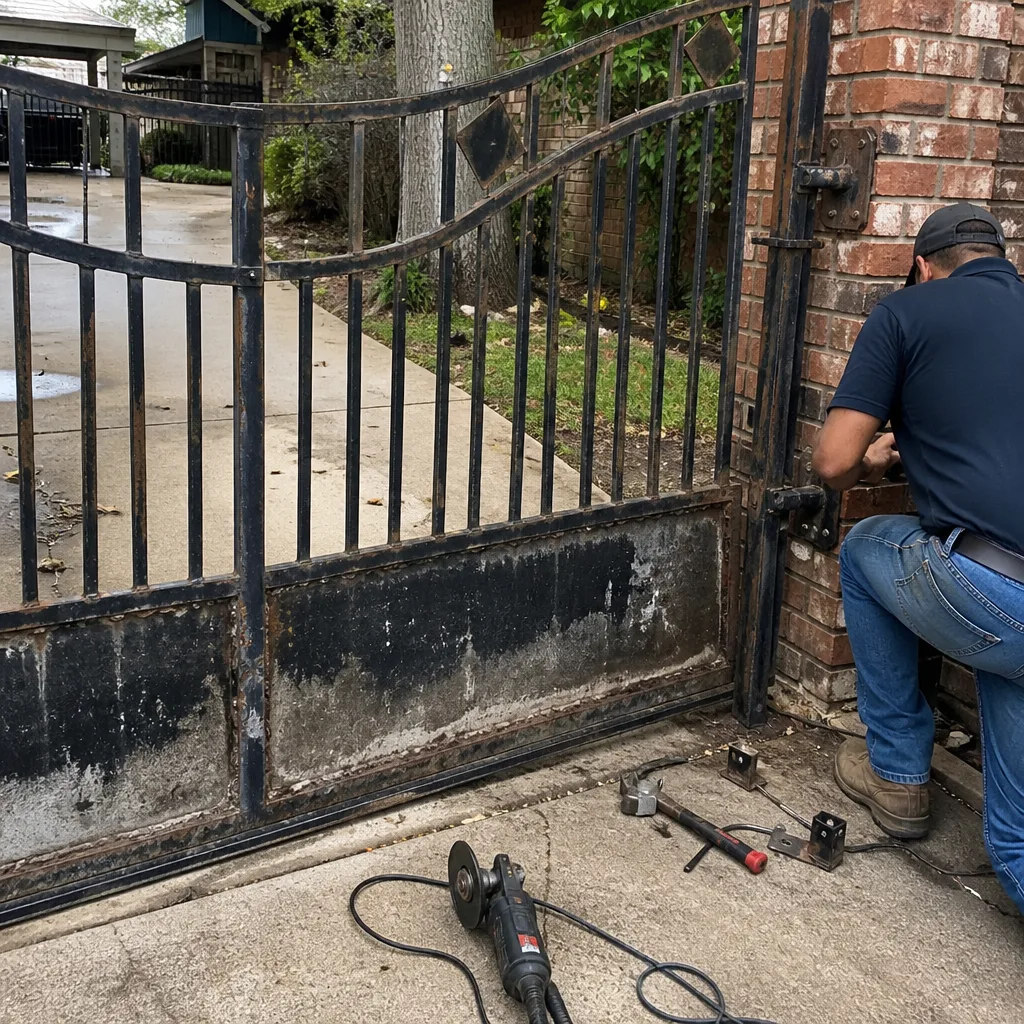 Before
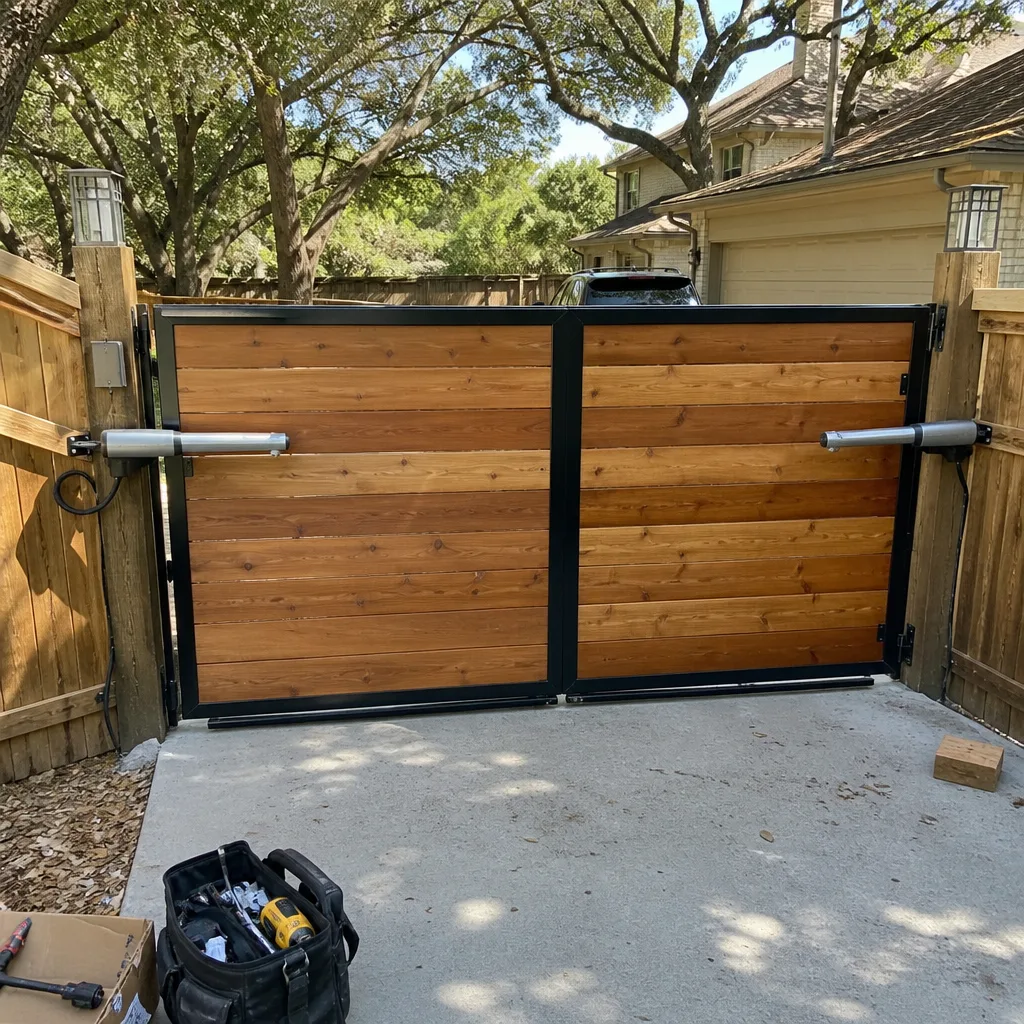 After
After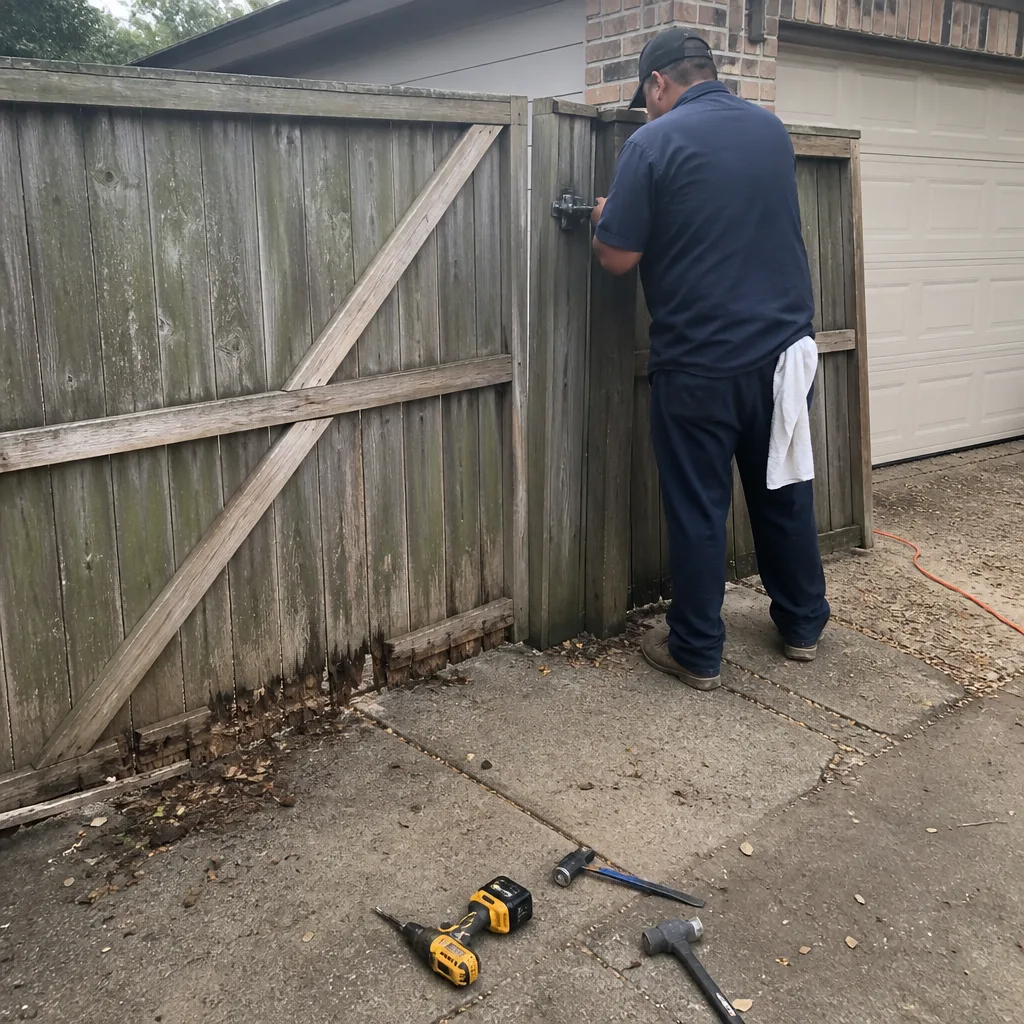 Before
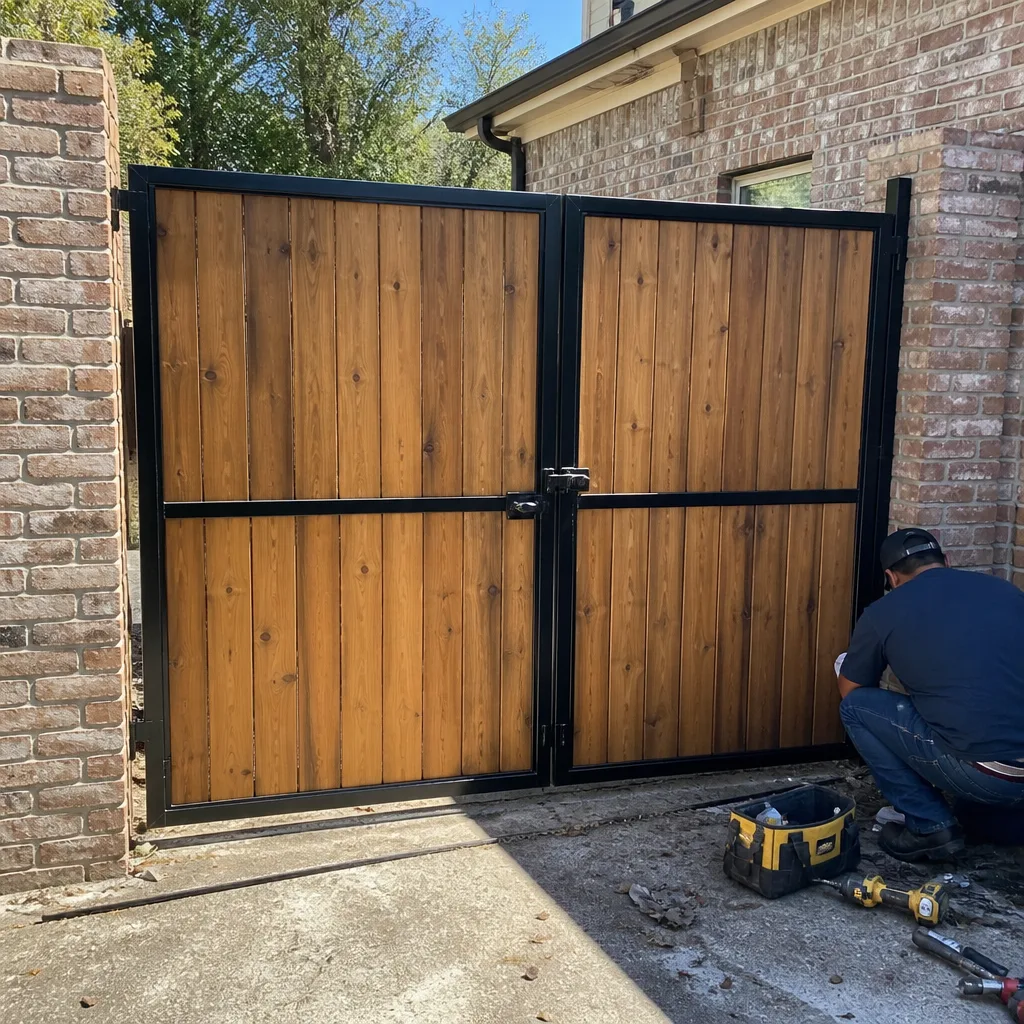 After
After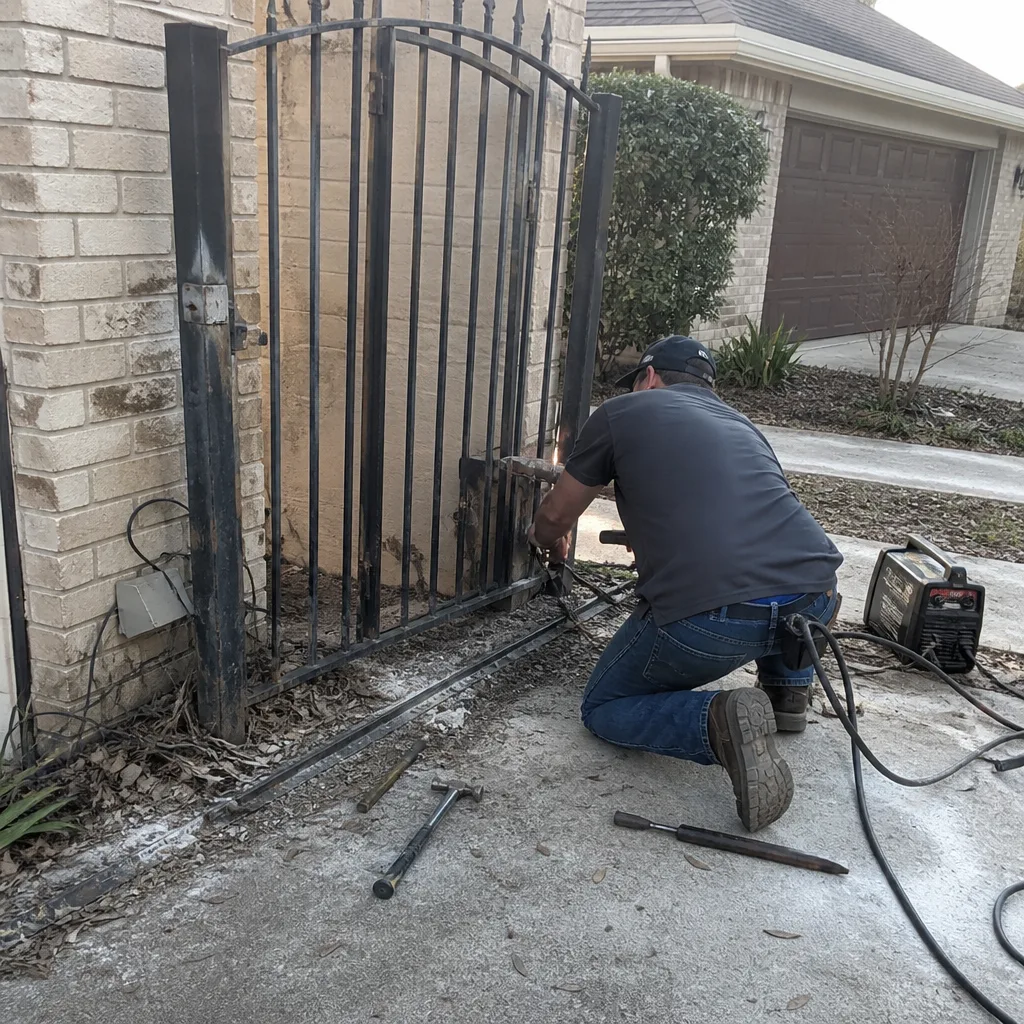 Before
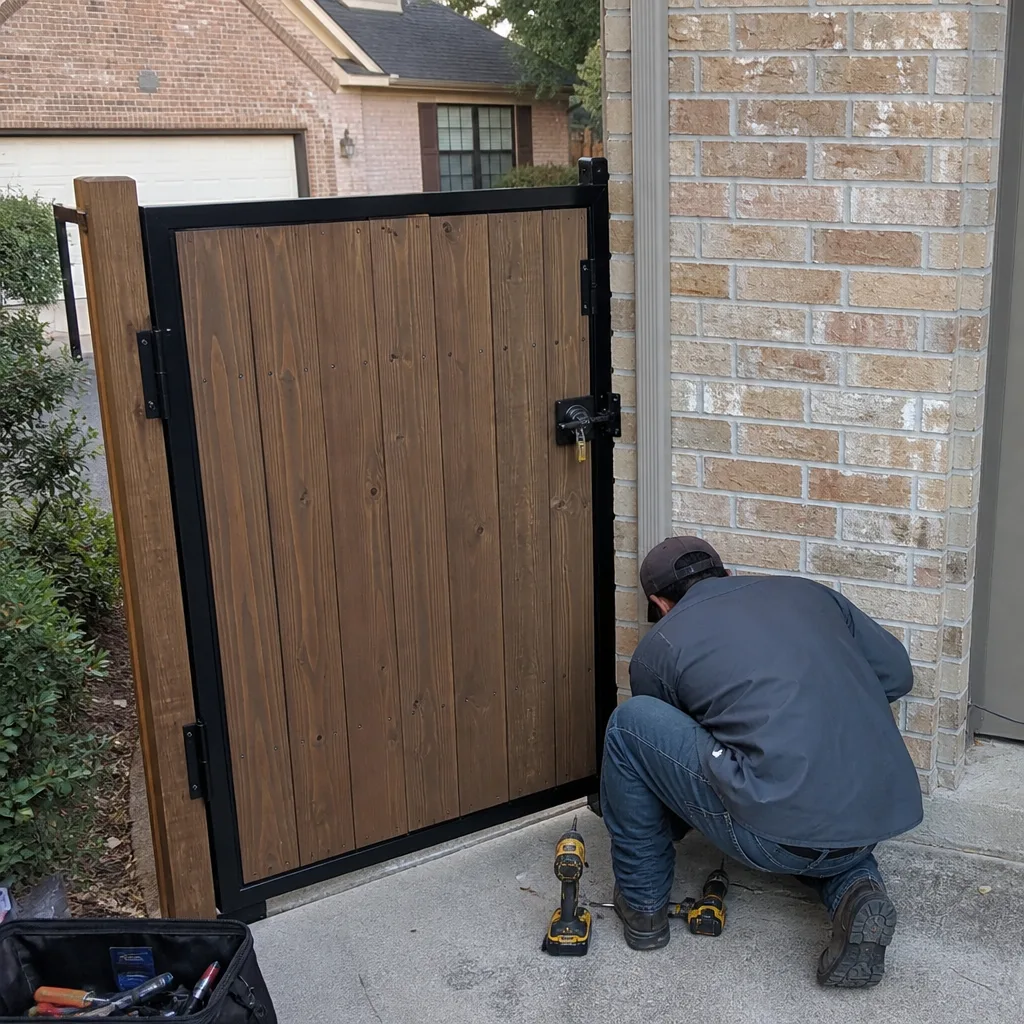 After
After