
Last updated October 16, 2026
 Wrought iron
 Wood & steel frame
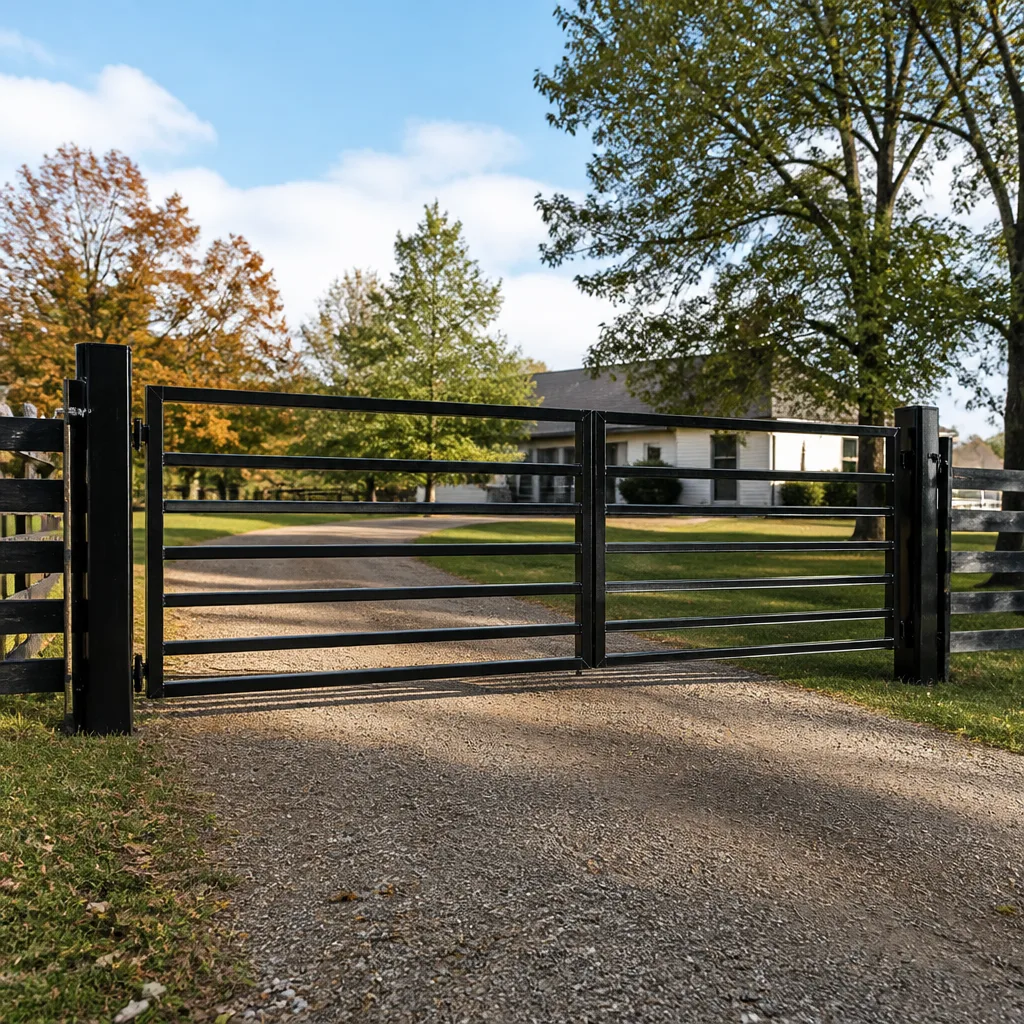 Farm & ranch
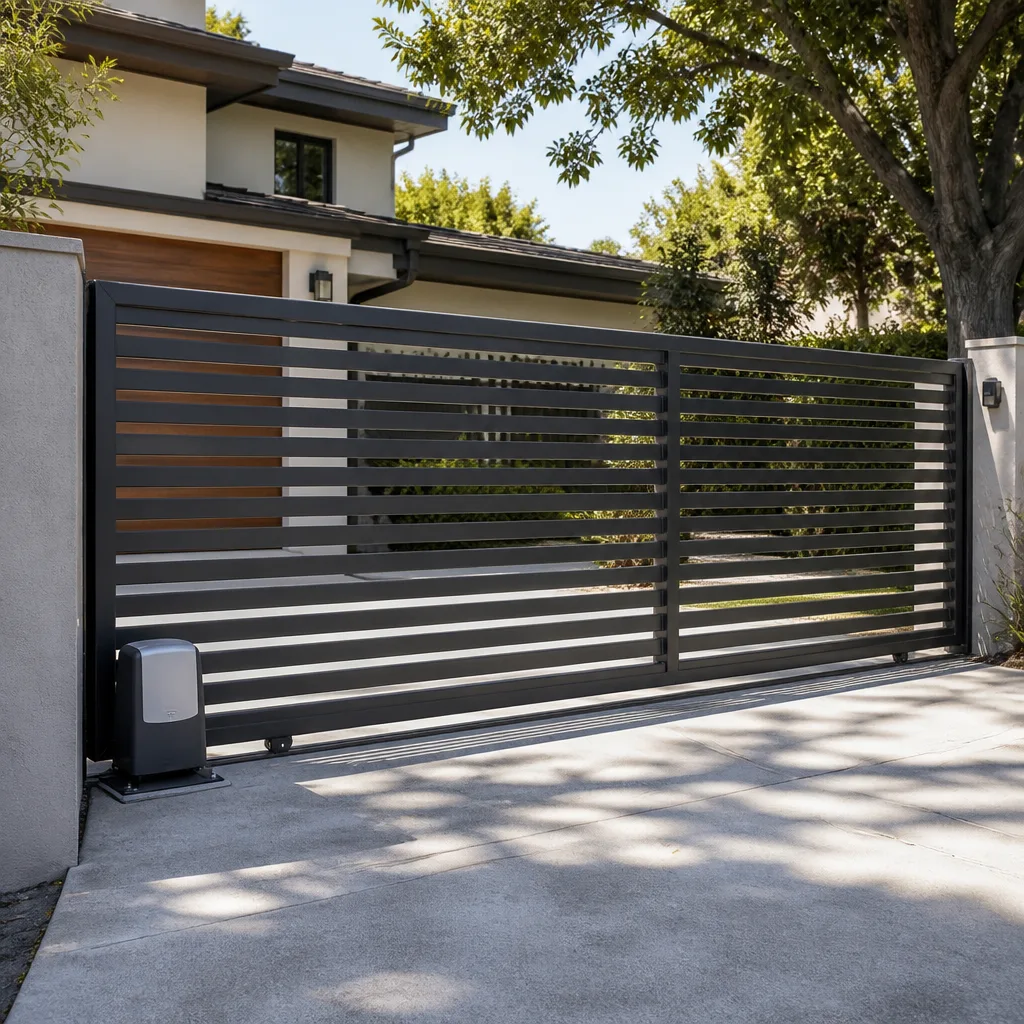 Sliding driveway gates
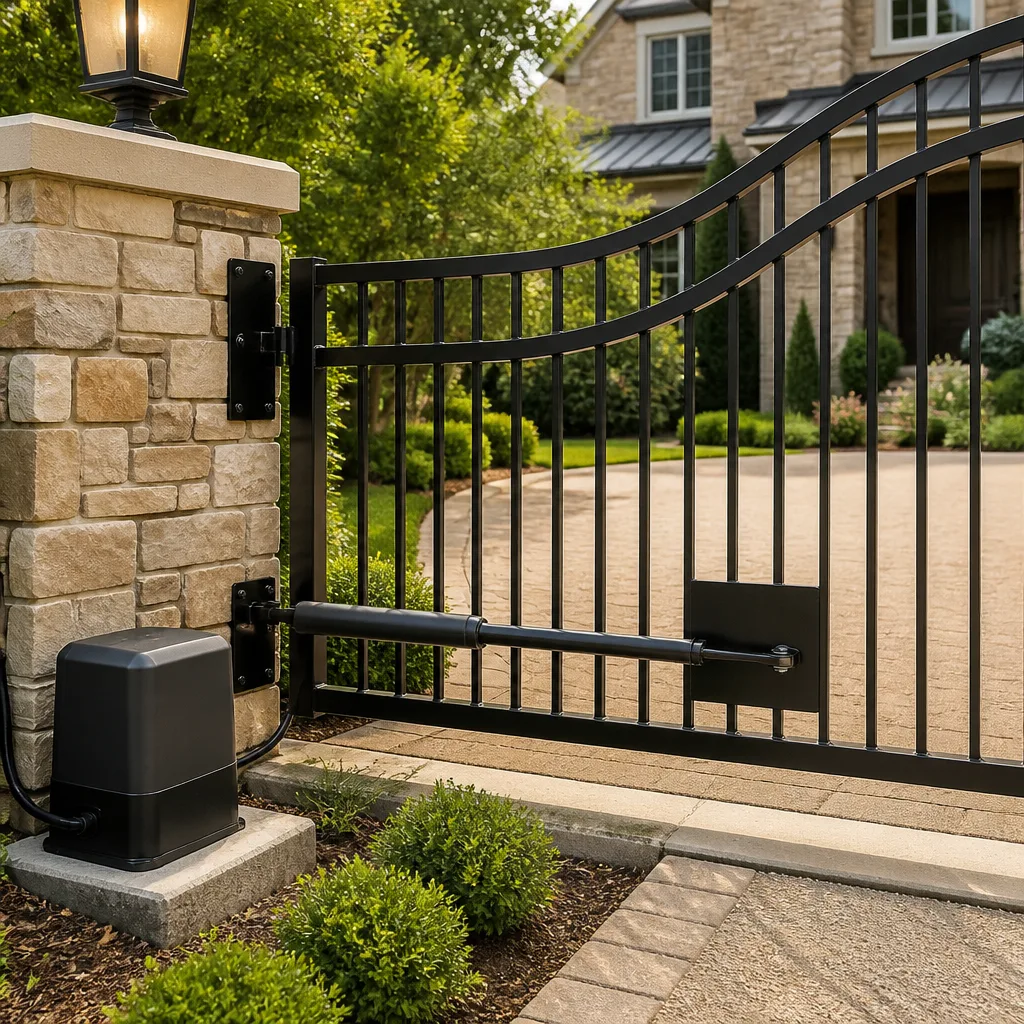 LiftMaster operators
Free on-site gate assessment - hinges, posts, and your LiftMaster or Nice gate operator checked before anything is quoted
The assessment is free and the quote is the invoice.
Get your free estimateGate Repair Maintenance Checklist for Houston Homeowners
Most gate operators in Houston fail before their rated lifespan not because the motor wore out, but because a $3 nylon roller cracked from UV exposure and put lateral load on the motor shaft for six months until the gearbox gave out. That is the Houston pattern in one sentence: small, cheap parts degrade under conditions this city throws at them harder than almost anywhere else, and the expensive components pay the price. This guide is a task-by-task maintenance schedule built for Houston specifically, not a generic checklist you could hand a homeowner in Denver or Phoenix, and for more guides & resources on gate care, see our blog. By the time you finish reading, you will know exactly what to check monthly, quarterly, and annually, what to lubricate and what to leave alone, and when to pick up the phone instead of the toolbox.
Quick Answer
A Houston gate maintenance checklist has three tiers: monthly visual checks of rollers, hinges, and photo-eyes; quarterly cleaning and lubrication with a heat-rated dry lubricant; and annual tests of the battery backup, limit switches, and ground-contact welds before hurricane outage season. The Houston-specific stressors are clay soil movement, salt air from the Gulf, and 90-percent summer humidity, which attack hinge bolts, welds, and photo-eye alignment in that order. Homeowners who follow this calendar catch the $3 failures before they become $900 motor replacements, though some issues still call for professional Gate Repair services.
Styles & brands we work with
Table of Contents
- Why Houston Is Different: The Three Stressors
- The Monthly Checklist: Ten Minutes, No Tools
- The Quarterly Checklist: Cleaning and Lubrication
- The Annual Checklist: Before Outage Season
- Battery Backup Testing for Houston’s Summer Load
- Signs a Maintenance Task Has Moved Into Technician Territory
- Common Mistakes to Avoid
- When to Call a Professional
Why Houston Is Different: The Three Stressors
Houston does not wear gates out the way most cities do. A gate in Phoenix fights dry heat and dust. A gate in Denver fights freeze-thaw cycles. A gate in Houston fights three things at once, and they compound each other.
First is clay soil. Much of Houston sits on expansive clay that swells when wet and shrinks when dry. A gate post set in that soil does not stay perfectly plumb year-round. It shifts, sometimes by fractions of an inch, sometimes by more. That movement transfers directly to the gate frame, the hinges, and the latch alignment. In neighborhoods like Meyerland and Spring Branch, where the clay is particularly reactive, we see hinge bolts working loose on gates that were installed correctly and checked six months prior. The fix is not a stronger post. It is a maintenance habit of checking hinge bolts and latch alignment on a schedule, before the shift gets big enough to bind the gate.
Second is salt air. Houston is close enough to the Gulf that the air carries salt, especially in neighborhoods east of I-45 and south of the Loop. Salt accelerates corrosion on zinc-plated hardware, gate frames, and any exposed steel. A hinge that would last fifteen years in Dallas might show rust bloom in five years in Clear Lake or Pasadena. That corrosion does not just look bad. It increases friction at pivot points, which makes the operator work harder, which shortens motor life.
Third is humidity. Houston averages over 70 percent relative humidity year-round, and summer days run 90 percent or higher. That means condensation forms on metal surfaces that never fully dry. Electronics corrode. Grease attracts dust, cakes, and turns into grinding paste. Lubricants that work fine in a dry climate gum up above 95°F. Every maintenance recommendation in this guide accounts for those three forces. A generic checklist does not, because a generic checklist was not written for Houston.
For the full picture on what breaks and what it costs to fix, see our Gate Repair in Houston page.
The Monthly Checklist: Ten Minutes, No Tools
The monthly pass is about catching the first sign of a problem before it becomes a repair bill. It takes ten minutes and requires no tools. If you do nothing else on this page, do this once a month for the life of the gate.
- Walk the gate through a full open-and-close cycle. Stand where you can see the gate and the operator. Watch for hesitations, jerks, speed changes, or a pause before the gate starts moving. A healthy gate leaves the closed position immediately and travels smoothly.
- Listen. Put your phone away and listen to the cycle. A healthy operator makes a steady hum. A change in pitch, a grinding noise, a click that was not there before, or a rattle at the hinge side all mean something. Write down what you heard and when. That note helps a technician later.
- Look at the rollers. Rolling gates run on steel or nylon rollers in a track. Look for cracks in nylon rollers, flat spots, or missing roller covers. In Houston’s sun, nylon degrades faster than the manufacturer’s rating suggests. A cracked roller is a $3 part that can destroy a motor. Replace it the week you see it.
- Check hinge bolts. On swing gates, put a hand on each hinge and try to wiggle the gate leaf. Movement at the hinge means a bolt is backing out or the post is shifting. Tighten loose bolts with a wrench, but if the post itself flexes, that is a soil movement problem, not a hardware problem.
- Check photo-eye alignment. The photo-eyes are the small sensors near the ground on either side of the gate opening. In Houston’s clay soil, the posts they mount to can shift enough to knock the beam out of line. If the gate reverses for no reason or refuses to close, misaligned photo-eyes are the first thing to check. Look for the small indicator light on each eye. Most brands show a solid light when aligned and a blinking light when not.
- Clear debris from the track and gate path. Houston storms drop branches, leaves, and sediment. Anything in the track or the swing path forces the operator to push through resistance. Remove it. Check for mud buildup in the bottom track especially after heavy rain.
This monthly pass is a homeowner task. It is not repair work. It is watching and listening, and it catches most failures early enough to keep them cheap.
The Quarterly Checklist: Cleaning and Lubrication
Four times a year, add cleaning and lubrication to the monthly pass. This is the maintenance that prevents wear, and it is where Houston homeowners most often go wrong by using the wrong product.
What to Clean
- The track on a rolling gate. Wipe or brush out grit, leaves, and dried mud. Pay attention to the bottom track, which collects everything that washes off the driveway.
- The operator housing. Wipe the outside so heat can dissipate. An operator covered in dust and grime runs hotter in Houston’s summer, and heat is the enemy of circuit boards and capacitors.
- The photo-eyes. Clean the lenses with a dry or slightly damp cloth. Condensation and salt film cloud lenses over time and cause false reversal signals.
- The hinge pins. Wipe old lubricant and grime off before applying anything new. Lubricant over dirt grinds metal faster than no lubricant at all.
What to Lubricate, and With What
Houston’s heat range changes the lubrication conversation. A grease that works in a cool climate can separate and gum up when the gate sits in 95°F heat for weeks. For gate hinges, rollers, and latch hardware, use a dry-film lubricant or a silicone spray rated for high temperatures. Apply it sparingly. A heavy coating attracts dust and in Houston’s humidity becomes a grinding paste inside the hinge barrel.
- Hinge pins: A light silicone spray, wiped clean after application. Do not use axle grease.
- Roller bearings: A dry graphite or silicone lubricant. If the roller is sealed, do not spray anything. Sealed rollers are replaced, not lubricated.
- Latch and lock mechanisms: A short burst of dry graphite. Do not use WD-40 here. It flushes out the film and leaves the mechanism dry.
- Operator chain or belt drive: Check the tension. If the manufacturer specifies a chain lubricant, use it. If not, leave the chain dry. Over-lubricating a chain inside a housing in Houston’s humidity turns it into a dirt magnet.
The rule for Houston: less lubricant, applied more often, with a product that does not gum in heat. For swing gate operators like the Linear and Viking models common in Houston, the articulating arm should move freely with no grind. If it does not, do not force it. That is a technician call. For more on how operators work and what fails, see our Gate Motor Repair in Houston page.
The Annual Checklist: Before Outage Season
Houston’s outage season runs from June through November, peaking with hurricane threats from August to October. The annual maintenance pass should happen in April or May, before the heat and the storms arrive together. This is the pass where you test systems under load, not just inspect them.
- Test the manual release. Every automatic gate has a release mechanism that lets you open it by hand when the power is out. Pull the release and hand-cycle the gate through its full travel. It should move steadily with no binding. If the gate is hard to move by hand, the operator has been fighting that resistance every cycle. Find the bind and fix it before it kills the motor.
- Check the limit switches. Limit switches tell the operator where the gate stops in the open and closed positions. If the gate slams into the post, stops short, or reverses with a shudder at the end of travel, the limits need adjusting. This is a two-person job on most systems and a technician task on operators like DoorKing and Ghost Controls where the switch settings are inside the housing.
- Inspect ground-contact welds. Where the gate frame meets the ground, or where a bottom bar attaches to the vertical frame, look for rust bloom, cracked paint, or separation. On swing gates, inspect the hinge-side frame welds. On rolling gates, inspect the pickup points where the operator connects. A cracked weld in a humid, salty environment fails fast once water gets inside it. If you see rust, have it cleaned and sealed. If you see a crack, stop using the gate and call.
- Check the battery backup, if equipped. Most modern operators can be fitted with a battery backup that opens the gate during a power outage. Test it under the specific load Houston summers create. The operator draws more current when the gate is hot, the hinges are tight, and the gate is full of wind-driven rain. Testing in April gives you three months to replace a weak battery before a hurricane enters the Gulf. The procedure: disconnect incoming power at the breaker (not at the battery), then cycle the gate on battery only. It should open, close, and open again without slowing. If the battery drops noticeably on the second cycle, replace it. See the battery section below for more detail.
- Inspect and reseal the operator housing gasket. The gasket keeps humidity and driving rain out of the electronics. Houston’s humidity works on gaskets year-round. If the gasket is cracked, compressed, or missing, condensation forms on the board and the board fails. This is also the time to check for ants, wasps, or gecko droppings inside the housing. We have opened operators in Houston that were half full of fire ant nests. Ants love the dry, warm interior of a gate operator and their presence shorts boards.
For a full gate replacement or a new installation, the schedule shifts. See our Gate Installation in Houston page for what a new gate setup in this city entails.
Battery Backup Testing for Houston’s Summer Load
A gate without a battery backup becomes a manual gate the moment the power drops. During a Houston outage, that means opening the gate by hand in the rain, at night, with a generator running somewhere up the street. A battery backup fixes that, but only if the battery holds a charge under real load.
Houston summer heat is the enemy of lead-acid and sealed AGM batteries alike. Battery life ratings assume a 77°F operating temperature. An operator housing in full sun on a 97°F Houston afternoon can sit at 120°F or higher inside. Heat accelerates the chemical degradation inside the battery. A battery rated for five years might be marginal after three in Houston. That is why the annual test matters, and why it should happen before the season that actually demands the backup.
Here is the test procedure, step by step:
- Run the gate through three full open-close cycles on normal power. This warms the system to operating temperature.
- Turn off the breaker that feeds the operator. Do not unplug the battery. Unplugging the battery defeats the test.
- Cycle the gate on battery power alone. Watch the gate speed and listen for a slow or labored cycle. A healthy battery cycles the gate with no noticeable slowdown.
- Beyond the battery, check the charger output with a multimeter. The charger should read between 13.2 and 13.8 volts DC on most gate operator battery systems. A charger that reads under 13 volts will never fully charge the battery. A charger that reads over 14.5 volts is cooking the battery and shortening its life.
- If the gate slows on the second battery cycle, or if the battery is more than three years old, replace it now, not in August.
Brands like Viking and Linear sell factory battery backup kits for their operators. Ghost Controls offers a battery backup option on many of its residential models. Match the battery to the operator. A generic battery from an auto parts store is not the same form factor and may not charge correctly on the operator’s charger circuit. When we replace a battery on a Houston gate, we note the battery age on the invoice so the homeowner knows when the clock started. That written record is part of the maintenance history, and it gets checked on the next annual pass.
Signs a Maintenance Task Has Moved Into Technician Territory
There is a clear line between homeowner maintenance and technician work. Homeowners check, clean, lubricate sparingly, and test. Technicians adjust, replace, wire, and weld. The line is crossed when a task requires a tool you do not own, a measurement you cannot take, or a live electrical connection.
Here is where the line sits for each area of the gate:
- Tightening a hinge bolt: homeowner task. A post that flexes when the gate moves: technician task. Flexing posts in Houston clay usually require resetting or adding ballast to the footing, and getting that wrong means the gate binds again next season.
- Cleaning photo-eye lenses: homeowner task. Chasing a false reversal after cleaning: technician task. A photo-eye that is clean and still misbehaving usually has a wiring problem or a failing sensor, and both require a meter to diagnose.
- Pulling the manual release to hand-cycle the gate: homeowner task. A gate that binds in manual mode: technician task. Finding the bind requires measuring the frame and hinge alignment, not guessing.
- Checking for rust bloom: homeowner task. Repairing a cracked weld or a section of frame with rust through the metal: technician task. A gate frame is a loaded structure. Grinding and rewelding a load-bearing joint without knowing the steel schedule can fail catastrophically.
- Cycling the gate on battery backup: homeowner task. Diagnosing a charger that will not hold voltage, or a board that will not switch to battery: technician task. Gate operator boards carry 120V input and 12-24V control circuits in the same housing. Opening that housing and probing live terminals is not a homeowner job.
The Garrison Code, the operating standard behind this guide and the way our crews work, draws the same line: if a task requires a meter, a welder, or opening a live panel, it is dispatched to a trained technician, not included in a homeowner handout. Knowing where to stop is part of maintaining the gate. The gate is safer with a boundary respected than with a housing opened by someone who does this twice a year.
Common Mistakes to Avoid
- Using WD-40 on hinges and rollers. WD-40 is a water displacer, not a lasting lubricant. It flushes out the grease or dry film, works for a week, then leaves the joint drier than before. In Houston’s humidity, a freshly WD-40’d hinge starts rusting faster than one left alone.
- Greasing the gate track. Rolling gate tracks run dry or with a dry-film product. Grease in the track collects Houston’s dust and humidity into a paste that increases rolling resistance. If a rolling gate is sticky, clean the track first and replace the rollers if they are shot. Grease is not the fix.
- Ignoring a gate that is slightly out of level. A gate that is a quarter-inch low on the latch side will only get lower in clay soil. The fix when it is a quarter-inch is a hinge adjustment. The fix when it is two inches is a post reset. The bill difference is the price of ignoring it.
- Waiting until hurricane season to test the battery backup. If the battery fails the test in June, you are replacing it during the exact weeks every homeowner in Houston wants the same battery. Test in April. Replace in May. Be ready in August.
- Lubricating sealed rollers. Sealed rollers are sealed for a reason. Drilling, prying, or spraying into a sealed roller bearing destroys the seal and lets Houston humidity inside. A sealed roller is replaced when it fails. It is never serviced.
- Adjusting limit switches without the manual. DoorKing, Ghost Controls, BFT, and Linear each set limits differently. Guessing the procedure can send a gate slamming into the post or set the gate to stop before it latches. That turns a maintenance task into a repair call that costs more than the adjustment ever would have.
- Running a gate with a cracked roller for “just one more month.” That one more month is exactly when the roller jams and the motor burns a gear. The classic $3 part, $900 repair pattern in Houston starts with a homeowner who saw the crack and decided to wait.
When to Call a Professional
Call a technician when the gate binds in manual mode, when a post flexes, when limit adjustments are needed on a system you do not know, when a weld is cracked, when the operator trips a breaker, or when the battery backup will not hold a cycle. These are repair conditions, not maintenance conditions, and attempting them without the right tools and training makes the repair worse. Carver Gate Repair Houston offers free estimates in Houston, and every estimate comes as a written price before any work starts. Call (361) 320-7104 and a live person answers, every day of the year.
See the difference
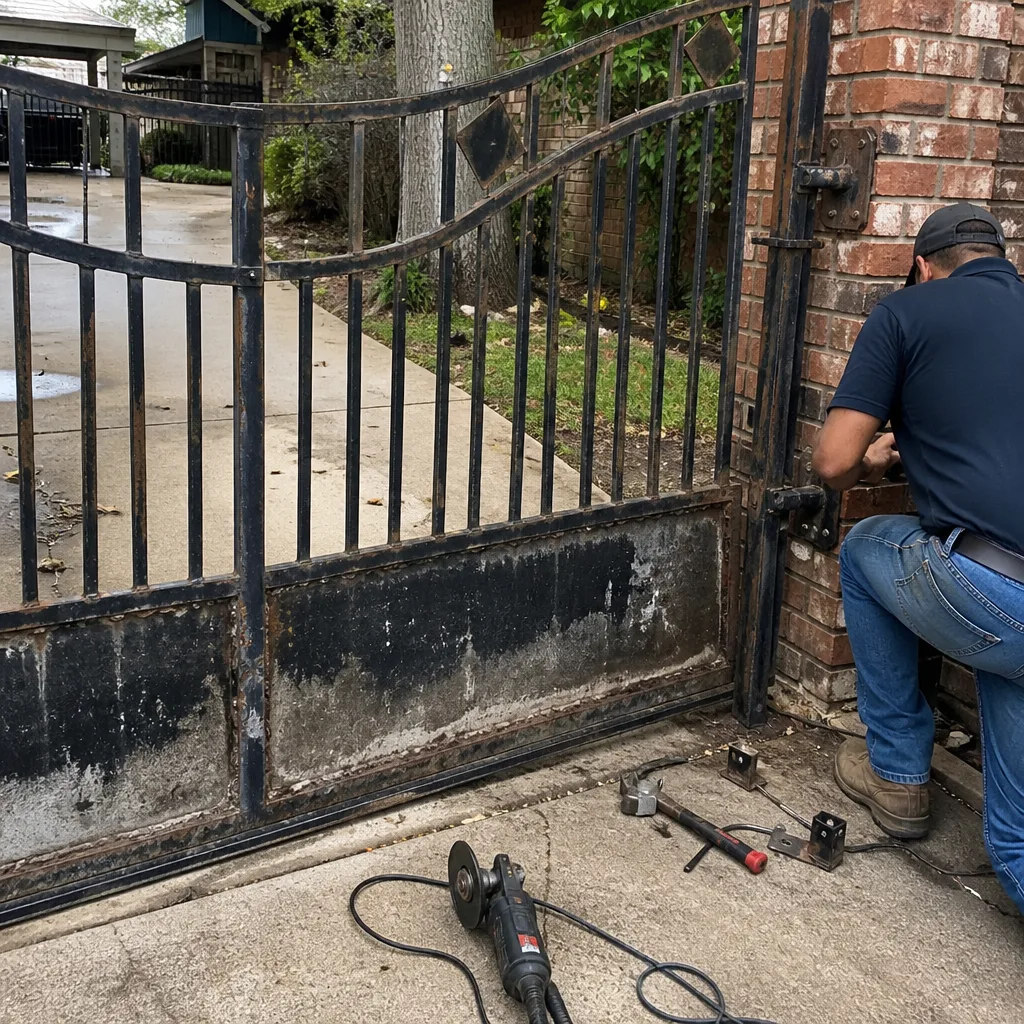 Before
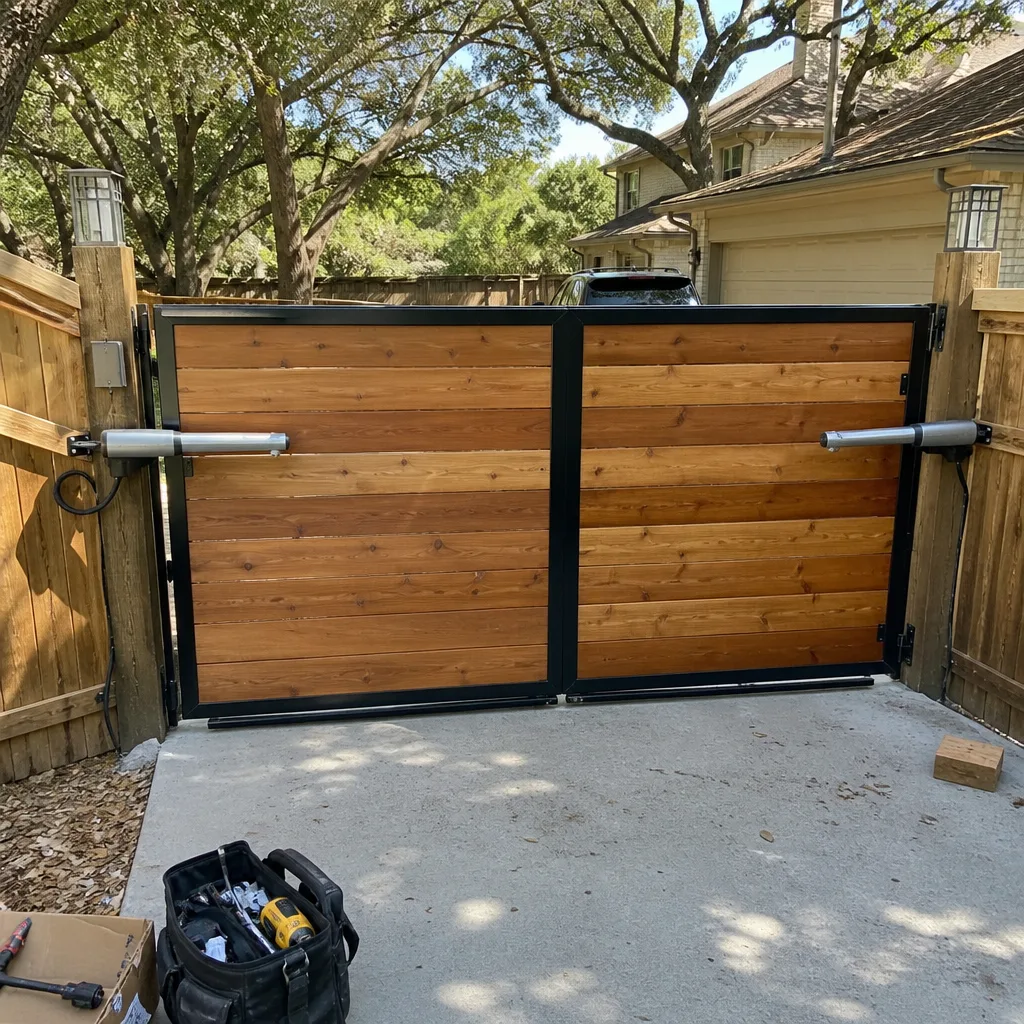 After
After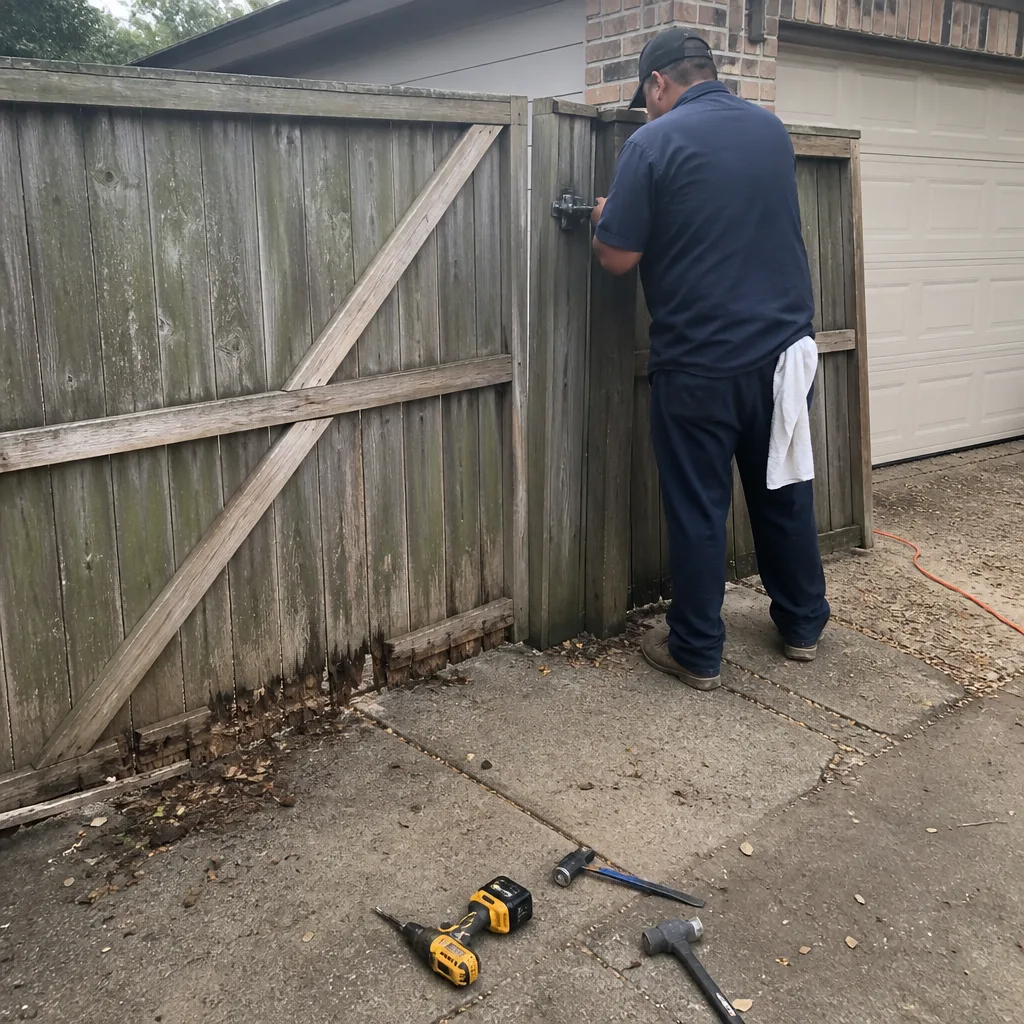 Before
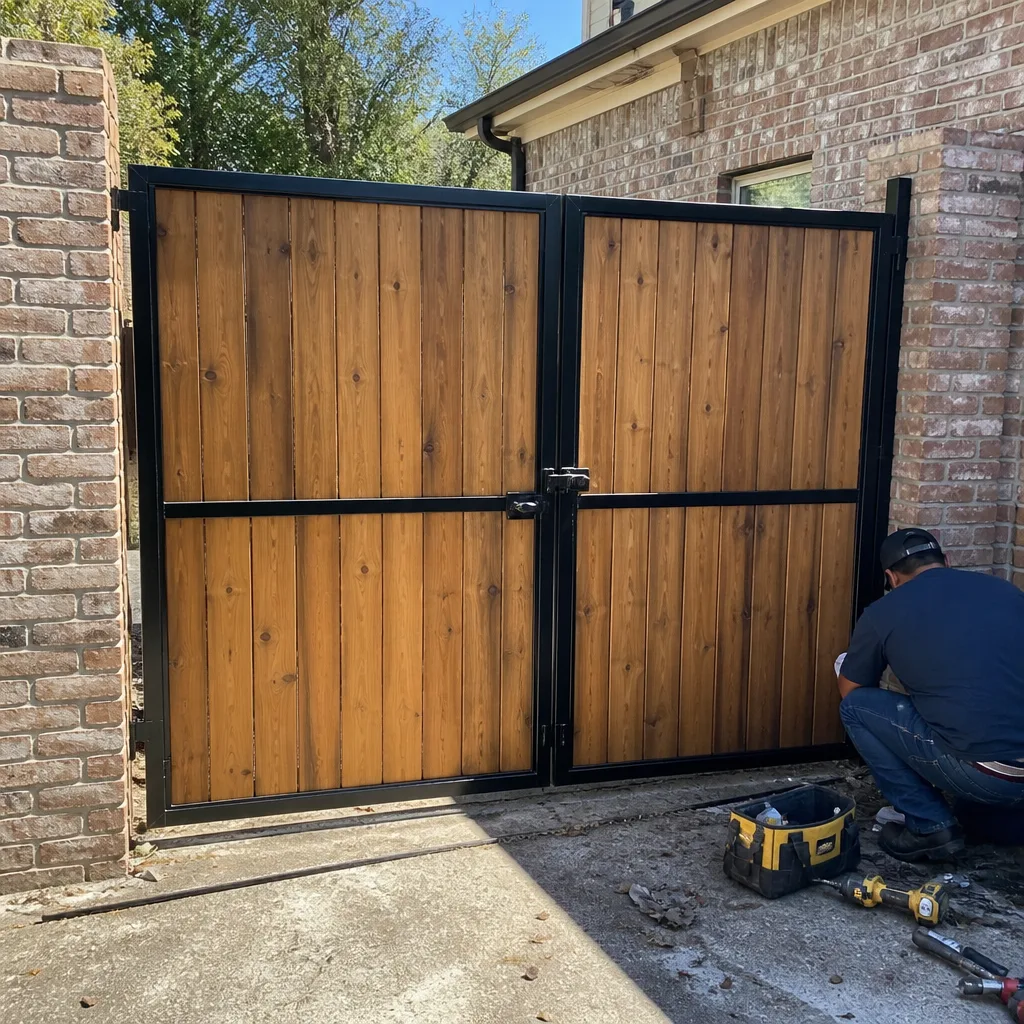 After
After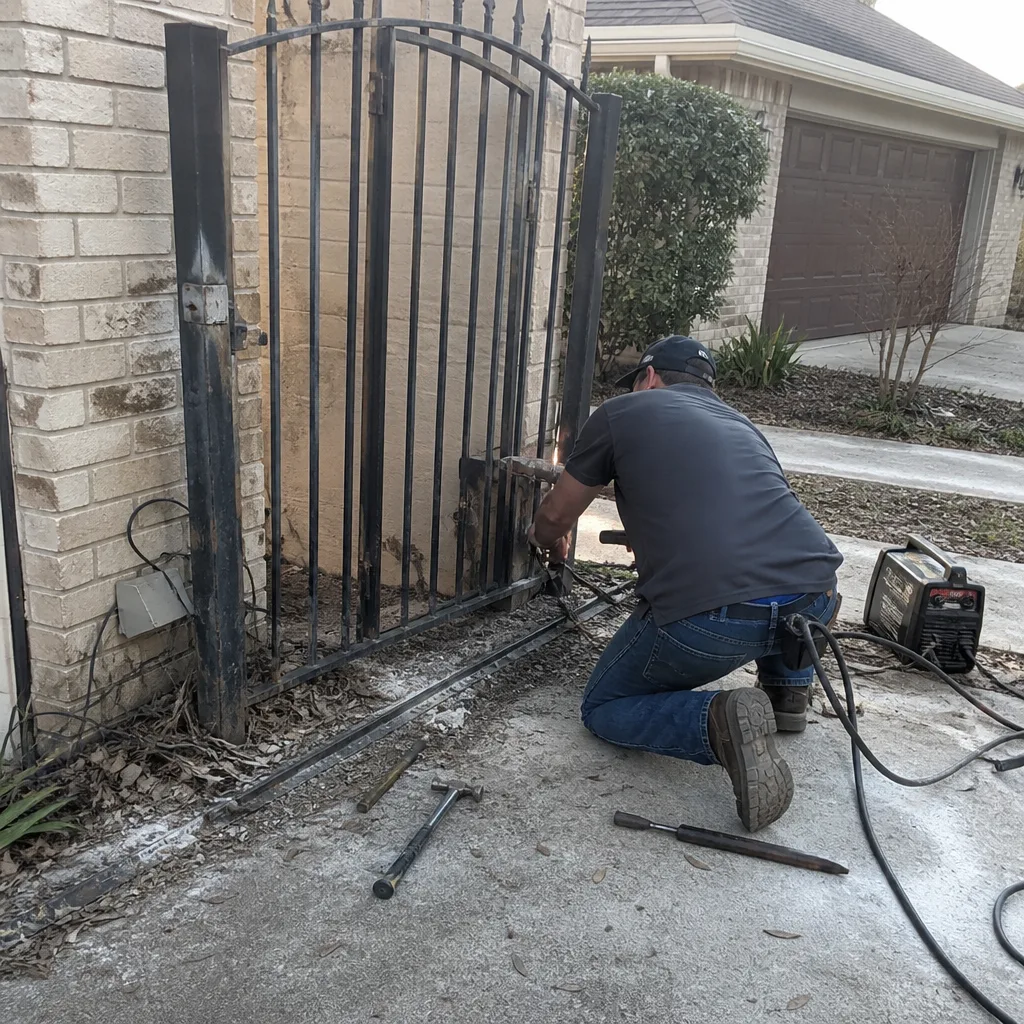 Before
 After
AfterFrequently Asked Questions
Every three months, using a dry-film or silicone lubricant rated for high heat, not a grease. Houston’s 90-percent summer humidity and 95°F-plus heat turns heavy grease into a dirt-trapping paste that accelerates wear. Apply sparingly and wipe off the excess.
In Houston, a gate that binds after rain usually points to expansive clay soil shifting the posts or washout sediment building up in the bottom track. Check the track for mud first, then put a hand on each post and watch for flex. A gate that binds only when wet is telling you the posts are moving with the soil, and that needs a technician to reset.
Plan on three years in Houston, not the five years a manufacturer’s rating suggests. Heat inside the operator housing in a Houston summer can shorten battery life by a third. Test the battery each April by running the gate on battery power alone, and replace it the moment it slows on a second cycle.
No. Pressure washers force water past seals, into hinge barrels, and through the operator housing gasket. Houston’s humidity already puts enough water where it does not belong. Use a garden hose with a light spray, a bucket of soapy water, and a soft brush instead.
Running a gate with disabled photo-eyes means the gate will close on a car, a child, or a pet without reversing. Do not do it. If the photo-eyes are clean and still not aligned, call a technician. This is a safety system, not a convenience feature.
A homeowner can do the monthly and quarterly maintenance with about $20 in supplies. A professional annual service visit runs $125 to $250 in Houston, which covers lubrication, limit check, battery test, weld inspection, and a written report. Repairs found during an annual visit are quoted separately, in writing, before work starts. Call Carver Gate Repair Houston at (361) 320-7104 for a free estimate on a maintenance visit or any repair, and review our Gate Repair Warning Signs: A Houston Homeowner’s Reference Guide to spot trouble early.
The Bottom Line
Houston gates fail the same way every time: a small part degrades under the triple load of clay soil, salt air, and humidity, and the damage travels up the system until the motor pays for it. The fix is not a better operator. It is a maintenance rhythm that catches the small failure while it is still a $3 part. Check monthly, clean and lubricate quarterly, test the battery and the welds annually in April, and call a technician the moment a task crosses the line into live wiring, limit adjustment, or structural repair. Start with the Carver Gate Repair Houston home page for the full service picture, and put the monthly pass on your calendar tonight. The gate you save is the one you watch.
Written by Lonnie Burke, Owner at Carver Gate Repair Houston, serving Houston since 2008.