
Last updated October 16, 2026
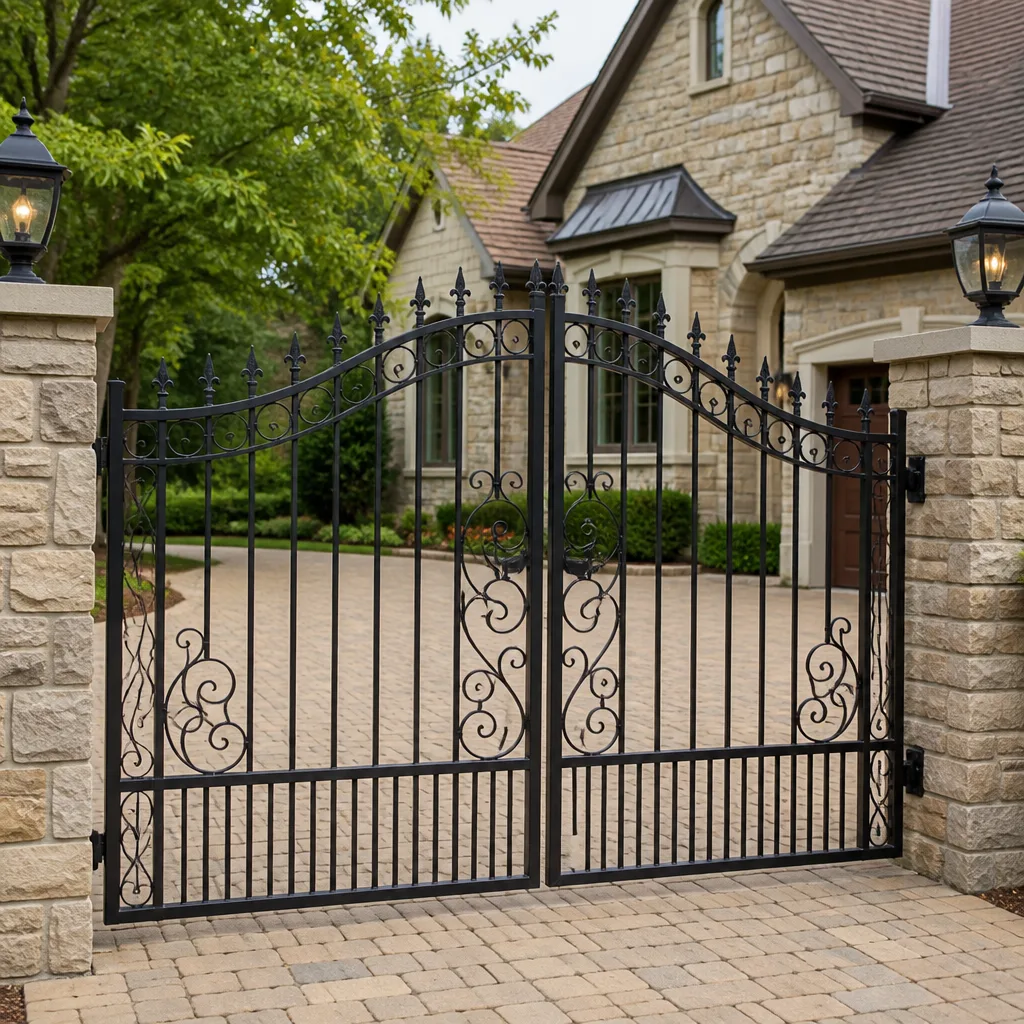 Wrought iron
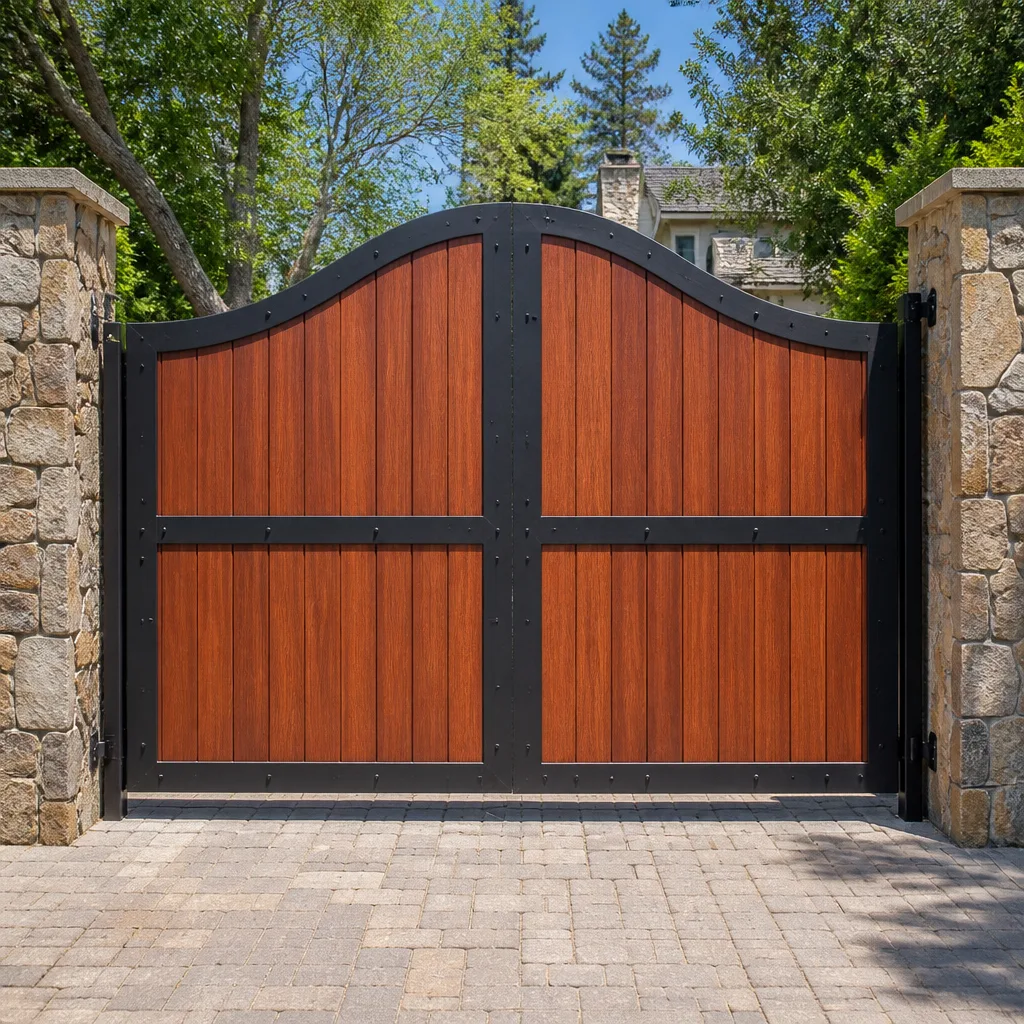 Wood & steel frame
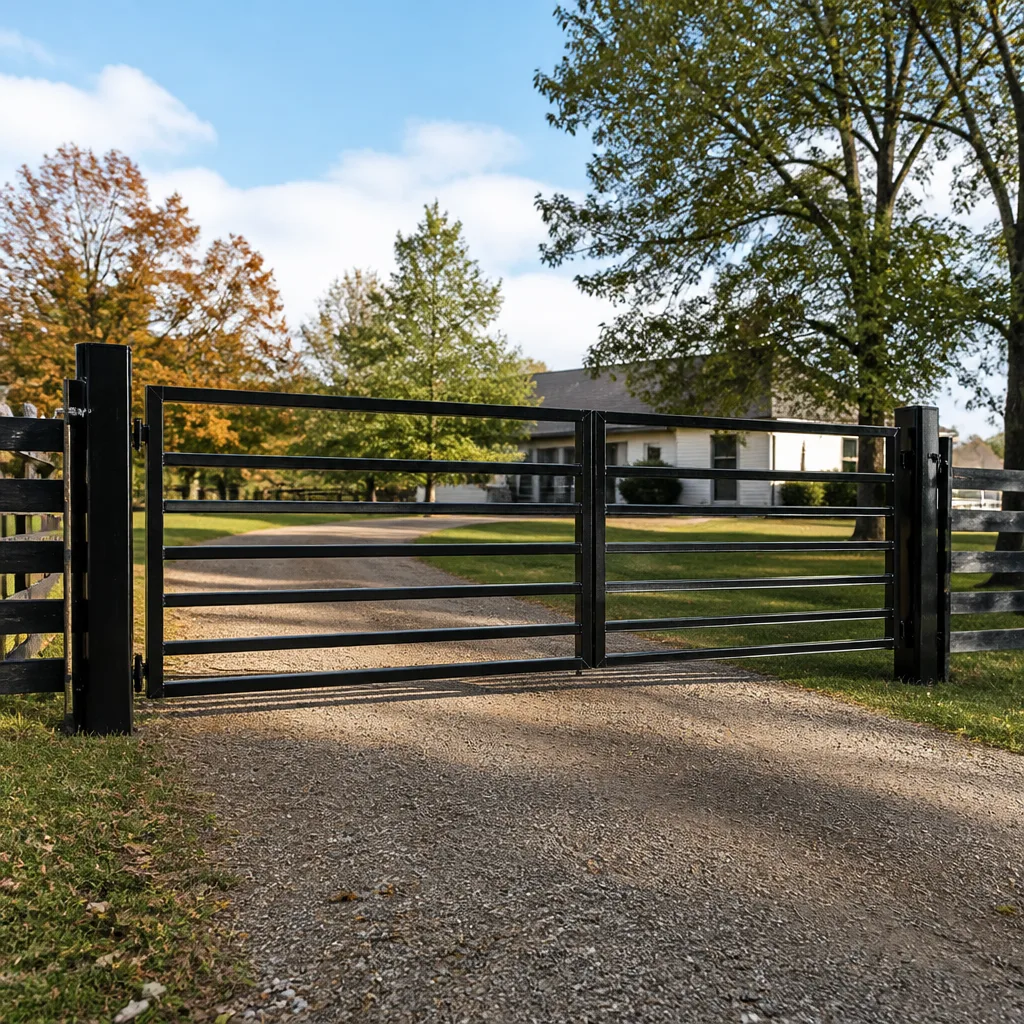 Farm & ranch
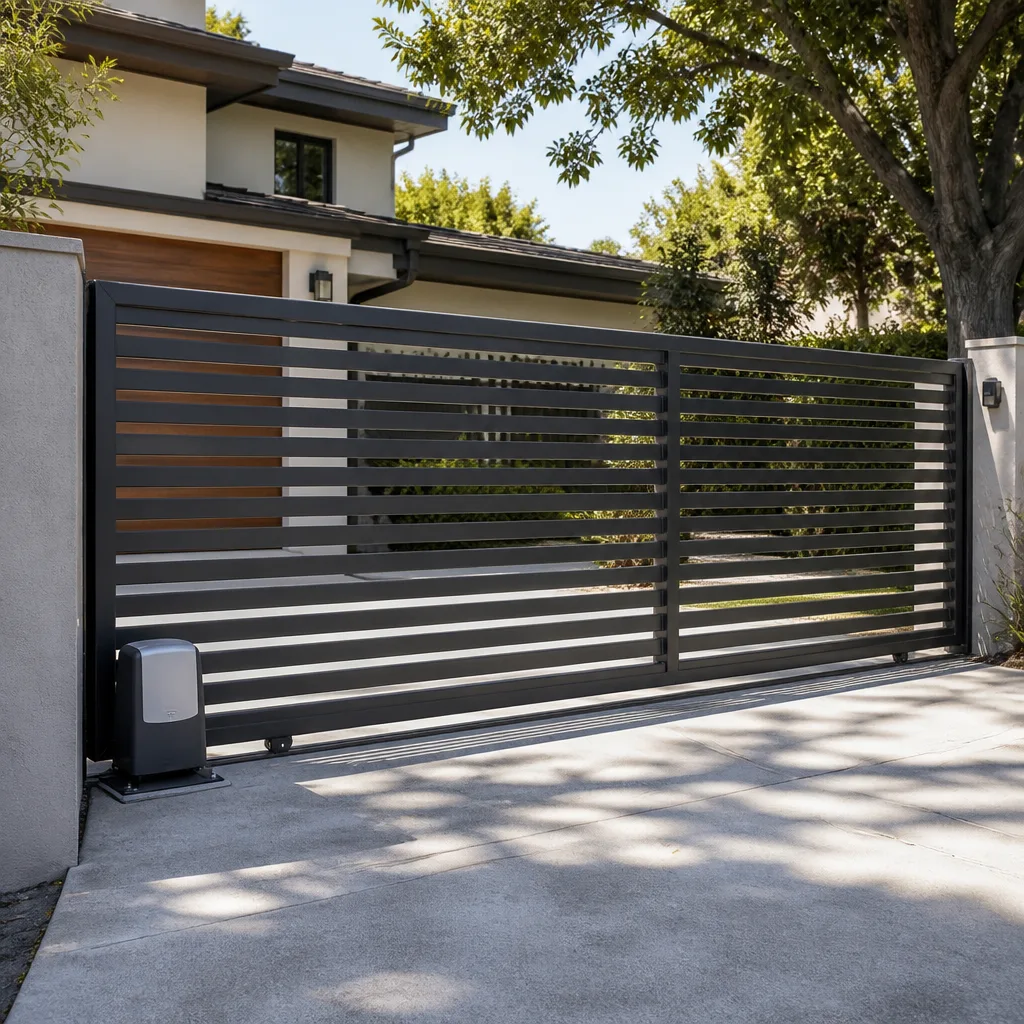 Sliding driveway gates
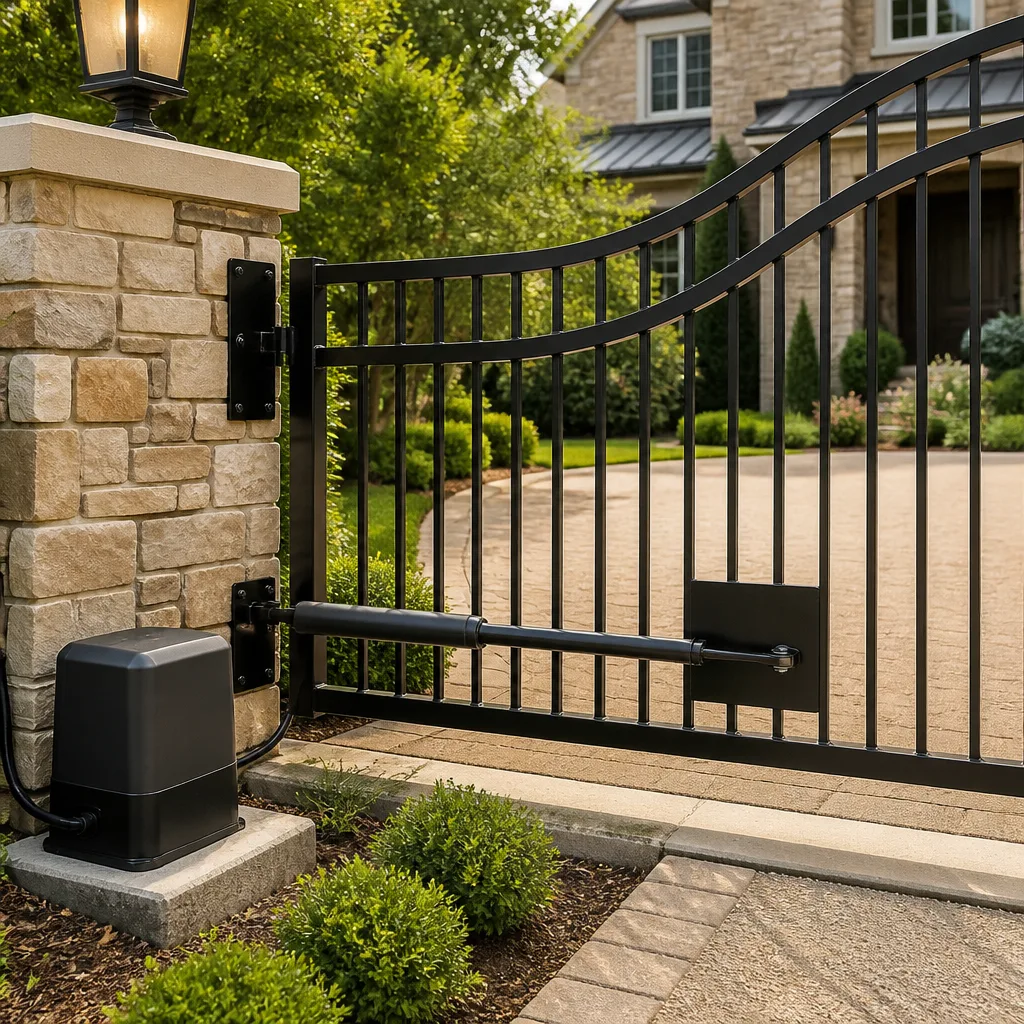 LiftMaster operators
Free on-site gate assessment - hinges, posts, and your LiftMaster or Nice gate operator checked before anything is quoted
The assessment is free and the quote is the invoice.
Get your free estimateGate Repair Warning Signs: A Houston Homeowner’s Reference Guide
A gate that hesitates for two seconds before moving is not a “quirk.” It is a motor working against a mechanical resistance it should not have, and that two-second hesitation typically becomes a no-movement failure within 60 to 90 days. This guide is written for Houston homeowners who want to catch gate problems before they strand a car in the driveway or leave a property unsecured overnight, and who may need Gate Repair services when issues arise. We’ll walk through warning signs by component, explain what each symptom points to, and give you a clear line between what you can monitor and what needs a technician now.
Styles & brands we work with
Quick Answer
The most common gate repair warning signs for Houston homeowners are hesitation before movement, grinding or metallic noise from the operator, a gate that stops mid-travel and reverses, visible rust at hinges or post bases, and sensors that fail to detect obstacles. For Seasonal Gate Repair Care for Houston: Year-Round Homeowner’s Guide, see our dedicated resource. Most of these symptoms point to a specific component: the motor, the limit switch, the control board, the hinge set, or the safety sensor. A gate that hesitates or grinds should be addressed within 48 hours because the underlying cause, usually resistance or a failing capacitor, gets more expensive the longer it runs.
Table of Contents
- Motor Warning Signs: What Each Symptom Points To
- Hinge and Post Warning Signs: What You Can See With Your Eyes
- Control Board and Sensor Failures That Look Like Motor Problems
- How Houston Soil, Humidity, and UV Create Warning Signs Manufacturer Guides Miss
- What to Monitor Yourself vs. What Needs a Technician Within 48 Hours
- Repair or Replace: Reading the Warning Signs as a Single Picture
- Common Mistakes to Avoid
- When to Call a Professional
- Frequently Asked Questions
- The Bottom Line
Motor Warning Signs: What Each Symptom Points To
Gate motors in Houston run in heat, humidity, and occasional flooding conditions that accelerate wear on capacitors and windings. We work on LiftMaster, FAAC, BFT, and Mighty Mule operators regularly, and the failure pattern is consistent across brands: the motor gives audible and visible warnings before it dies completely.
Hesitation Before Movement (The Two-Second Warning)
When you press the remote or keypad and the gate pauses before moving, the operator is fighting something. That something is almost always one of three things: a failing capacitor that can no longer deliver the starting torque, a motor drawing high amperage against a stiff hinge or wheel, or a control board delaying the start signal. In Houston, we see capacitor failures more often in summer because heat degrades the dielectric material inside the capacitor faster. The fix is usually under $300. The failure, if ignored, becomes a full motor replacement at $800 to $1,500 depending on the operator model.
Grinding or Metallic Noise From the Operator
Grinding means metal is touching metal where it should not. On a swing gate, this points to a failing gearbox inside the operator or a drive arm that has come loose from its mounting. On a slide gate, grinding usually means the drive chain has stretched, the sprocket teeth are worn, or the gate wheels are dragging on a track that has shifted. A gate motor should produce a low hum, not a grinding sound. The moment you hear metal on metal, stop using the gate and schedule a repair. Running it further turns a gear replacement into an operator replacement.
Heat Coming Off the Motor Housing
A warm motor is normal after a full open-and-close cycle. A hot motor, one you cannot keep your hand on, is not. Heat indicates the motor is drawing more current than it was designed for. The cause is mechanical resistance somewhere in the system: a dry hinge, a sagging gate leaf, a wheel that no longer rolls, or a partially seized bearing. Houston’s summer temperatures make this worse because the motor starts at 95 degrees before it even runs. A hot motor is a motor working toward thermal overload. Address the resistance and the motor cools down. Ignore the resistance and the motor burns out, sometimes within a few weeks.
Partial Travel, Then Reversal
A gate that opens halfway, stops, and reverses is hitting a false obstruction signal. This comes from either a misaligned safety sensor, a limit switch that has drifted out of adjustment, or a motor sensing overcurrent from physical drag. The gate’s logic interprets the drag as an obstacle, so it reverses to “protect” whatever it thinks is in the path. Homeowners often assume the remote is failing. It is almost never the remote. The gate is telling you something mechanical has changed.
Motor Runs But Gate Does Not Move
This is the clearest sign of a mechanical disconnect between operator and gate. On a slide gate it is often a broken chain, a sheared sprocket key, or a slipped clutch. On a swing gate it is usually a disconnected or broken articulating arm. The motor hums because it is running fine, but nothing transfers to the gate leaf. This requires a technician. Do not attempt to manually force the gate open or closed while the operator is still powered.
For a full breakdown of motor failure patterns and what repairs typically cost in Houston, see our Gate Motor Repair in Houston page.
Hinge and Post Warning Signs: What You Can See With Your Eyes
Most gate failures start at the hinge line, not the motor. A motor burns out because a hinge bound up. A control board faults because a sagging gate tripped the safety sensor repeatedly. The hinge and post are where the physical load lives, and they show damage visually before any electronics fail.
Rust Patterns That Tell a Story
Not all rust is equal. Light surface rust on a welded steel gate is cosmetic. Rust that forms a raised, flaking crust at a hinge barrel or where a post meets the concrete is structural. That pattern means water has been sitting inside the joint, and the metal is corroding from within. In Houston’s humidity, this happens faster than homeowners expect. A hinge that creaks and shows flaking rust is near the end of its service life.
Gap Changes Between Gate and Post
Stand at the latch side of a closed gate and look at the gap between the gate leaf and the post. It should be the same top to bottom. If the gap is wider at the top, the gate is sagging. The hinge bearing is wearing, the post is leaning, or the gate frame itself is deforming. As that sag increases, the latch stops aligning, the gate drags on the ground or on the track, and the motor works harder. A gate that occasionally fails to latch is usually a sagging gate, not a latch problem.
Ground Contact and Scrape Marks
A swing gate should clear the ground by 2 to 4 inches. If you see a scrape arc worn into the concrete or bare dirt where the gate sweeps, the gate is low. That means the post has moved, the hinges have worn, or the gate leaf was too heavy for the post from the start. Houston’s expansive clay soil is the hidden cause in many of these cases. Clay swells when wet and shrinks when dry, and over a decade of wet and dry seasons, a post set without a deep enough footing shifts. The gate drops. The scrape appears. The motor strains.
Post Lean and Cracking at the Base
A gate post that leans even two or three degrees changes the entire geometry of the gate. The latch misses. The hinges bind at an angle. The operator arm pushes off-axis. You can stand back from the gate and sight down the post against a straight reference like a fence line or a roofline. If the post is not plumb, it is moving. Cracks in concrete where the post enters the ground are a second confirmation. This is not a repair a homeowner should attempt. The post has to be dug out, the footing inspected, and the post reset with new concrete. In Houston’s clay soil, we recommend footings set below the active swell zone, which often means deeper than the original install.
Control Board and Sensor Failures That Look Like Motor Problems
Homeowners call us and say the motor is bad. Sometimes it is. More often, the motor is fine and the control board or a sensor is making the gate behave like the motor failed. Knowing the difference saves money and prevents replacing a good motor.
The Logic Fault: Gate Opens But Will Not Close
A gate that opens normally and then refuses to close is almost never a motor problem. The motor just proved it can run. The problem is on the logic side: a safety sensor thinks something is in the gate path, a loop detector is stuck in “vehicle present” mode, or the close limit switch is not registering. On LiftMaster and FAAC systems, a stuck loop detector is a common Houston failure because our frequent storms and shifting soil can nick or break the buried loop wire. The board then holds the gate open because it believes a car is sitting on the loop. A technician can test this in minutes with a multimeter. Before calling, wipe the photo eye lenses with a dry cloth. Houston dust and pollen film over the lenses regularly, and a dirty sensor lens will absolutely prevent the gate from closing.
Sensor False Positives: The Gate That Reverses for No Reason
If the gate closes, then stops and reverses without anything in the path, the safety system is firing incorrectly. The cause is a misaligned photo eye, a failing photo eye that drifts out of alignment as it heats up, or a loop detector sensing interference. In Houston, we also see insect nests inside sensor housings, especially mud dauber wasps, which build nests that block the beam intermittently. A homeowner can check alignment by making sure both eyes point at each other and the indicator LEDs are lit. If the problem recurs after cleaning and realignment, the sensor or the loop is failing and needs replacement.
Dead Board Symptoms: No Response From Any Input
When the keypad, remote, and manual button all fail to move the gate, the control board may be dead. But check three things first: the circuit breaker, the power switch on the operator housing, and any GFCI outlet in the circuit. Houston storms and power surges kill control boards regularly. A board that chatters or clicks repeatedly when you press a button is telling you a relay is dying. Board replacement on common operators runs $300 to $700 installed, which is less than a motor replacement. A good technician will test the board outputs before quoting you a motor.
Intermittent Operation: The Hardest Symptom to Catch
The gate works for three days, then fails for an afternoon, then works again. Intermittent faults are the hardest for any trade to diagnose, and gates are no exception. The usual culprits are a cold solder joint on the control board, a wiring connection that expands and contracts with Houston heat, or a power supply that drops voltage under load. We tell homeowners to keep a simple log: date, time, what the gate did, and what the weather was. That log is more useful to a technician than a verbal description of “it does it sometimes.”
When the issue is clearly not the motor but the gate structure itself, our Gate Repair in Houston page covers the full diagnosis approach we take on every call.
How Houston Soil, Humidity, and UV Create Warning Signs Manufacturer Guides Miss
Manufacturer troubleshooting guides are written for a generic environment. Houston is not generic. Our clay soil, our humidity, and our sun create failure patterns that a national manual will not mention.
Soil Heave and Gate Post Movement
Houston sits on expansive clay. The soil swells when it rains and shrinks during dry spells. Over years, that cycle works posts loose. A post set in a 24-inch footing in a part of Houston with high shrink-swell clay will move. We see it most in neighborhoods like Katy, Cypress, and Spring, where the clay content is high. The warning sign is seasonal: the gate latches fine in summer, then drags or misaligns after a wet spell. That seasonal pattern is not a “gate problem.” It is a footing problem. In Houston, the fix is either resetting the post below the swell line or, for severe sites, a concrete pier with proper drainage. Manufacturer guides do not mention soil heave. It is our most common structural repair in this market.
Humidity Corrosion on Electronics and Steel
Houston’s average humidity runs 70 to 90 percent most of the year. Control boards corrode. Wire connections oxidize. Steel gates rust from the inside out. A gate that works fine in a dry climate for 15 years may need hinge replacement in Houston in 7. The warning sign is green or white oxidation on wire terminals inside the operator housing, or rust weeping from seams and joints. If you open the operator cover and see corrosion on the terminals, the board and wiring harness are on borrowed time. Cleaning and sealing the enclosure is a short-term fix. The long-term fix is addressing the moisture entry point.
UV Degradation on Plastics, Keypads, and Insulation
Houston sun is hard on everything left outside. Keypad faces fade and crack. Wire insulation becomes brittle. Plastic operator covers degrade. The warning sign for UV damage is visible: hairline cracks on the keypad face, a keypad that works sometimes, wire insulation that flakes when touched. A cracked keypad lets moisture into the circuit board behind it. A brittle wire can short against the operator frame. These failures do not appear in manufacturer troubleshooting because the manufacturer does not know which climate zone the gate lives in. In Houston, UV and humidity work together. Every exterior electrical component has a shorter life than the manual suggests.
Flood and Standing Water Effects
Parts of Houston flood. A gate operator mounted low to the ground may sit in standing water during a heavy storm. Even if the operator is rated for outdoor use, few are rated for submersion. A gate that acts erratically after a heavy rain, or trips a GFCI during wet weather, is telling you water is entering somewhere. The fix is not just drying out the housing. It is raising the operator, sealing the conduit, and checking the drainage around the pad. We see this in Meyerland, Kingwood, and other flood-prone areas. The warning sign is consistently weather-correlated behavior. If the gate only fails when it rains, water is the problem.
What to Monitor Yourself vs. What Needs a Technician Within 48 Hours
Homeowners do not need to call us for everything. Some warning signs are slow-moving and can be tracked. Others mean a component is about to fail and every day of delay adds cost. Here is the line, and for How to Hire a Gate Repair Contractor in Houston: A Step-by-Step Guide, see our detailed walkthrough.
Signs You Can Monitor and Track
- Light surface rust on steel that has not yet flaked or pitted. Brush it, treat it with a rust converter, and repaint. Watch it over a season.
- Slight gate drag that appears only after a heavy rain, then disappears. Log when it happens. If the pattern repeats, the post or hinge is moving.
- A remote that works intermittently at longer distances. This could be a dying battery first. Replace the battery before assuming the worst.
- Keypad buttons that need harder presses. Note it. The keypad will fail eventually, but it will not strand you tomorrow.
- Dry scraping sound from a hinge with no visible sag. Lubricate the hinge with a dry graphite or silicone spray. Do not use grease, which collects Houston dust and turns into grinding paste.
Signs That Need a Technician Within 48 Hours
- Hesitation before movement on every cycle. The capacitor or the motor is failing. This becomes a full failure in weeks, not months.
- Grinding or metallic noise from the operator or the track. Stop using the gate and call. Running it converts a repair into a replacement.
- A hot motor housing after a single cycle. The motor is overworking against resistance. Thermal overload is next.
- A gate that stops and reverses consistently. Something in the safety or limit system is sending a false signal, and it will strand you eventually.
- Post lean or visible gap change top to bottom. Structural movement does not self-correct. It only gets worse.
- Any electrical burning smell from the operator. Shut off the breaker and call. A burning smell means insulation is failing inside the housing.
Repair or Replace: Reading the Warning Signs as a Single Picture
Individual symptoms point to components. But a gate is a system, and sometimes the right call is to look at the whole picture before spending money on one part.
When Repair Makes Sense
A repair makes sense when the gate structure is sound, the posts are plumb, and the operator is less than 8 to 10 years old. Common repairable items include a capacitor, a limit switch, a photo eye, a control board, a hinge bearing, or a drive chain. The best diagnostic question is: “If I fix this one component, is the rest of the gate still solid?” If the answer is yes, repair is the right call. Most gate repairs in Houston run $200 to $600 per component repair. A full operator replacement runs $800 to $1,500 depending on the gate type and the operator brand. Repair is usually the better financial decision when the failure is isolated.
When Replacement Makes More Sense
Replacement makes sense when two or more major components are failing at once, when the posts have moved, or when the gate itself is rusted through at the frame. A hinge repair on a gate that has also sagged and a motor that has also overheated is throwing money into a system that is telling you it is done. In Houston, gates that have been in service for 12 to 15 years and have never had a hinge or post service are usually candidates for replacement rather than repair. The motor may still run, but the structure is tired. If the gate is rusted at the bottom rail or the post has cracked concrete, replacement is often the more honest recommendation. A full gate and operator replacement in Houston runs $4,000 to $12,000 depending on size, material, and automation.
The Cost of Waiting
The clearest number we can give a Houston homeowner is this: a capacitor replacement is $180 to $350. The motor replacement that follows an ignored capacitor failure is $800 to $1,500. That is the cost of waiting. Most gate failures give four to six weeks of warning before the component dies completely. The warning signs in this guide are the gate asking to be fixed before a small repair becomes a large one.
If you are weighing repair against replacement and want an honest read from a technician who works on gates every day, call us. We give a written price before any work starts, so the decision is yours with the numbers in front of you. And if you are considering a new gate entirely, our Gate Installation in Houston page walks through what the process looks like from measure to final walkthrough.
Common Mistakes to Avoid
- Lubricating a binding hinge with grease. Grease holds Houston dust and grit, which accelerates hinge wear. Use a dry graphite or silicone spray, and only on hinges that are not already showing sag.
- Assuming the motor is bad when the gate reverses. Reversal is almost always a sensor or limit switch issue. Replacing a good motor does not fix the false obstruction signal.
- Power-cycling the breaker to “reset” a gate that trips repeatedly. A breaker or GFCI that trips repeatedly is protecting you from a short or a moisture problem. Resetting it without finding the cause is how boards and motors get destroyed.
- Forcing a gate open or closed when the operator will not move. A gate that is mid-failure has stored energy in the operator and mechanical load in the gate. Forcing movement can shear a gear, snap a chain, or injure you. Release the manual override instead, or call a technician.
- Ignoring seasonal behavior changes. In Houston, a gate that only misbehaves after heavy rain is giving you a soil or drainage problem, not a motor problem. Wait long enough, and the post moves far enough to turn a footing repair into a full reset.
- Replacing the remote before checking the operator. If multiple remotes and the keypad all fail, the problem is the receiver or the board, not the remotes. One bad remote is a remote problem. All bad remotes is an operator problem.
- Delaying because “it still opens.” Every warning sign in this guide is the gate still working, for now. The cheapest repair is the one done while the component still functions.
When to Call a Professional
Call a professional when the gate hesitates consistently, grinds, runs hot, reverses without obstruction, or when you see post lean, cracking concrete, or flaking structural rust. Call immediately for any burning smell, for any gate that moves on its own, or for any situation where the gate has come off its track or hinges. Electrical and structural gate work is not a DIY job. High-tension springs, loaded gates, and line-voltage wiring can injure quickly. Carver Gate Repair Houston offers free estimates in Houston. Call (361) 320-7104 and a live person will answer, day or night. We give a written price before any work starts, and every repair carries our written 365-day guarantee.
Frequently Asked Questions
Most component-level gate repairs in Houston run $200 to $600, while a full gate motor replacement runs $800 to $1,500 depending on the operator brand and gate type. The final price depends on what has actually failed. We give a written price before any work starts, so the number you are quoted is the number you pay. Call (361) 320-7104 for an exact quote on your gate.
Hesitation before movement usually means a failing capacitor, a motor drawing high amperage against a stiff hinge or wheel, or a control board delaying the start signal. In Houston, capacitor failures are more common in summer because heat degrades the capacitor faster. This symptom typically becomes a full no-movement failure within 60 to 90 days if not addressed.
Yes. We run same-day service for emergency gate repairs in Houston, and our phones are answered by a live person 24 hours a day, 7 days a week. If your gate is stuck open or stuck closed and the property is unsecured, call (361) 320-7104 and we will get a technician dispatched.
A full gate installation includes removing the old gate and operator, setting new posts to proper depth for Houston’s clay soil, mounting the new gate, installing the operator, wiring the control board and safety sensors, and testing the full cycle. We provide a written price for the entire job before work begins. See our Gate Installation in Houston page for the full process.
Yes. We repair and install Mighty Mule, LiftMaster, FAAC, and BFT operators, along with five other major brands. Our technicians are trained on the full system, not just the motor, so we can diagnose whether the problem is the operator, the board, the sensor, or the gate structure itself.
The gate is not dangerous to you, but it is telling you something in the safety or limit system is sending a false signal. The usual causes are a misaligned or dirty photo eye, a failing loop detector, or a limit switch that has drifted. Wipe the sensor lenses first. If the problem continues, the sensor or loop needs testing. Call (361) 320-7104 and a technician can diagnose it on-site.
The Bottom Line
Gate failures in Houston do not happen suddenly. They announce themselves through hesitation, noise, heat, sag, rust, and false reversals, sometimes four to six weeks before the component dies. The two-second hesitation is the one to take most seriously, because it is a motor fighting resistance it should not have, and it becomes a full failure faster than homeowners expect. Most of the warning signs in this guide point to a specific component, and most component repairs cost a fraction of a full motor or gate replacement. The cheapest repair is the one made while the gate still moves. If you are seeing any of these signs on your gate in Houston, call (361) 320-7104. We answer the phone, we give a written price before we start, and we guarantee the repair in writing for a full year.
Written by Lonnie Burke, Owner at Carver Gate Repair Houston, serving Houston since 2008.
See the difference
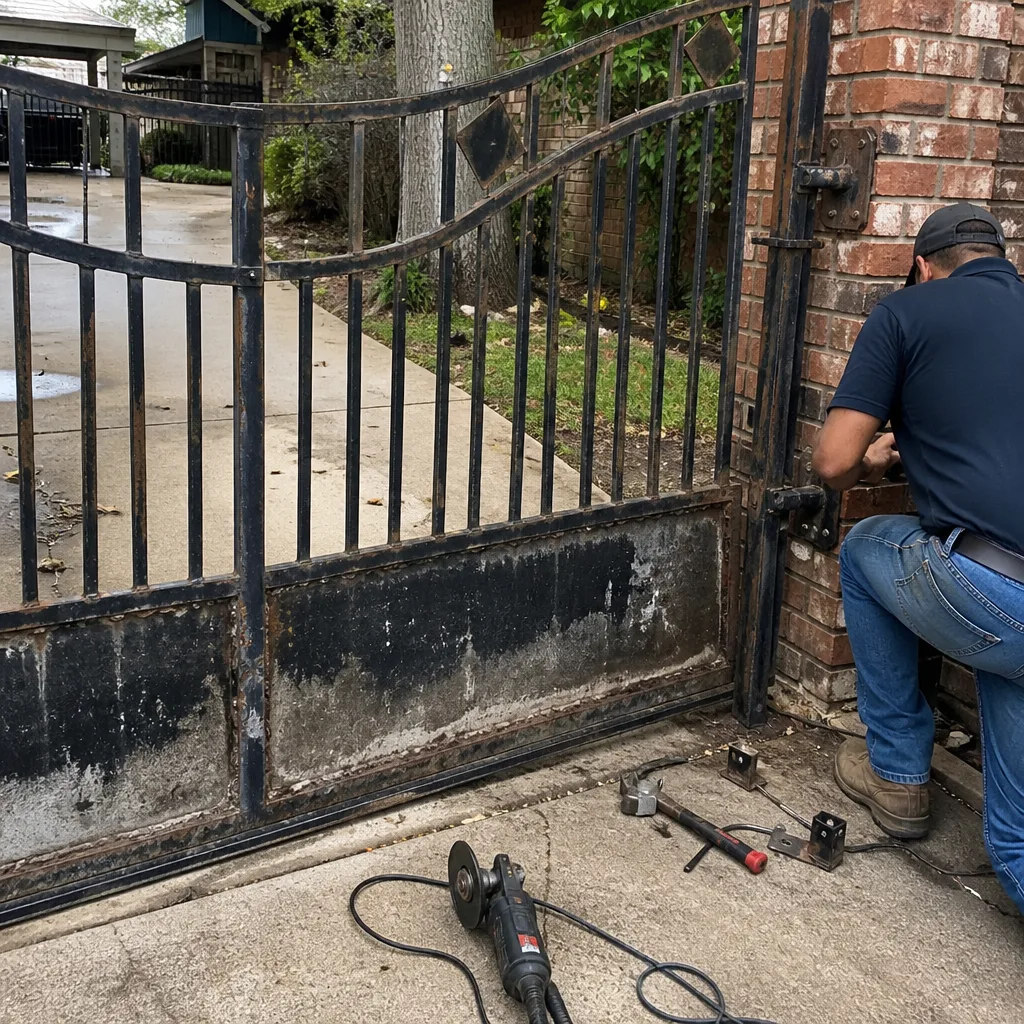 Before
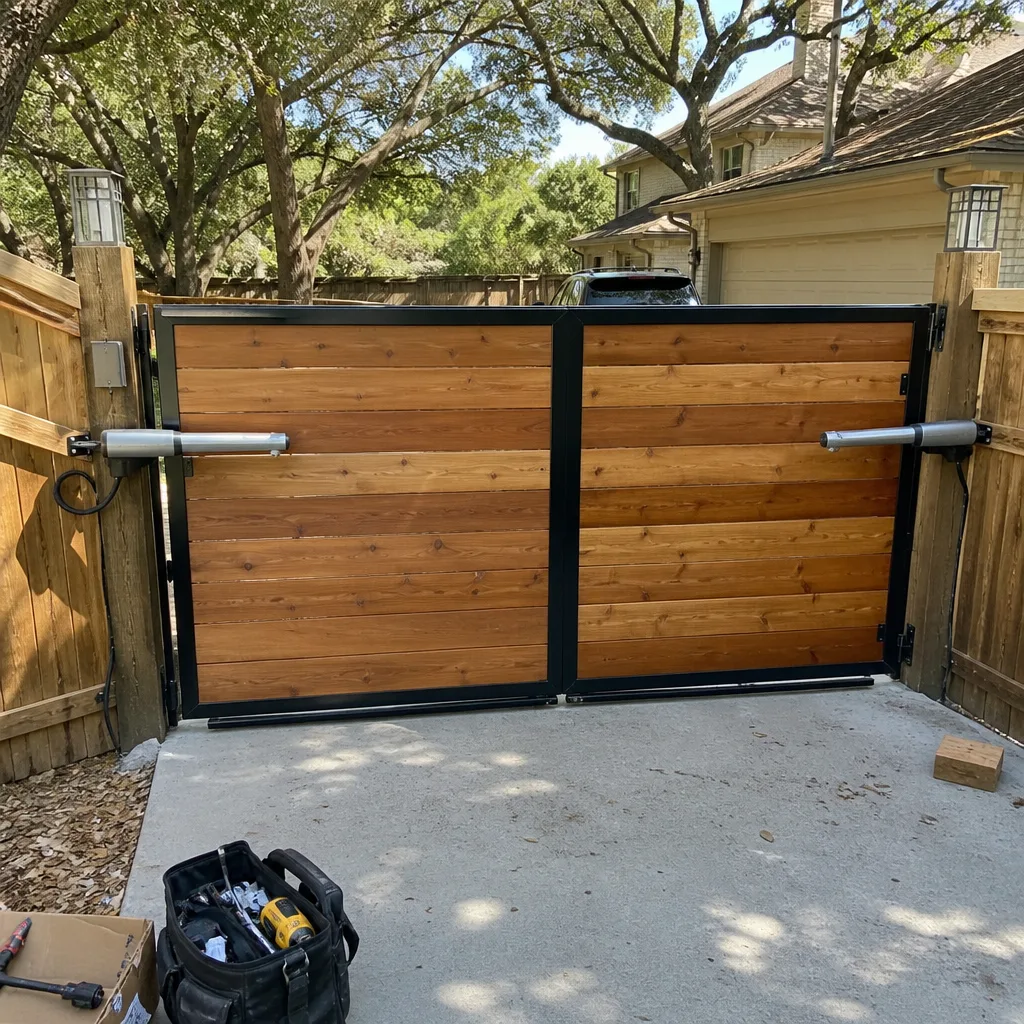 After
After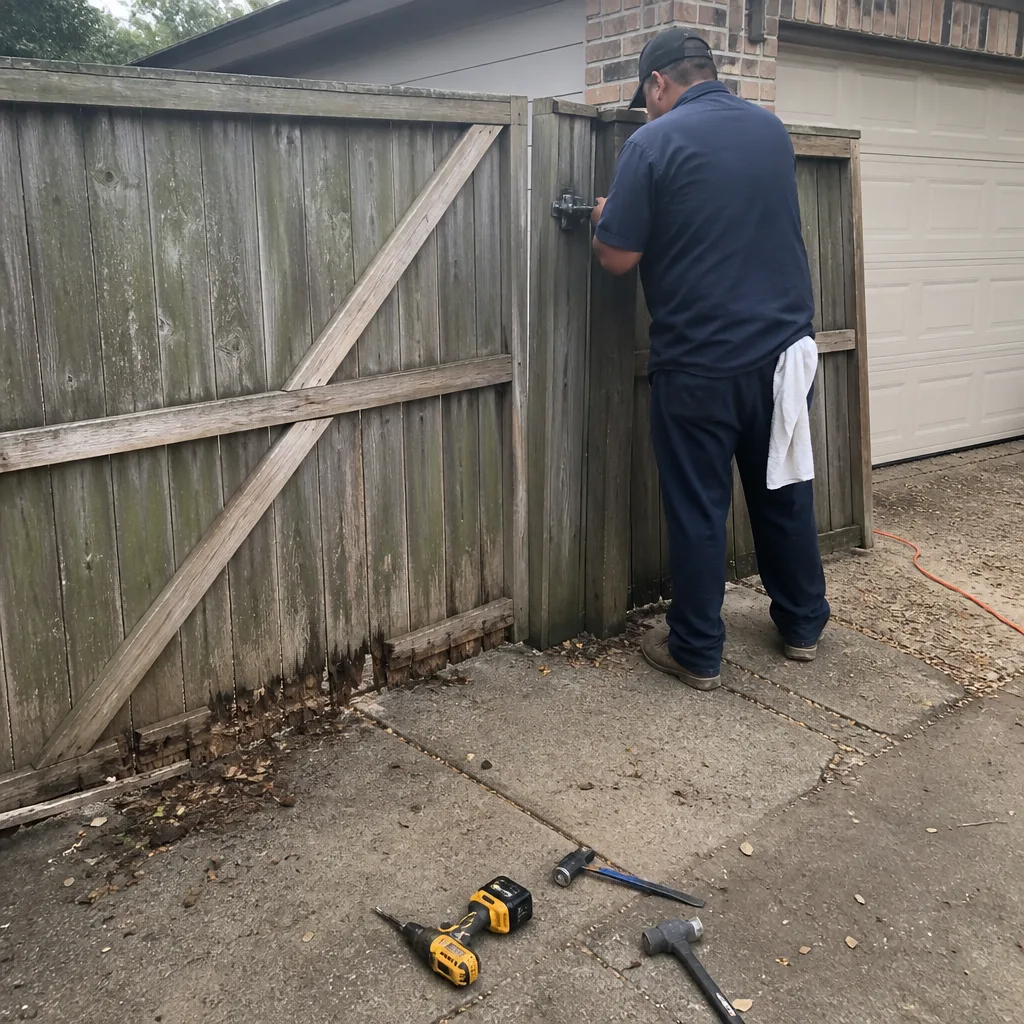 Before
 After
After Before
 After
After