
Last updated October 16, 2026
 Wrought iron
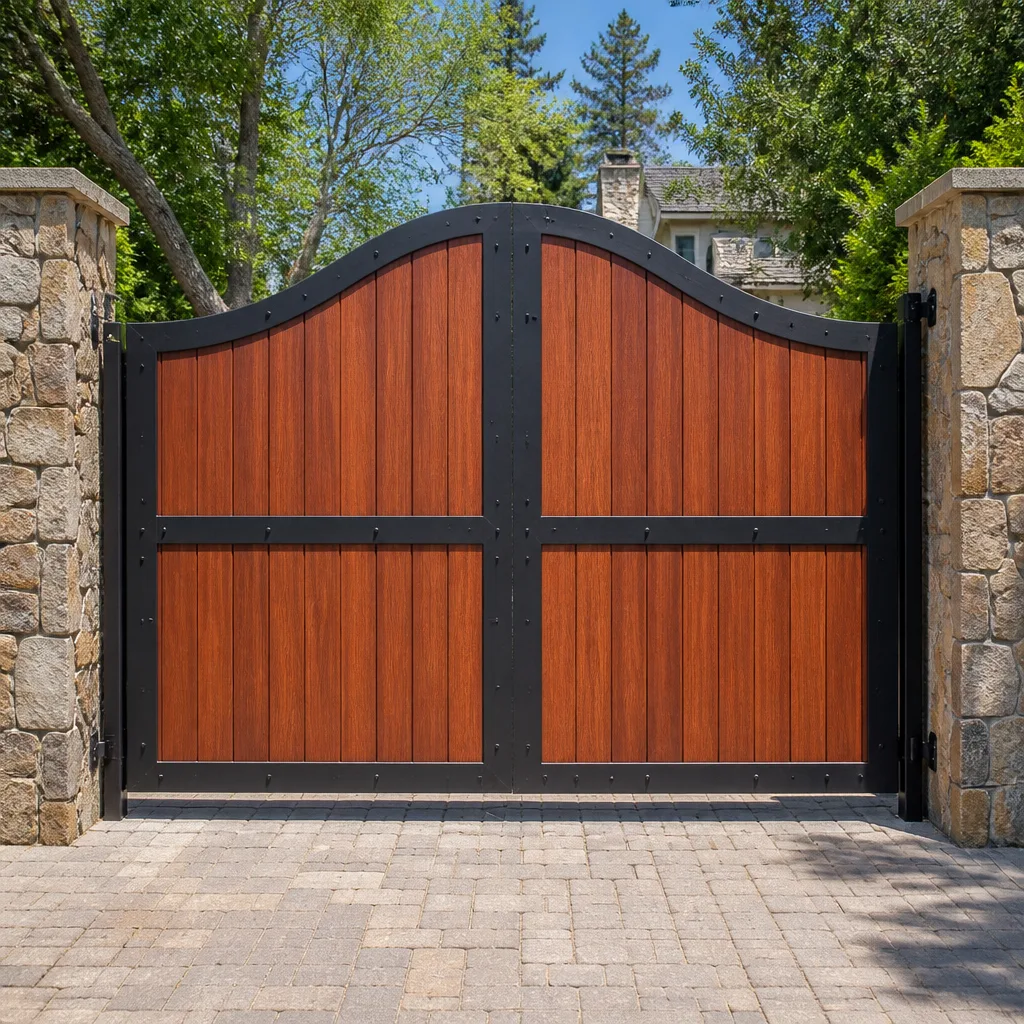 Wood & steel frame
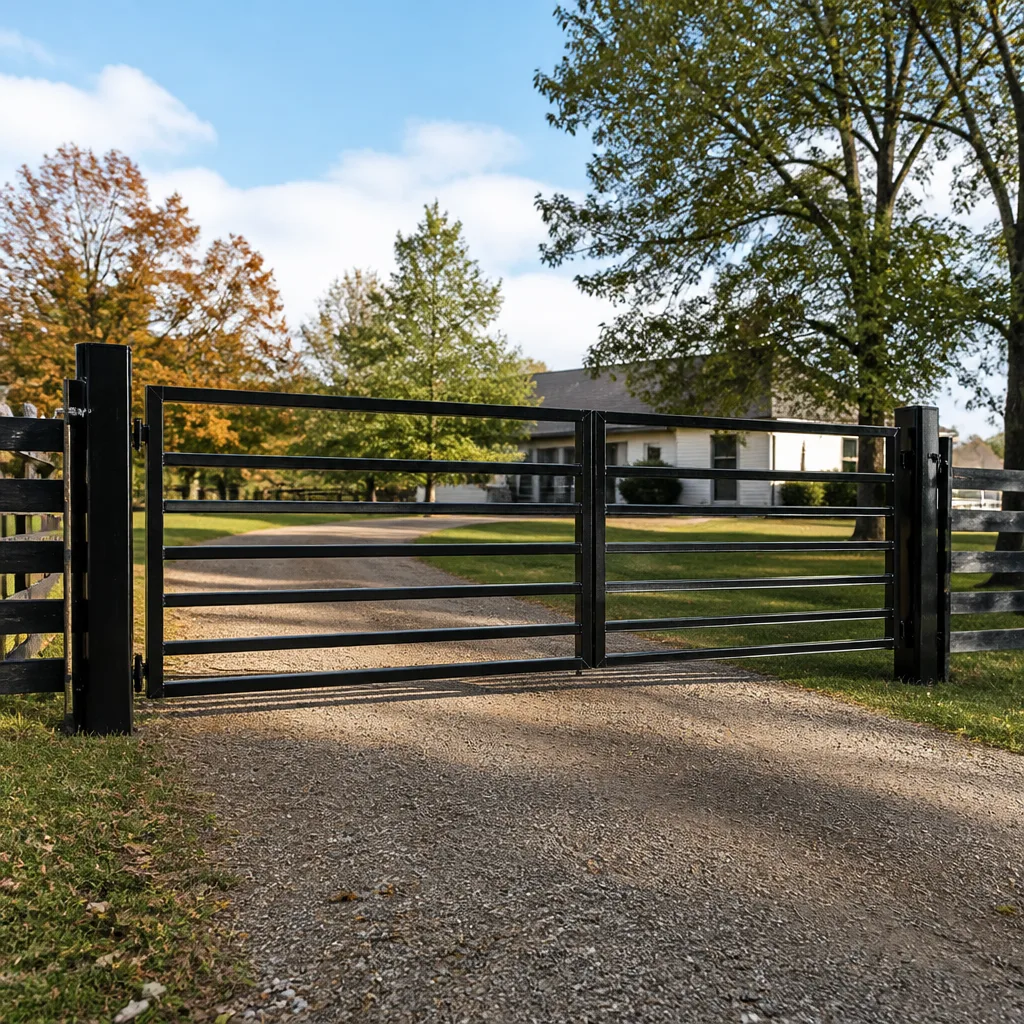 Farm & ranch
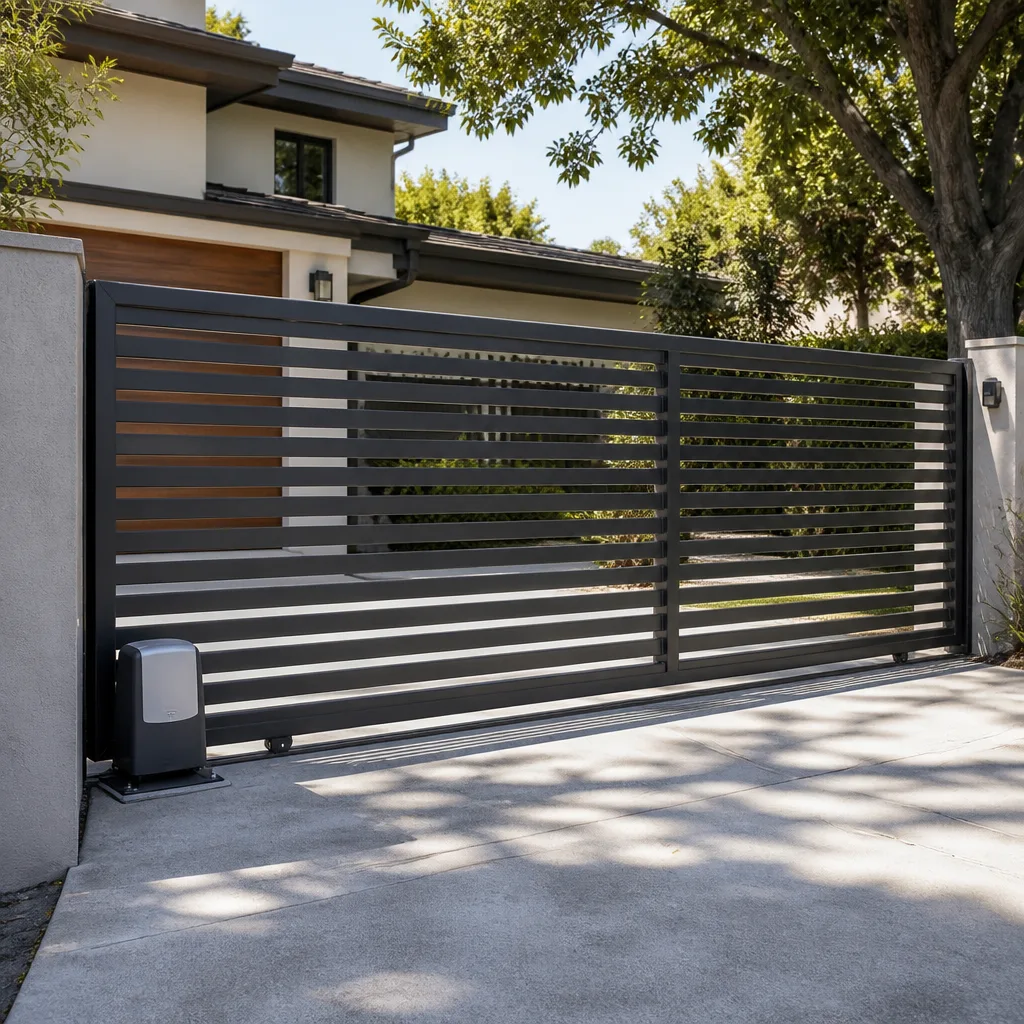 Sliding driveway gates
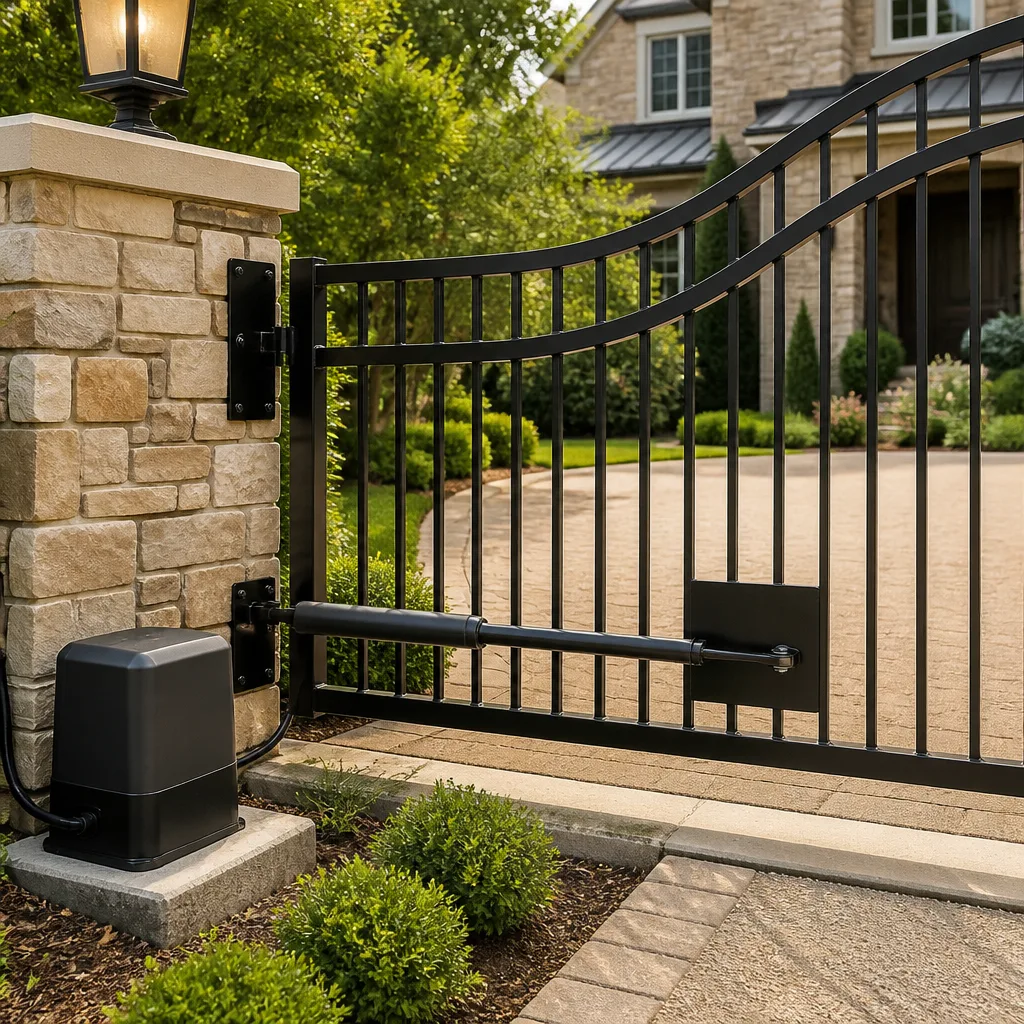 LiftMaster operators
Free on-site gate assessment - hinges, posts, and your LiftMaster or Nice gate operator checked before anything is quoted
The assessment is free and the quote is the invoice.
Get your free estimateSeasonal Gate Repair Care for Houston: Year-Round Homeowner’s Guide
February is Houston’s most dangerous month for gate operators. The city averages fewer than ten freeze days a year, which means most gate motors, batteries, and control boards are not rated or maintained for freeze cycles. A single overnight at 28°F can crack a battery that tested fine in September, and a limit switch that worked flawlessly through Thanksgiving can seize solid by sunrise. This guide walks you through what to do, month by month, so your gate opens when you need it to and stays put when you don’t. For hands-on help, our Gate Repair services cover everything described here.
Styles & brands we work with
Quick Answer
Houston gate care should follow the city’s actual climate pattern, not a generic four-season calendar. You need five seasonal passes: a spring alignment check after winter soil movement, a pre-summer heat prep in May, a mid-summer duty-cycle check, a post-summer inspection window in October and November, and a freeze-readiness pass every December before the first cold snap. Each pass takes under an hour and prevents most of the breakdowns we respond to across Houston.
Table of Contents
- Houston’s Climate Reality: Why Standard Gate Advice Fails Here
- Spring (March – April): The Post-Winter Alignment Window
- Pre-Summer (May): Heat Prep Before the First 90° Day
- Summer (June – September): Duty Cycles, Batteries, and Photo-Eye Drift
- Hurricane Season (June – November): Securing the Gate Leaf
- Fall (October – November): The Inspection Window That Matters Most
- Winter (December – February): Freeze Prep for Intermittent Cold
- Common Mistakes to Avoid
- When to Call a Professional
- Frequently Asked Questions
- The Bottom Line
Houston’s Climate Reality: Why Standard Gate Advice Fails Here
Most seasonal gate maintenance articles are written for places with four distinct seasons. Houston doesn’t work that way. What Houston actually has is a six-month heat and humidity stress test, interrupted by two shoulder seasons, plus a short winter window where temperatures can drop 40 degrees in a single afternoon. A gate care schedule built around leaf cleanup in October and snow removal in January misses the actual failure modes Houston homeowners deal with.
Gate hardware in Houston fails for predictable reasons. Galvanized steel rusts faster near the Ship Channel and in low-lying neighborhoods like Meyerland and Kingwood where standing water sits after heavy rain. Clay soil across much of Harris County expands and contracts with moisture, shifting gate posts out of plumb by fractions of an inch each year. And sustained heat above 90°F pushes gate motor duty cycles past their rated limits, especially on unshaded west-facing installations in neighborhoods like Katy and Cypress where afternoon sun hits the operator housing directly.
Humidity is the second variable most guides ignore. Houston’s average relative humidity stays above 70% for most of the year. Condensation forms inside operator housings during temperature swings, corroding terminal strips, limit switch contacts, and battery compartments. A gate motor that lasts ten years in Phoenix can fail in five here, not because the motor is worse but because the environment is harder on electronics.
This guide assumes a few things about your gate: it’s a swing or slide gate on a residential property, it’s operated by an electric motor, and it gets daily use. If that describes your setup, the schedule below matches what we use on our own service routes across Houston. For deeper background, read The Complete Guide to Gate Repair in Houston.
Spring (March – April): The Post-Winter Alignment Window
March and April in Houston bring the first real drying-out after winter, and that’s when the ground moves. Harris County clay shrinks as it dries, and the posts holding your gate hinges or track shift with it. The check most homeowners skip entirely is post plumb: whether the hinge post is still perfectly vertical. A post that’s out of plumb by even a quarter inch changes how the gate leaf sits on its hinges, which throws off the limit switches, strains the motor, and wears hinge bearings unevenly.
Here’s the spring pass, in order:
- Check post plumb. Use a 4-foot level against the hinge post on both faces. If the bubble sits outside the lines, the post has moved. Mark it and watch it for a month. If movement continues, the post needs resetting, not just shimming.
- Inspect hinge gap. Open the gate halfway and look at the gap between the leaf and the post. It should be even top to bottom. An uneven gap means the post has tipped or the hinge bearings have worn. Worn hinge bearings are a $40 – $80 fix we handle regularly; a tipped post is a bigger job that starts around $250 – $450 depending on post size and access.
- Run the gate through a full cycle. Listen for grinding, scraping, or hesitation at both ends of travel. A gate that slows before it reaches the close limit often has a failing capacitor or a worn gear, both cheaper to fix in March than to replace in July.
- Check the track (slide gates). Look for debris packed into the track, bent guide rollers, and rust blooms. Knock out hardened mud with a screwdriver and wipe the track with a dry rag. Do not grease the track; grease attracts grit and turns into grinding paste.
- Test the photo eyes. Wave your hand through the beam while the gate is closing. It should stop and reverse immediately. If it doesn’t, the eyes need realignment or cleaning, and that’s a safety item, not a cosmetic one.
Post-winter soil movement is the one check that prevents the most expensive swing gate failures in Houston. A hinge post that drifts another quarter inch between March and August will eventually bind the gate leaf, overheat the motor, and burn out the operator. That repair commonly runs $800 – $1,400 for a swing operator replacement. Checking alignment in March costs nothing.
Pre-Summer (May): Heat Prep Before the First 90° Day
Houston’s first 90-degree day usually lands in May, and every degree above that stresses your gate motor. Most residential operators are rated for a duty cycle of 10 – 15 cycles per hour at ambient temperatures up to 100°F. When the temperature climbs, the thermal overload protection trips sooner. A motor that easily handles ten cycles on an April afternoon might cut out after six cycles on a July afternoon, and that’s not a defect, it’s physics.
Before the heat settles in, do this:
- Clear the operator housing. Dirt, cobwebs, and leaf litter inside the housing trap heat. Vacuum it out or blow it out with compressed air. A housing packed with debris can add 15 – 20°F to the internal temperature.
- Check ventilation. Most operator housings have vents or louvers. Make sure they’re not blocked by mulch, siding, or overgrown shrubs. Air needs to move through the housing, not around it.
- Test battery condition (solar and DC operators). Heat accelerates battery failure. A 12V battery that tests at 12.6V in May can drop below 11V by August, and below 11V the control board starts behaving erratically. Replacement batteries for most systems run $35 – $90 depending on brand (LiftMaster, FAAC, and BFT batteries are all readily available in Houston).
- Inspect the capacitor. Swing and slide operators use start capacitors. A bloated or leaking capacitor is a failure waiting for the hottest day of the year. Capacitors cost $15 – $40 and take twenty minutes to swap.
- Lubricate hinges and rollers sparingly. Use a dry graphite or silicone spray, not WD-40. WD-40 displaces water but leaves a residue that gums up in heat. A light coat on hinge pins and guide rollers is enough.
If your gate operator has been in service more than seven years and you’ve never had the capacitor or battery replaced, assume both are near end of life. Replacing them proactively in May costs less than a service call in August, and it means your gate keeps working through the worst heat Houston throws at it.
Summer (June – September): Duty Cycles, Batteries, and Photo-Eye Drift
Summer in Houston is not a maintenance season, it’s a monitoring season. The work you did in spring and May is what carries the gate through June, July, August, and September. But two things still need attention during the hot months: duty cycle management and photo-eye drift.
Duty cycle management means understanding how many times your gate can cycle in an hour before the thermal overload trips. Most residential swing and slide operators are rated for intermittent duty, not continuous duty. That rating assumes normal use: open, close, wait. Problems start when visitors come and go, delivery trucks arrive, the kids ride bikes in and out, and the gate cycles eight times in twenty minutes. The motor heats up, the overload trips, and the gate stops mid-cycle. It resets after cooling down, but repeated overheats shorten motor life permanently.
If your gate trips during heavy use days, that’s not a malfunction, it’s a duty cycle limit. Options: reduce cycles during peak heat (leave the gate open during a party), upgrade to a continuous-duty operator, or install a higher-capacity motor. A continuous-duty swing operator for residential use runs $1,200 – $2,000 installed, depending on gate weight and brand (LiftMaster and FAAC both make suitable units).
Photo-eye drift happens because heat expansion moves the mounting brackets. The photo eyes sit on posts or columns that expand and contract with temperature. Over a Houston summer, a bracket that was perfectly aligned in May can drift out of line by August. The symptom: the gate starts closing and immediately reverses, or refuses to close at all. The fix takes five minutes: loosen the bracket, re-aim the eyes until the alignment LED goes solid, tighten. If you see this happen more than twice in a season, the brackets need a sturdier mount.
Battery-backed operators also lose charge capacity faster in sustained heat. If your gate runs on a solar panel with battery backup, check battery voltage monthly through summer. A healthy battery holds 12.5V or higher at rest. Below 12V at rest, plan for replacement before the fall.
Hurricane Season (June – November): Securing the Gate Leaf
Houston’s hurricane season overlaps almost all of summer and fall, and it creates a gate task most homeowners never consider: securing the gate leaf before high-wind events. A swing gate in the open position acts like a sail. Winds above 40 mph can slam the leaf against its stops hard enough to bend the gate frame, snap hinge welds, or strip the operator’s internal gears. Insurance often denies this damage, classifying it as lack of maintenance rather than storm damage.
The task is simple, but it needs to happen before the storm arrives, not during it:
- Put the gate in manual mode. Pull the release handle on the operator. This disengages the motor so the gate swings freely.
- Secure the leaf in the closed position. Use a chain and padlock, a heavy-duty strap, or a purpose-built gate pin to hold the leaf against the closed stop. Don’t rely on the operator’s internal brake; wind loads exceed its holding force.
- Lock the operator cover. If your operator has a lockable cover, lock it. Flying debris can pop covers open and let rain into the electronics.
- After the storm, re-engage slowly. Before re-engaging the operator, check for debris in the track or swing path, check that the gate still sits square on its hinges, and run it manually once. Then re-engage the motor and test a full cycle.
For slide gates, the risk is different: wind drives debris into the track, jamming the gate. Before a storm, clear the track of anything loose within ten feet, and after the storm, clear it again before cycling the operator. A jammed slide gate motor will burn itself out against a blocked track.
If your gate has already suffered wind damage or the leaf doesn’t sit square after a storm, that’s a Gate Repair in Houston job. Bent gate frames can sometimes be straightened; snapped hinge welds require welding; stripped operator gears usually mean a new operator head. We quote all of this in writing before work starts.
Fall (October – November): The Inspection Window That Matters Most
October and November are the most important maintenance months for Houston gates. The heat has done its damage by then, the ground has dried and shifted, and you still have six to eight weeks before the first freeze threat. This is the window to find and fix what the summer broke before cold weather makes it worse.
Post-summer inspection, in order of importance:
- Battery load test, not just voltage test. A voltmeter reading of 12.5V tells you the battery has charge; it doesn’t tell you whether the battery can deliver current under load. Batteries that survived the summer often fail the first cold snap because cold reduces cranking amps. A load test takes one minute and separates good batteries from marginal ones. Replace marginal batteries now, not in January.
- Inspect limit switch contacts. Limit switches tell the motor where “open” and “closed” are. Heat and humidity corrode the contacts over a Houston summer. Symptoms: the gate stops short, overruns the stop, or reverses unexpectedly. Cleaning or replacing limit switches runs $60 – $150 including the part.
- Check for rust bloom on welds and fasteners. Look at hinge welds, gate frame corners, and post bases. Surface rust is normal and treatable with a wire brush and cold galvanizing spray. Deep flaking rust on structural welds needs a welder’s assessment.
- Run the gate on battery backup (if equipped). Unplug the operator or trip the breaker and cycle the gate on battery alone. If it won’t open or opens sluggishly, the battery backup is not doing its job. Houston doesn’t lose power as often as some cities, but ice storms and hurricanes both take out power, and a dead battery backup means a gate that won’t open when you need it to.
- Adjust travel limits for temperature creep. Gate frames expand slightly in heat and contract in cold. If your gate was adjusted during summer, the limits may be slightly off for winter conditions. A gate that closes against the stop with too much force in October will be worse in January when the frame contracts.
This fall pass is also the right time for any deferred work from summer. Fix the hinge bearing that clicked in August. Replace the capacitor that looked bloated in July. Address the photo-eye mount that kept drifting. Doing it in October means doing it in pleasant weather with parts in stock, instead of in February on an emergency call.
For a full seasonal tune-up or a Gate Motor Repair in Houston inspection, our technicians work through a checklist that covers everything in this section plus wiring connections, transformer output, and receiver range. The inspection is free; the written price for any work comes before we start.
Winter (December – February): Freeze Prep for Intermittent Cold
Houston’s winter is short but not gentle. The city sees an average of one to three freeze events per year, each lasting one to four nights. That’s just enough to crack a battery, seize a limit switch, or damage a control board through condensation, and just enough that most Houston gates are not prepared for it.
The freeze prep pass should happen in early December, before the first hard freeze. If you’ve already had a freeze, do it anyway; the second freeze is never far behind.
- Battery insulation. Batteries lose capacity as temperature drops, and a battery that’s already weak from summer heat loses more. Wrap the battery in a foam insulation sleeve or install the operator’s factory cold-weather kit if available. FAAC and LiftMaster both sell cold-weather battery kits for their DC operators. Do not use a household blanket; it holds moisture against the terminals.
- Inspect the operator housing seal. Cold air intrusion causes condensation inside the housing, which corrodes terminals and control board traces. Check the cover gasket for cracks and the housing for missing screws. A tube of automotive weatherstrip sealant costs $8 and closes small gaps.
- Lubricate the manual release. The release handle on most operators is a steel cable inside a sheath. When humidity condenses and freezes, the cable can seize. Pull the release handle and work it back and forth a few times. If it’s stiff, a light shot of silicone lube into the sheath fixes it.
- Check the gate leaf for ice clearance. Frost heave around gate posts isn’t common in Houston, but ice accumulation on the ground under a swing gate can prevent full travel. Before a forecast freeze night, raise low-hanging gate leaves by adjusting the hinges slightly or ensure the ground under the swing path is graded clear.
- The night before a forecast freeze: Run the gate through three full cycles the evening before. This warms the motor, confirms the limit switches are working, and charges the battery. Then set the gate to remain closed or open (your choice) and leave it. The fewer cycles during the freeze, the less chance of a stall. Water expands when it freezes, and any moisture on moving parts becomes the enemy. If the gate must move during the freeze, expect it to operate slower; that’s normal cold-weather behavior.
If your gate fails during a freeze, the most common causes are a dead battery or a seized limit switch, both of which are cheap to fix if caught early. If the gate won’t open at all and you have no manual release that works, that’s an emergency call. The Carver Gate Repair Houston home line is answered by a live person 24/7, including the night of a freeze.
Common Mistakes to Avoid
- Lubricating the gate track or chain with WD-40. WD-40 is a water displacer, not a lubricant. On a gate track it leaves a sticky film that attracts dirt and grinds into the rollers. Use dry graphite for tracks and silicone spray for hinge pins.
- Ignoring photo-eye drift until the gate refuses to close. A misaligned photo eye is usually a bracket problem, not a sensor problem. Level and re-aim the eyes, then tighten the bracket. If it drifts again, the bracket needs remounting, not more adjustment.
- Replacing the operator before checking the capacitor. A swing gate that hums but won’t start often has a failed start capacitor, a $15 – $40 part. Replacing the entire operator costs $800 – $1,400. Check the cheap part first.
- Waiting until the first freeze to think about battery health. Batteries fail in heat and then reveal the failure in cold. A battery tested in November is the only battery you can trust in February.
- Securing the gate during a hurricane with the operator still engaged. The operator’s brake is not rated for wind loads. Disengage the motor, chain the leaf to the stop, and re-engage after the storm passes. Otherwise the wind turns your gate into a lever that pries the operator off its mounts.
- Skipping the spring post check because the gate “still opens fine.” Gate posts move slowly, and operators compensate until they can’t. By the time a misaligned post causes a noticeable problem, the operator has already been taking damage for months.
- Using a household voltmeter to test a gate battery and trusting the reading. Voltage alone doesn’t prove a battery can handle a load. Load test it. A battery that reads 12.6V at rest can still collapse under the draw of a gate motor on a cold morning.
When to Call a Professional
Most of the seasonal checks above are DIY-able with basic tools. Some conditions need a trained technician. Call a professional if: the gate post is visibly out of plumb and moving, the operator trips its thermal overload repeatedly during normal use, the gate frame shows deep rust or cracking at welds, the gate has been hit by a vehicle, the operator makes grinding or popping sounds, or the gate won’t operate on battery backup. Gate motors contain high-tension springs and heavy moving parts; when a spring or cable under load fails, it can cause serious injury. A trained technician knows where the stored energy lives and how to release it safely.
Carver Gate Repair Houston offers free estimates throughout Houston. Call (361) 320-7104 and a live person will answer, day or night. We give you a written price before any work starts, and if it’s not done right, we come back. That’s the Garrison Standard, and it’s in writing.
Frequently Asked Questions
Twice a year. A full inspection in October or November catches what the summer heat damaged, and a lighter pass in March catches what winter soil movement and cold damaged. Between those two passes, most Houston gates run reliably all year. If your gate is older than seven years or gets more than ten cycles per day, consider three passes: March, May, and October.
Cold thickens the grease in the gearbox, increases battery internal resistance, and makes the gate metal contract slightly. All three effects make the motor work harder, so the gate cycles slower. This is normal down to about freezing. If the gate stalls entirely or moves at a crawl, you have a weak battery or a gearbox that’s low on lubricant, and that’s a service call.
Most residential swing gate operator replacements in Houston run $800 to $1,400 installed, depending on gate weight, operator brand (LiftMaster and FAAC are the most common we install), and access. Slide gate operators run $900 to $1,800. The price includes the operator, mounting, limit switch setup, and programming. You’ll get a written price before we start, so the number doesn’t move at the door.
You don’t need to turn it off fully, but reducing cycles during the coldest hours helps. Run the gate a few times the evening before a freeze to warm the motor and charge the battery, then leave the gate in your preferred position. If you use battery backup, make sure the battery is charged before the freeze. A discharged battery freezes at a higher temperature than a charged one.
Most Houston homeowners don’t need a hurricane-rated gate unless they’re in a coastal flood zone or their HOA requires it. What you do need is a way to secure the leaf manually before high winds. A chain and padlock or a gate drop pin costs under $40 and does the job. The more expensive upgrade is a wind-rated operator, which starts around $1,500 and is only worthwhile if your property faces open water or sustained winds.
Yes. Our technicians work on all four of those brands and several others, including older models that many generalist repair companies won’t touch. We carry common replacement parts for LiftMaster, FAAC, BFT, and Linear, which means most repairs happen on the first visit instead of waiting on a parts order. Call (361) 320-7104 and we’ll tell you over the phone whether the part is on the truck.
The Bottom Line
Houston gates fail on Houston’s schedule, not a generic seasonal calendar. The pattern is consistent: summer heat slowly damages the operator, fall is the window to catch that damage, winter cold finishes off what heat started, and spring is when the ground moves and post alignment drifts. If you do the fall inspection thoroughly, the spring post check early, and the pre-summer heat prep before May, your gate will survive almost everything Houston’s climate throws at it. Browse our more guides & resources for year-round gate care tips.
For everything else, there’s a phone number. (361) 320-7104, answered by a live person, 24 hours a day, 7 days a week. Written price before any work starts. Written guarantee on every repair, good for a full year. That’s how Gate Installation in Houston and repair should work, and it’s how we’ve operated since 2008.
Written by Lonnie Burke, Owner at Carver Gate Repair Houston, serving Houston since 2008.
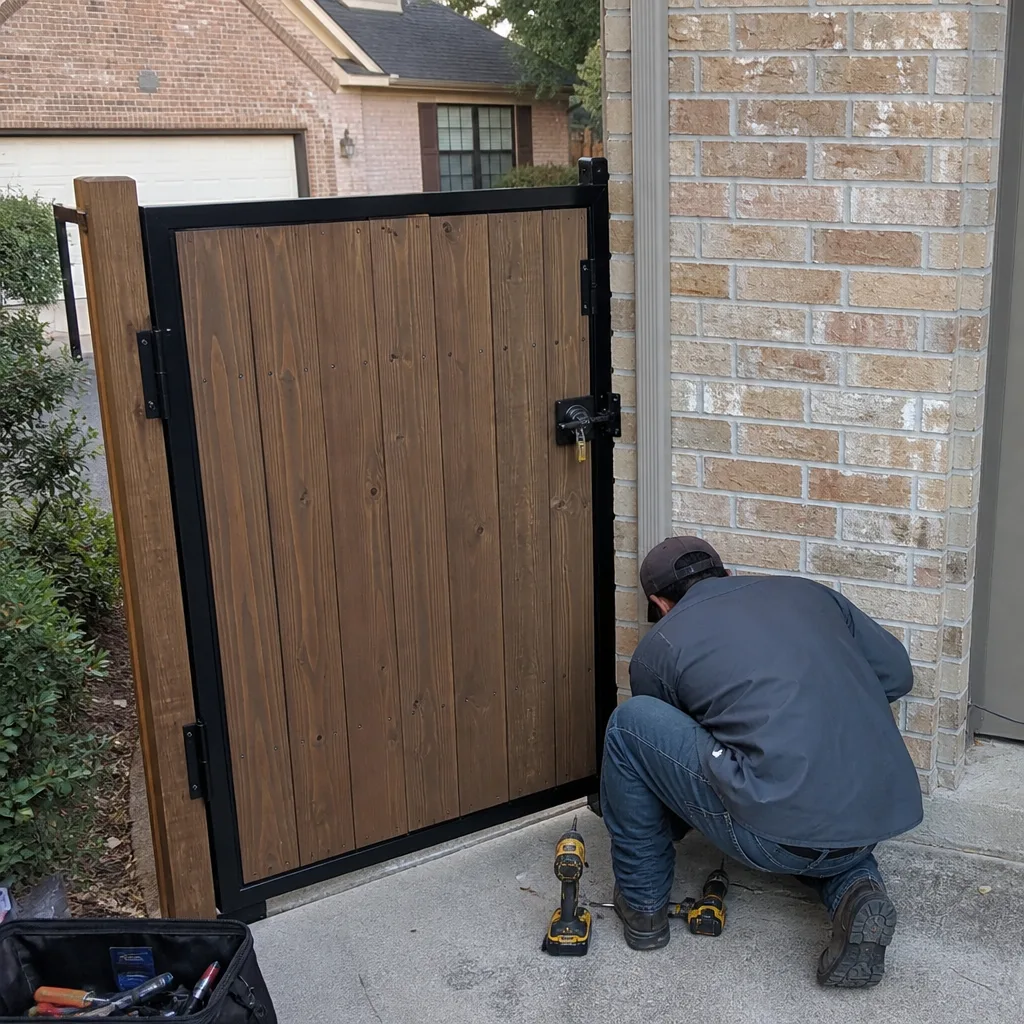
See the difference
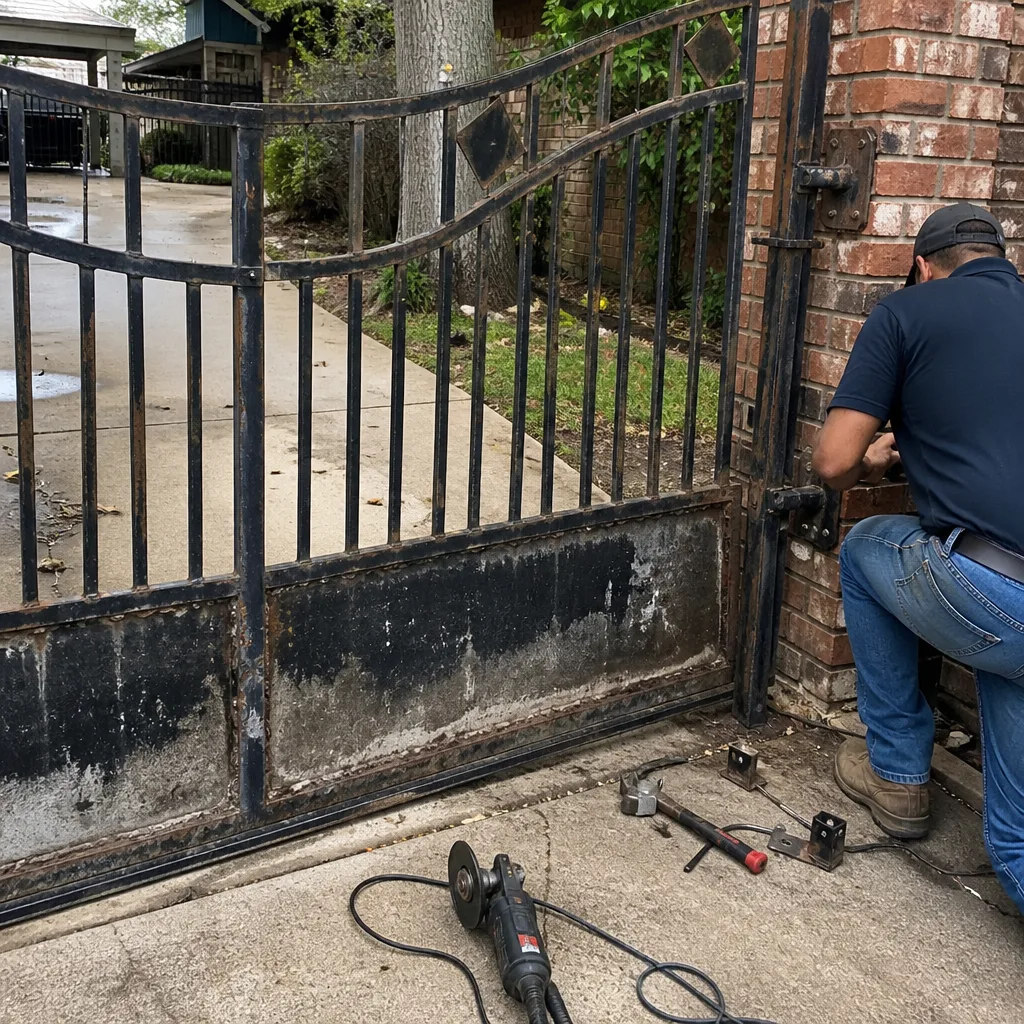 Before
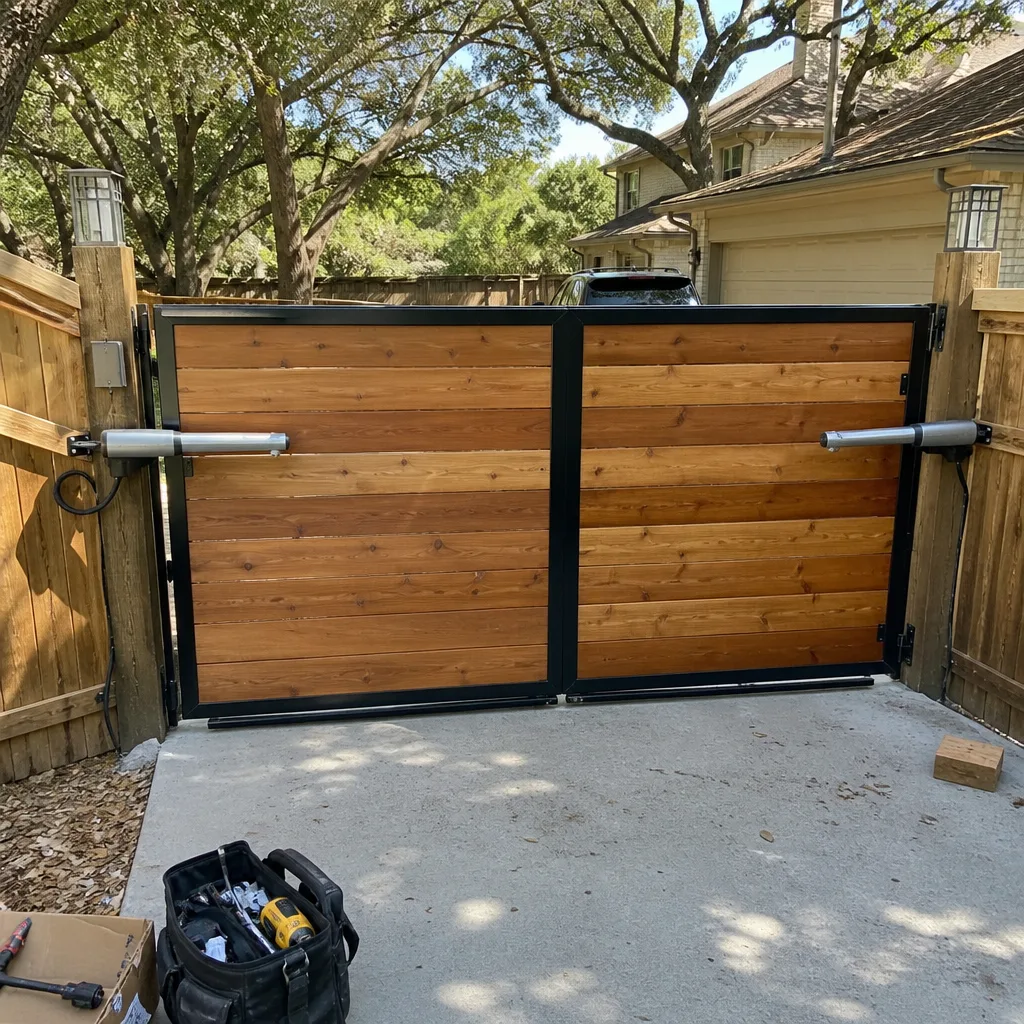 After
After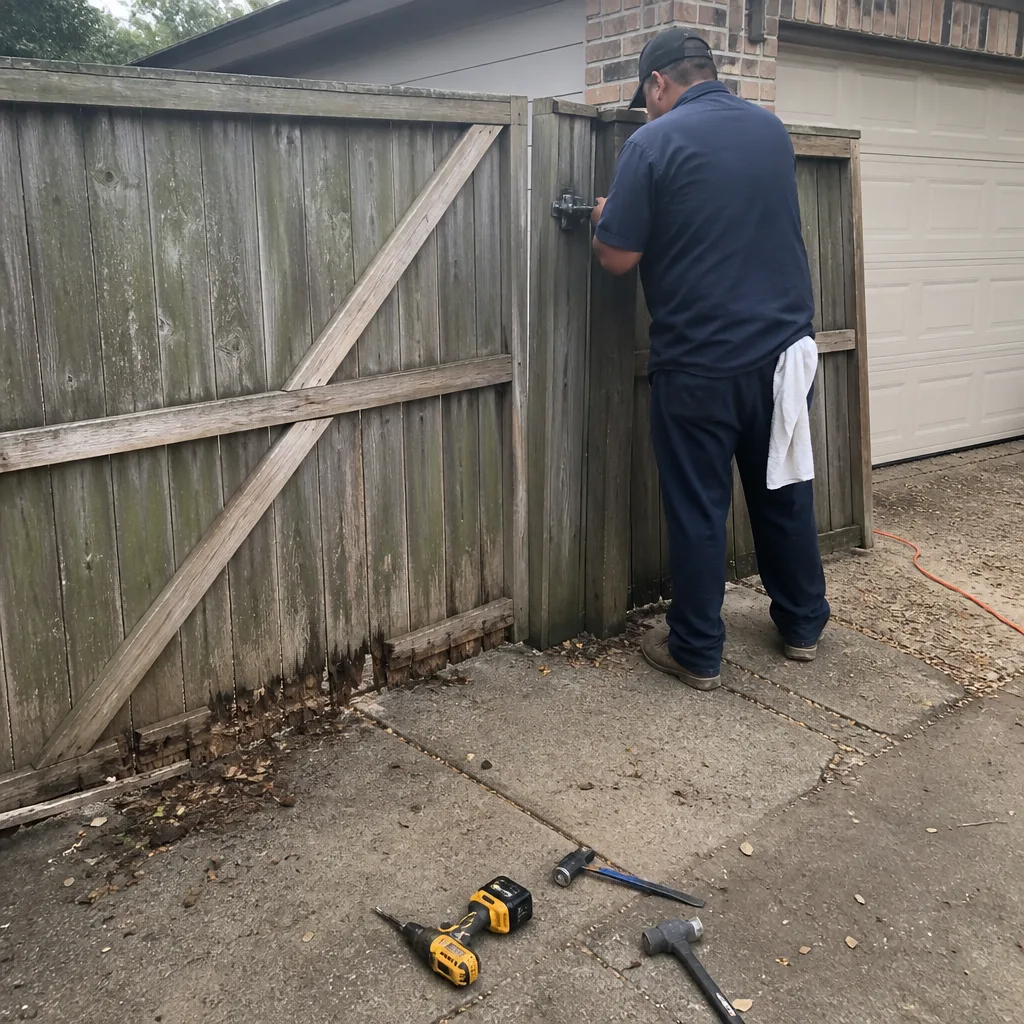 Before
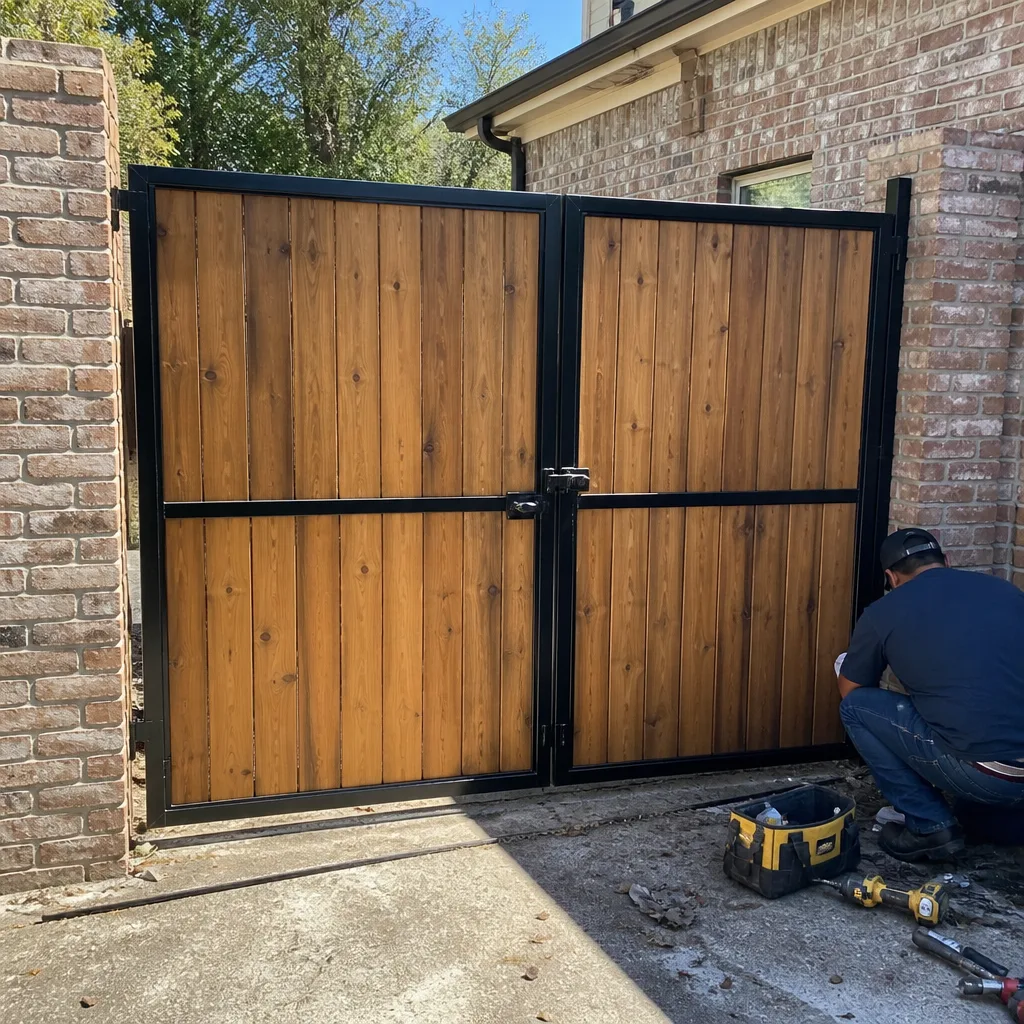 After
After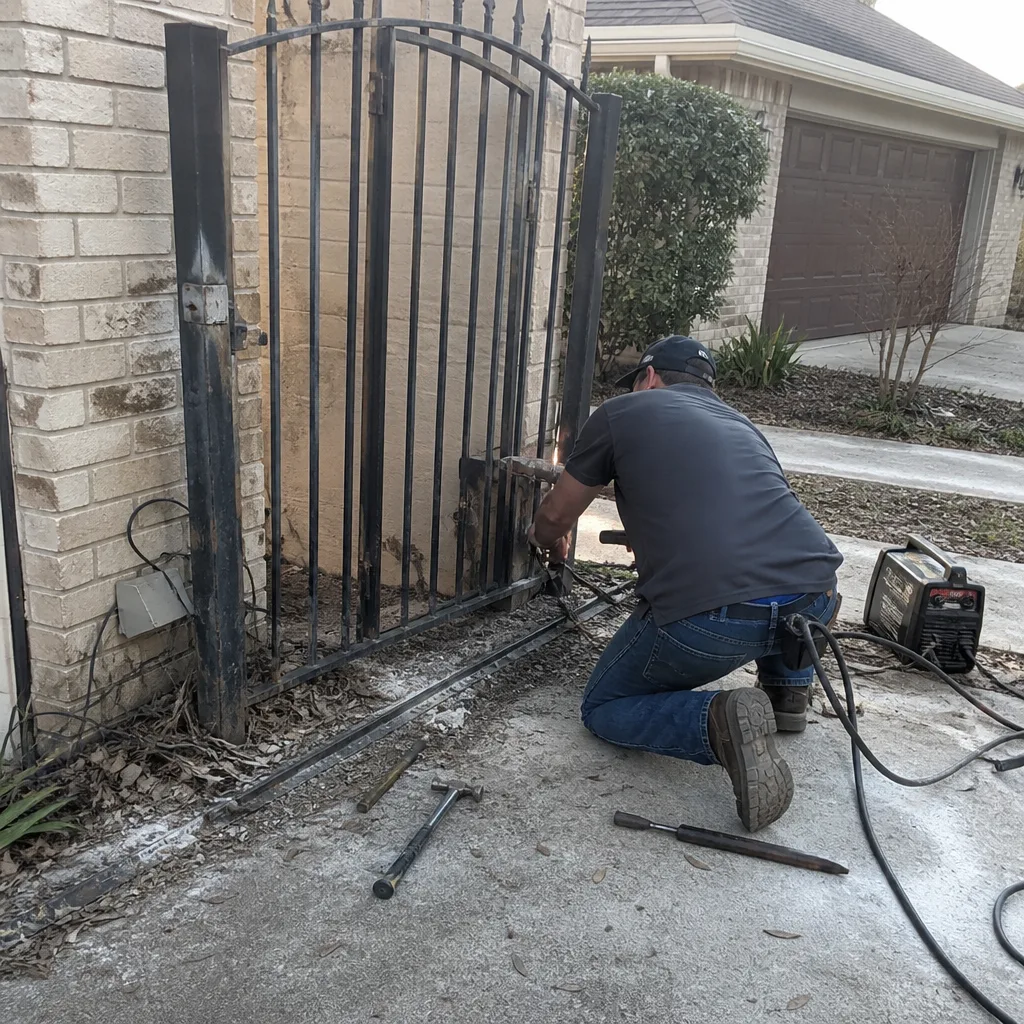 Before
 After
After