
Last updated October 16, 2026
 Wrought iron
 Wood & steel frame
 Farm & ranch
 Sliding driveway gates
 LiftMaster operators
Free on-site gate assessment - hinges, posts, and your LiftMaster or Nice gate operator checked before anything is quoted
The assessment is free and the quote is the invoice.
Get your free estimateGate Repair Permits, Codes & Inspections in TX: What You Need to Know
Most homeowners in Houston assume any work on an automatic driveway gate needs a permit pulled before the first tool comes off the truck. The truth cuts a much narrower line, and that line moves depending on whether you’re changing a battery, adding a concrete footing, or wiring a 20-amp circuit across the yard. This guide maps the actual permit triggers under Harris County and City of Houston code, the HOA layer most people overlook, and the electrical standards that apply to gate operators in Texas. We’ll show you exactly where the legal exposure sits, what a homeowner can legally touch, and how to confirm a contractor did the paperwork before the work started.
Styles & brands we work with
Quick Answer
Most residential gate repairs in Houston, Texas do not require a permit: swapping a hinge, replacing a control board, or adjusting a limit switch falls under routine maintenance. But a new gate operator hardwired to a dedicated circuit, any new post footing or footer, and any gate on a property governed by an HOA with architectural controls can trigger permit requirements. When in doubt, check the City of Houston permitting portal and your HOA’s CC&Rs before work begins.
Table of Contents
- What Actually Triggers a Gate Permit in Houston
- Electrical Code for Gate Operators: NEC 2020 as Adopted in Texas
- The HOA Layer: Why a City Permit Isn’t Enough
- What a Homeowner Can Legally Do vs. What Requires a Licensed Pro
- How to Verify a Contractor Pulled the Permit
- Insurance Exposure: The Risk You Don’t See
- Common Mistakes to Avoid
- When to Call a Professional
- Frequently Asked Questions
- The Bottom Line
What Actually Triggers a Gate Permit in Houston
Houston operates under Chapter 10 of the City Code, which spells out when a building permit is required. For residential properties, the short version is this: permits attach to new construction and structural or electrical modifications, not to repairs that swap like-for-like parts. Replacing a hinge, re-welding a cracked post sleeve, or installing a new control board on a LiftMaster or FAAC operator does not require a permit. Nor does replacing a gate wheel or adjusting an articulating arm on a cantilever gate.
Where the line gets crossed is when the work changes what is physically or electrically present on the property. Here’s the practical breakdown for Harris County and City of Houston jurisdiction:
- New post footings or concrete pads: If a section of driveway is being excavated or concrete is being poured to seat a new gate post, that falls under structural work. The City of Houston requires a permit for new footings that bear a gate over 6 feet tall or any gate that will be automated.
- New electrical circuits: Running a new 120V circuit from the panel to a gate operator is permit-triggering electrical work. This is where most homeowners and many handymen get it wrong.
- New gate installation with automation: Installing a new automated gate where none existed before, including the operator, the safety loops, and the wiring, generally requires both an electrical permit and a building permit if footings are involved.
- Replacement of an existing gate on existing posts: This typically does not require a permit, provided the posts stay in place and the operator is swapped like-for-like without new wiring.
What we’ve seen in Houston repeatedly is confusion on the third bullet. A homeowner hires a general handyman to install a new BFT swing operator on an existing gate, the handyman runs a new circuit from a spare breaker, and nobody pulls an electrical permit. The work gets done, the gate functions, and two years later the homeowner discovers the issue during a home sale inspection or worse, during an insurance claim. More on that below.
Electrical Code for Gate Operators: NEC 2020 as Adopted in Texas
Texas adopted the 2020 National Electrical Code (NEC) with state-specific amendments, and that standard governs every gate operator circuit installed after the adoption date in the state. For gate operators, the most relevant section is Article 430, which covers motors and motor circuits, and Article 300, which covers wiring methods. A gate operator like a Viking or Linear swing arm draws power from a dedicated branch circuit, and the NEC requires that circuit to be properly sized and protected.
Here’s what NEC 2020 means in practical terms for a Houston gate motor installation:
- Dedicated circuit requirement: A hardwired gate operator must be on its own circuit. Sharing the circuit with garage door openers, landscape lighting, or an irrigation controller is a code violation.
- GFCI protection: Outdoor receptacles and circuits feeding gate operators require ground-fault circuit-interrupter protection. In Houston’s humid, rain-heavy climate, GFCI trips are among the top service calls we address, often due to moisture intrusion in a junction box rather than an actual ground fault.
- Disconnect means: A service disconnect must be present within sight of the operator. If the panel is on the side of the house 80 feet from the gate, a disconnect at the gate is required by code.
- Conduit and burial depth: Underground wiring to a gate operator must run through approved conduit and be buried at the proper depth per NEC Table 300.5. In Houston’s gumbo clay soil, which shifts with moisture cycles, rigid PVC conduit is the standard choice, as EMT or thin-wall conduit corrodes and collapses over time.
Who is legally allowed to do this work? In Texas, electrical work that requires a permit must be performed by a licensed electrician holding an electrical contractor’s license from the Texas Department of Licensing and Regulation (TDLR). A gate repair technician cannot pull an electrical permit unless they hold that license or work under someone who does. This distinction matters. A gate company can install the mechanical operator, adjust the limit switches, program the remote controls, and mount the arms. But if the job requires running a new circuit, pulling wire to the operator, and making the final connection at the panel, that portion of the work belongs to a licensed electrician.
The HOA Layer: Why a City Permit Isn’t Enough
Houston is unusual among major Texas metros for having no comprehensive zoning ordinance. That absence means many residential neighborhoods fall back on deed restrictions and HOA covenants, conditions, and restrictions (CC&Rs) to govern what a homeowner can and cannot do. If your property sits in a managed community, Kingwood, Clear Lake, Cinco Ranch, or any of the dozens of master-planned communities around Harris County, the HOA layer sits on top of city code, not underneath it.
Here’s why that matters for gate work:
- Architectural control is separate from building code. The City of Houston may not care about gate style, material, or color. Your HOA probably does. Most CC&Rs require an architectural review committee (ARC) application before any exterior change, including a new gate or a significant modification to an existing one.
- A city permit does not equal HOA approval. These are two separate approvals from two separate bodies. Pulling a city permit for new footings and wiring does not satisfy your HOA. And HOA approval does not substitute for a city permit where one is required.
- HOAs can and do order removal. If a gate is installed without ARC approval, the HOA’s remedy is typically to demand removal or modification at the homeowner’s expense, with fines accruing until compliance. In Texas, HOAs have broad enforcement powers under Chapter 202 of the Texas Property Code.
- Some HOAs restrict front yard gates outright. Many newer communities prohibit driveway swing gates entirely or require them to be set back a minimum distance from the property line. Check this before budgeting for any gate installation in Houston that will be visible from the street.
In our experience, the HOA piece is where Houston homeowners get caught most often. The city inspection passes, the gate looks great, and six months later a violation notice arrives from the management company. The ARC process is usually straightforward: submit an application with a dimensional drawing, a photo of the proposed gate style, and in some cases a survey showing the gate’s placement relative to the property line. But it has to happen before work begins, not after.
What a Homeowner Can Legally Do vs. What Requires a Licensed Pro
Texas law grants homeowners a specific carve-out for electrical work on their own residence. Under the Texas Occupations Code and TDLR rules, a homeowner may perform electrical work on property they own and occupy, without holding an electrical license, provided the work is not being done for compensation and the property is not intended for sale or lease within the relevant timeframe. This is the state’s homestead exemption for electrical work.
But here’s what that carve-out does and does not cover in practice:
What a homeowner can legally do
- Replace an existing gate operator with a like-for-like unit that uses the existing circuit and wiring, provided no new wiring is run.
- Replace a control board, limit switch, capacitor, or remote receiver on an operator from FAAC, BFT, Linear, or another brand.
- Adjust limit switches, force settings, and safety sensor alignment on an existing operator.
- Lubricate hinges, tighten hardware, and replace gate wheels or rollers.
What requires a licensed professional
- Running a new electrical circuit from the panel to the gate operator. This requires an electrical permit and a licensed electrician, even if the homeowner is doing other parts of the project themselves.
- Pouring new gate post footings or structural concrete. If a gate post is being set in concrete, the excavation and pour must meet the City of Houston’s structural requirements for depth and reinforcement. This is licensed contractor territory.
- Installing a new automated gate system from scratch. This combines the electrical and structural components, and it is the single most permit-triggering gate project a Houston homeowner can undertake.
- Working on any gate on commercial property. The homeowner homestead exemption does not apply to commercial, industrial, or multi-family properties. That work always requires licensed contractors.
The safety stakes here are not theoretical. A gate operator’s motor contains a capacitor that stores voltage even after power is disconnected. A high-tension spring on a cantilever gate, if released improperly, can cause serious injury. We do not recommend that anyone without formal training open a gate operator housing to replace a capacitor or motor. If you need gate motor repair in Houston, hire someone who does this every day.
How to Verify a Contractor Pulled the Permit
Every reputable contractor in Houston should be able to provide a permit number before work begins. The City of Houston’s online permitting portal allows anyone to search active and issued permits by address. If a contractor tells you the permit is “in process” for more than a few business days, verify the claim.
Here’s the step-by-step verification process we recommend:
- Ask for the permit number in writing. The contractor should provide it in the written estimate or contract. If the estimate includes a line-item for “permit fees” but no number, that’s a flag.
- Search the Houston Permitting Center portal. Enter your property address. The permit should show as issued or under review, not absent.
- Confirm the permit type matches the work described. An electrical permit for a gate operator should reference the panel or circuit being modified. A permit for “general repairs” does not cover new wiring.
- Post the permit on site. In Houston, the issued permit card must be posted in a visible location on the property during the work. If no card is posted, ask why.
- Demand a final inspection for any electrical work. The permit is not complete until a city inspector signs off on the work. If the contractor disappears before the final inspection, the permit remains open, and the homeowner is later responsible for closing it.
What if you discover after the fact that work was done without a permit? The first step is to stop using the equipment until an inspection can be arranged. Then, contact the Houston Permitting Center to file for an after-the-fact permit. In most residential cases, the city will inspect the work, and if it meets code, the permit is issued retroactively. The homeowner is usually responsible for the permit fee and any inspection charges. If the work does not meet code, the repairs to bring it into compliance become the homeowner’s cost, separate from the original job.
Insurance Exposure: The Risk You Don’t See
Here is the most counterintuitive part of this entire guide, and the reason we wrote it. A gate operator installed without a required electrical permit in Harris County does not just risk a stop-work order. It can void a homeowner’s insurance claim if that operator is ever associated with a fire, an electrical surge, or an injury on the property, even years later.
Texas homeowners insurance policies contain specific language about unpermitted work and code compliance. Most standard HO-3 policies exclude coverage for damage caused by faulty, inadequate, or defective workmanship, and many policies include a provision that unpermitted improvements are not covered for damage arising from those improvements. If a gate operator wired without a permit causes a house fire, the insurer has grounds to deny the structure claim. If a guest is injured by a gate that was installed without required inspections, the liability claim may be denied on the grounds that the insured knowingly engaged in unpermitted work.
This is not hypothetical. We have spoken with Houston homeowners who discovered undisclosed gate work during a home sale, and the transaction stalled because the seller could not produce a closed permit for the electrical installation. The buyer’s lender flagged the open permit, and the seller had to pay for an after-the-fact inspection and repairs before closing. The gate operator that looked like a good deal came back five years later as a five-figure closing delay.
The reverse is also true. When you hire a contractor who pulls the permit, completes the inspection, and closes the permit, that paperwork becomes part of your home’s permanent record. It protects you during a sale and during a claim. This is one reason we’re deliberate about the permitting conversation at the start of any gate repair in Houston that touches electrical or structural work.
Common Mistakes to Avoid
Over the years, the same missteps show up in Houston gate projects again and again. Here are the ones to avoid, each one grounded in a specific failure mode we’ve encountered.
- Assuming a handyman can pull an electrical permit. In Texas, only a licensed electrical contractor or the homeowner can obtain an electrical permit. A handyman or generalist without a TDLR electrical license cannot. If they say they can, ask for the license number.
- Treating HOA approval as optional. Skipping the architectural review committee application for a gate visible from the street in a managed Houston community is the single most preventable mistake in this guide. The ARC process takes a few weeks and costs little. Removal and reinstallation cost thousands.
- Confusing a low-voltage operator with a line-voltage unit. Many modern operators from Ghost Controls and Mighty Mule run on solar or low-voltage DC power. But a BFT, Viking, or FAAC swing operator that hardwires to the panel is a 120V line-voltage device. The permit requirements are completely different.
- Skipping the final inspection. Pulling the permit is not enough. A permit that is issued but never inspected remains open in the city’s system. It will surface during any future title search or permit review.
- Not checking for a disconnect near the operator. Code requires a disconnect within sight of a hardwired gate operator. If a previous installation lacks one, that deficiency becomes the next owner’s problem, or yours, when the inspector shows up.
- Letting the gate operator share a circuit with a pool pump or HVAC condenser. This is both a code violation and a recipe for nuisance breaker trips in Houston’s summer heat, when the condensers run at full load.
- Hiring the lowest bid without checking for licensing, insurance, and a written price. In Houston, gate work spans a wide range of quality. A written price before work starts, with a stated scope and a drawn line on the permit responsibility, protects both parties.
When to Call a Professional
If the work involves new wiring from your electrical panel, new concrete footings, a new automated gate system, or any electrical diagnostic on a line-voltage operator, call someone who does this work full-time. The cost of a licensed electrician and a permitted installation is a fraction of what a failed inspection or denied insurance claim will cost. If you discover that previous gate work on your property was unpermitted, call a professional to assess what is present and what compliance steps are needed. Carver Gate Repair Houston offers free estimates on Carver Gate Repair Houston home service in the Houston area. Call (361) 320-7104 with the details of your gate and we’ll tell you what applies, what doesn’t, and what a permit-ready path looks like.
Frequently Asked Questions
Replacing an existing gate operator with a like-for-like unit on the same circuit generally does not require a permit in Houston, as long as no new wiring is run and no new footings are poured. If the replacement requires a new electrical circuit from the panel, a permit and licensed electrician are required. Call (361) 320-7104 if you’re not sure which category your job falls into, and we’ll walk you through it.
Electrical permit fees in the City of Houston are calculated based on the valuation of the electrical work, with typical residential gate operator circuits falling in the $75 to $250 range for the permit fee alone. Inspection fees are additional and vary by the number of inspections required. The electrician typically includes the permit cost as a line item in the written estimate.
Yes. A homeowner who owns and occupies the property can obtain an electrical permit and perform the electrical work themselves under the Texas homestead exemption. However, the work must still meet the same NEC 2020 standards and pass the same inspections as work done by a licensed electrician. Most homeowners find that the complexity of correctly sizing, routing, and terminating a new gate operator circuit is beyond weekend-project scope.
Routine repairs that maintain the existing appearance, such as replacing a control board, fixing a hinge, or repainting the same color, generally do not require HOA approval. But any change to the gate’s appearance, height, material, or placement requires an architectural review committee application before work begins. Your CC&Rs are the governing document, and they carry legal weight in Texas courts.
An open or missing permit will surface during a title search or buyer’s inspection. The seller is typically required to resolve the issue before closing, either by obtaining an after-the-fact permit and passing an inspection, or by removing the unpermitted work. In a hot Houston market, this can delay closing by weeks or collapse a sale entirely.
Search your address in the Houston Permitting Center’s online portal and look for permits matching the rough age of your gate. If no permit appears and your gate has hardwired power, it was either installed before the current permitting system or installed without approval. A gate technician can inspect the electrical installation and tell you what code issues are present. Call (361) 320-7104 for a free assessment in Houston.
The Bottom Line
Gate permits in Houston are not a gray area; they follow a clear line that runs between like-for-like repair and new structural or electrical work. For more guides & resources, see our blog. Most residential gate repairs are permit-exempt. New electrical circuits, new footings, and new automated installations are not. The HOA layer adds a second approval track that no city permit can substitute for. And the insurance exposure from unpermitted electrical work is the risk that catches up with Houston homeowners years after the gate closed for the first time. Check the permit requirement before you spend. If the work goes beyond a part swap, make sure the paperwork is in the file before the first shovel hits the dirt.
Written by Lonnie Burke, Owner at Carver Gate Repair Houston, serving Houston since 2008.
See the difference
 Before
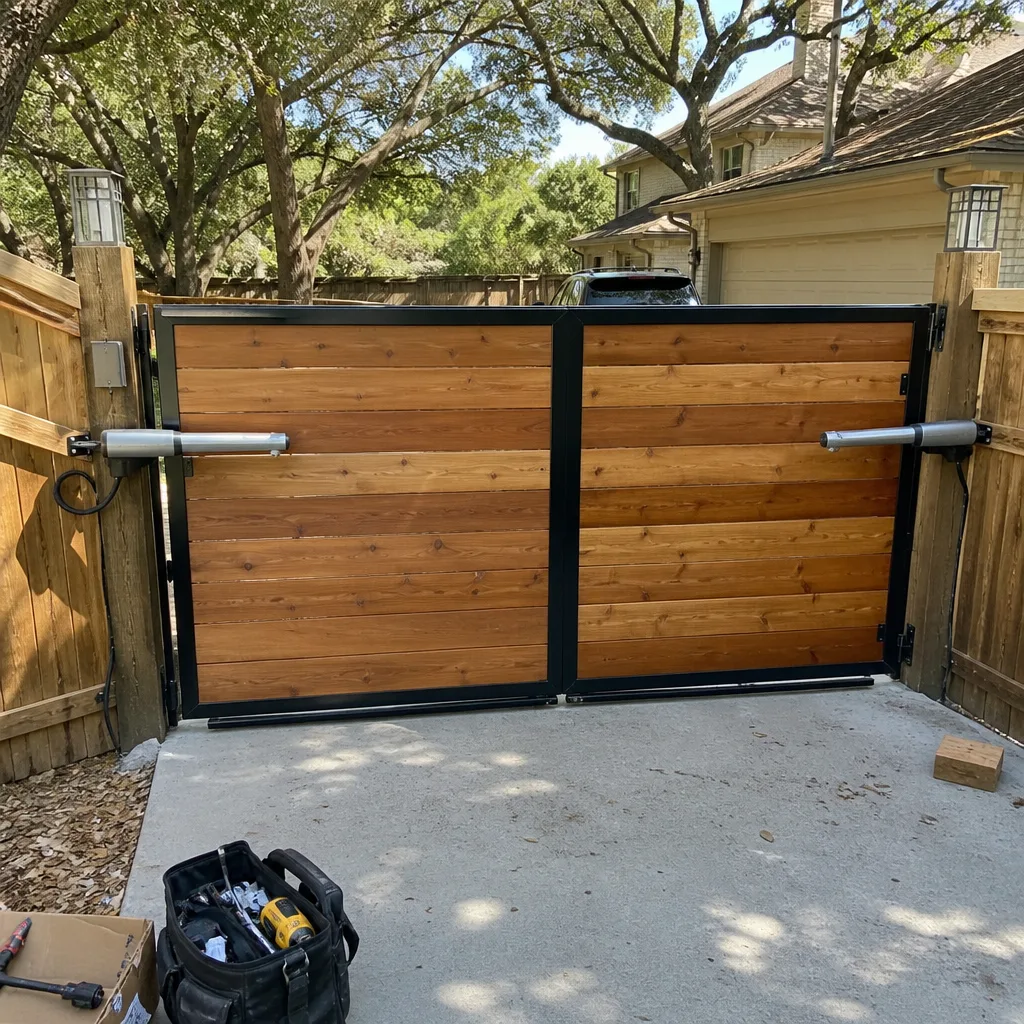 After
After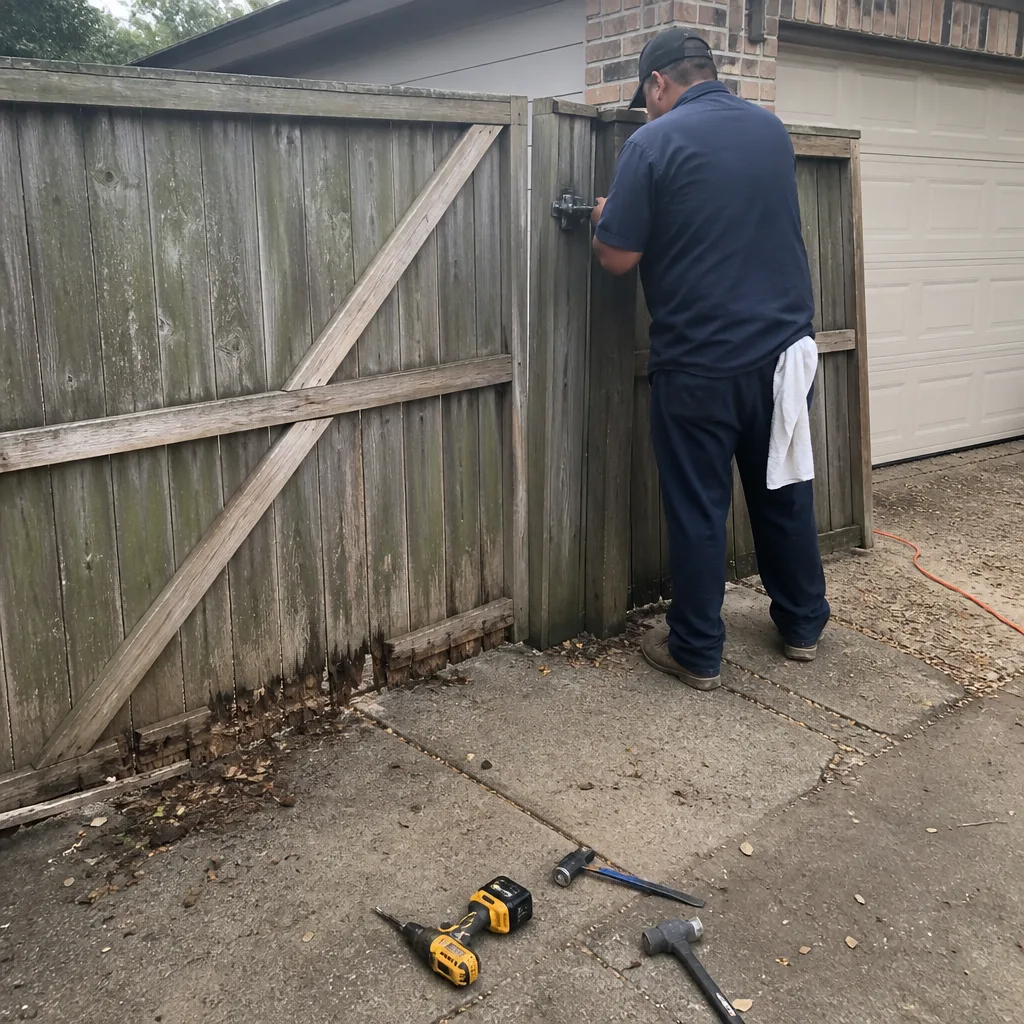 Before
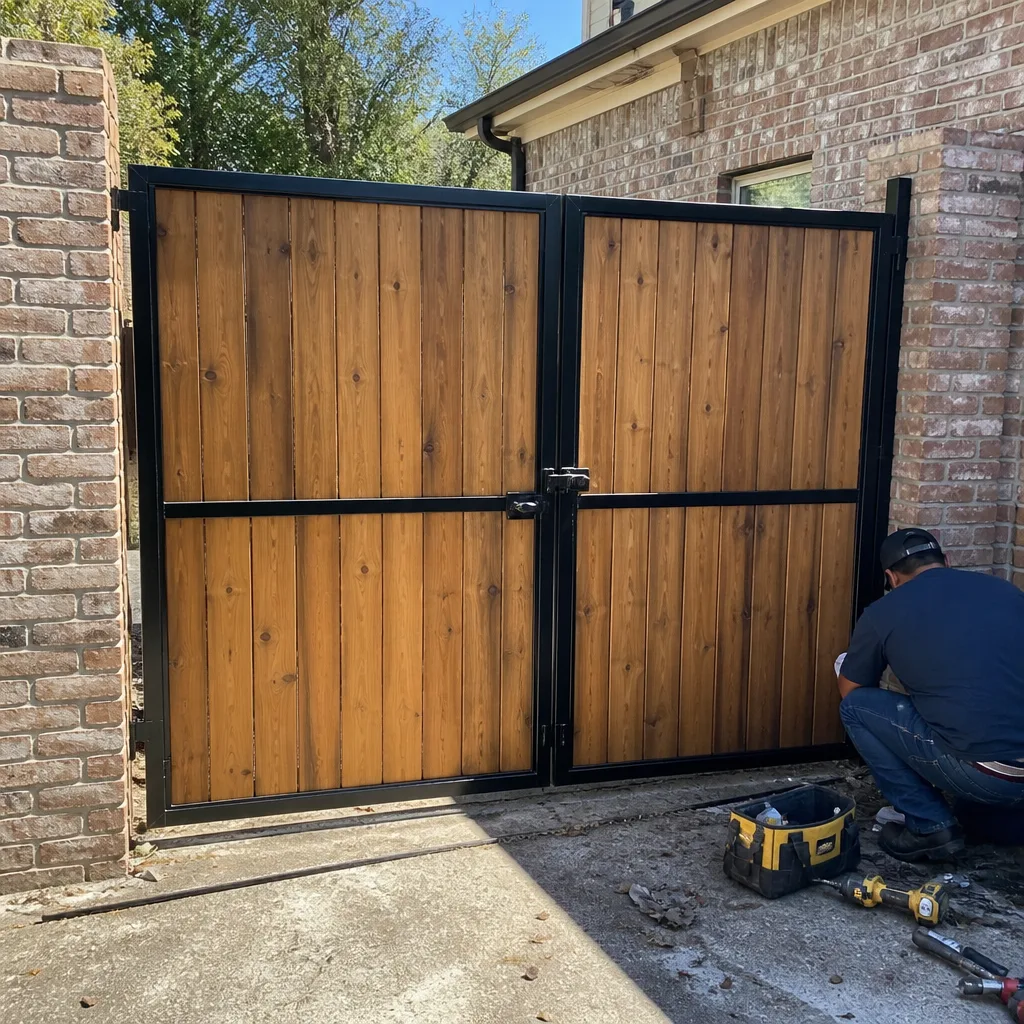 After
After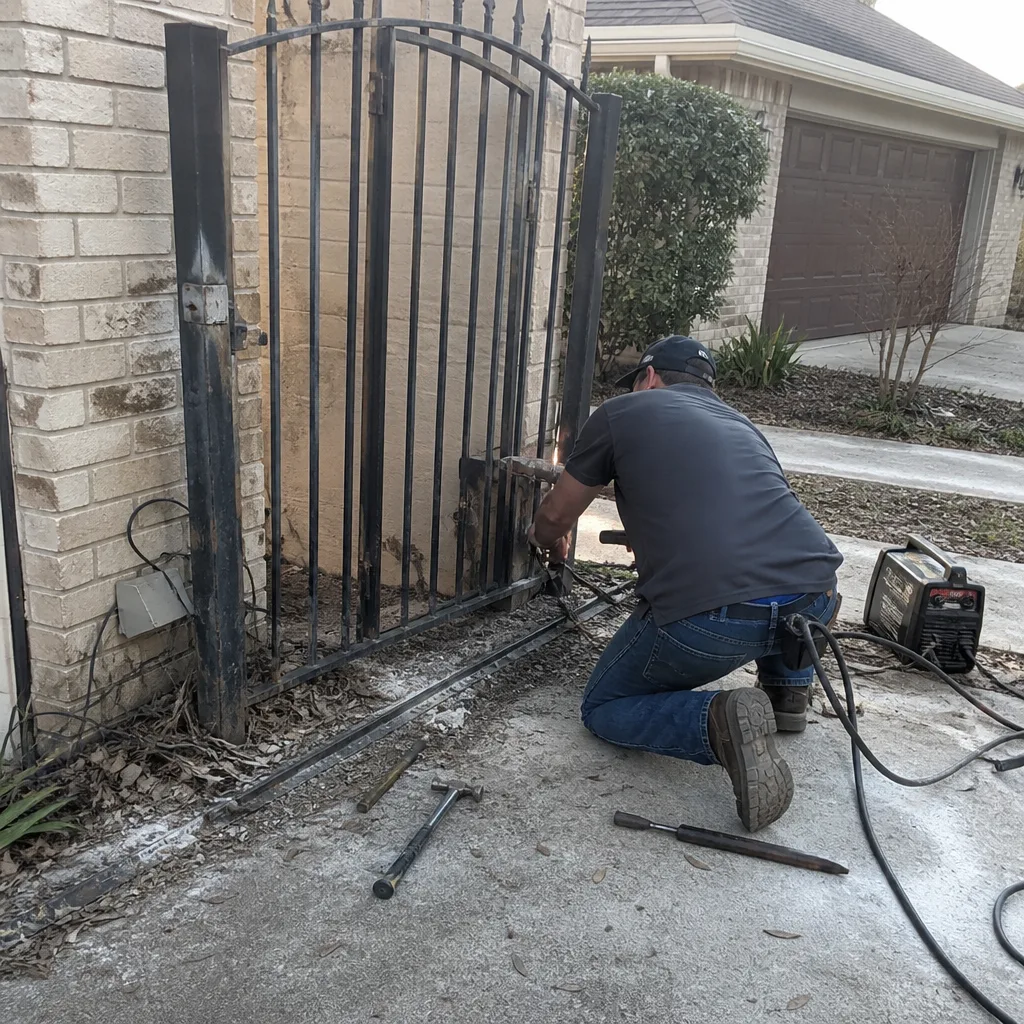 Before
 After
After